


Medium Oak Bureau
A medium oak bureau gives you a practical writing surface with enclosed storage, combining sturdy timber with compact domestic proportions.
Medium Oak Bureau
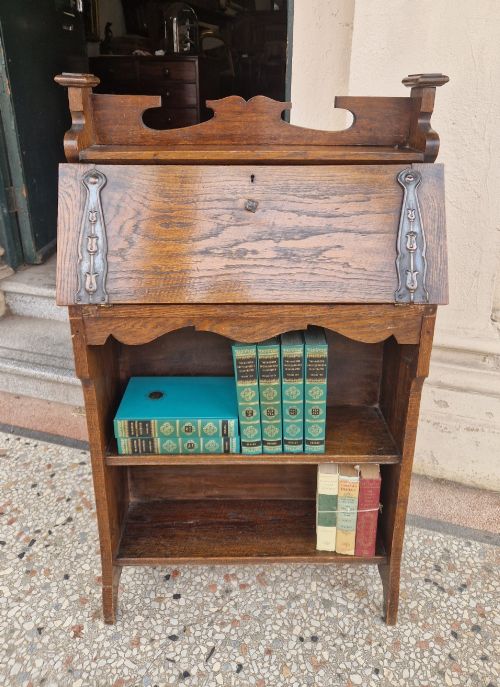
A medium oak bureau provides a dedicated writing space alongside functional drawer storage, appearing across styles from Late Victorian and Edwardian periods through to the interwar 1920s and 1930s. Buyers searching for a medium oak bureau encounter fall-front writing desks, roll-top variants, and taller bureau bookcases fitted with internal compartments.
The material palette centres on oak, often accompanied by brass handles, leather writing surfaces, glass doors, and occasional wood inlay or copper accents. Pieces range from straightforward Arts and Crafts designs to Jacobean revival models featuring moulded panels and bun handles.
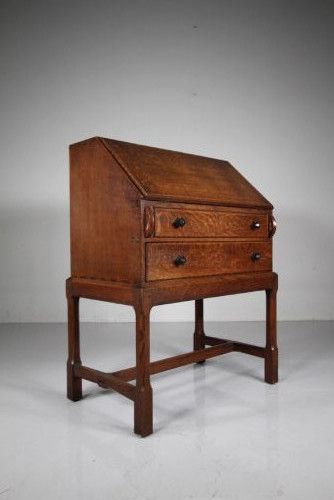
Most examples date from the late nineteenth century to the 1930s, reflecting domestic shifts towards compact fitted furniture for the home study or parlour. The typical form balances a sloping writing flap or cylinder front above two, three, or more drawers.
How they were made
Construction relies primarily on solid oak timbers, sometimes framed as two-part bureau bookcases or fitted with internal stationary compartments. Cabinetmakers utilised traditional joinery to house drawers and support the pivoting or sliding mechanisms of roll-top desks.
Hardware additions such as brass handles, lead cames on glass doors, and leather inserts for writing surfaces completed the functional design. Makers occasionally incorporated wood inlay to accent panels and drawer fronts on revival and Arts and Crafts examples.
Some slim Edwardian models manage to squeeze three bun-handled drawers and a stationary interior into a neat two-part frame complete with its original key.
What varies in quality
The distinction between standard commercial production and finer workshop output lies in the selection of timber and the precision of the interior fittings. Pieces bearing maker labels or attributed to specific designers demonstrate higher standards of internal joinery and thoughtful detailing.
Proportion and structural integrity distinguish simpler utilitarian desks from elaborate bureau bookcases with integrated shelving and glazed doors. The quality of secondary materials, including brass hardware and leather inserts, also marks the grade of the piece.
Stanley Webb Davies·Bryn Mawr
The Medium Oak Bureau Glossary
- Bureau
- A writing desk featuring a sloping hinged flap that opens to reveal internal compartments and small drawers. This form provides a concealed workspace when closed.
- Roll top desk
- A writing desk fitted with a flexible slatted cylinder tambour that slides up and down to cover the desktop and pigeonholes. It offers quick enclosure for ongoing paperwork.
- Bureau bookcase
- A two-part tall cabinet combining a lower writing bureau with an upper bookcase enclosed by glass doors. This form maximises vertical storage in domestic rooms.
- Jacobean Revival
- A style emulating seventeenth-century English furniture through heavy mouldings, panelled doors, and turned supports. It appeared frequently on oak desks and writing cabinets.
Medium Oak Bureau: Frequently Asked Questions
What is a bureau bookcase?
A bureau bookcase is a tall two-part piece of furniture that combines a lower desk section with an upper shelving unit enclosed by glass doors.
This form was designed to keep books and writing materials together in one compact unit within a study or living space.
How do I use a roll top desk?
A roll top desk operates by sliding a tambour shutter made of narrow wooden slats upward along tracks to open the desk surface.
Pulls or keys allow you to secure the slatted cover over the internal pigeonholes and small drawers when you finish writing.
How do I date an oak bureau?
Dating an oak bureau involves examining the overall style, construction methods, and hardware choices visible on the piece. Evidence spans late Victorian, Edwardian, and interwar periods up to the 1930s.
Design influences such as Arts and Crafts simplicity or Jacobean revival moulding help place the desk within its specific manufacturing era.
What is an Edwardian bureau?
An Edwardian bureau is a writing cabinet produced during the reign of Edward VII or the wider Edwardian era, typically featuring light oak construction and practical internal stationery fittings.
These desks often include brass handles and compact drawer arrangements suited to early twentieth-century domestic interiors.
Are these desks made of solid oak?
The listings show oak as the primary timber used across these desks, complemented by hardware in brass, copper, and glass.
Construction styles range from plain utilitarian student pieces to labelled workshop items and elaborate two-part bookcase combinations.