
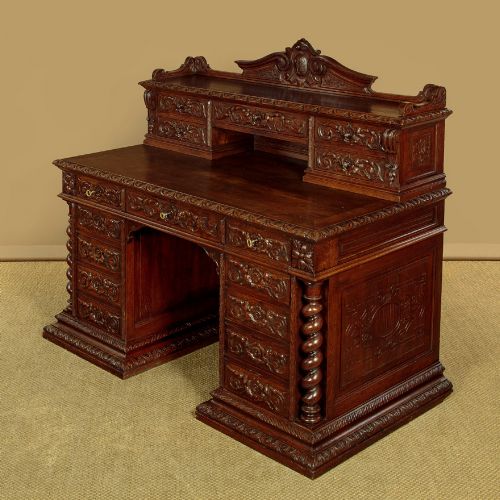


Vintage Oak Kneehole Desk
A vintage oak kneehole desk is a sturdy pedestal workspace designed for a study or library, prized for its classic proportions and deep timber grain.
Vintage Oak Kneehole Desk
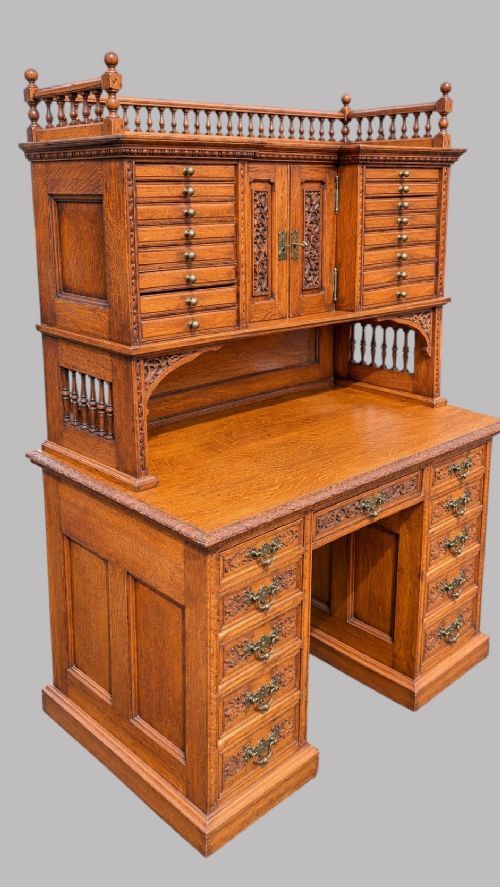
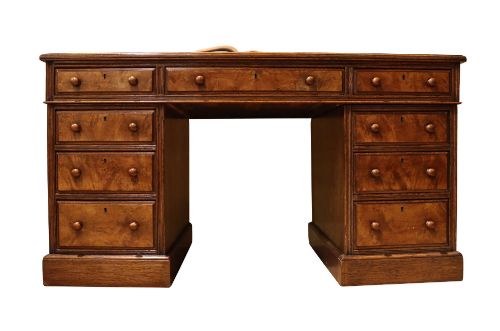
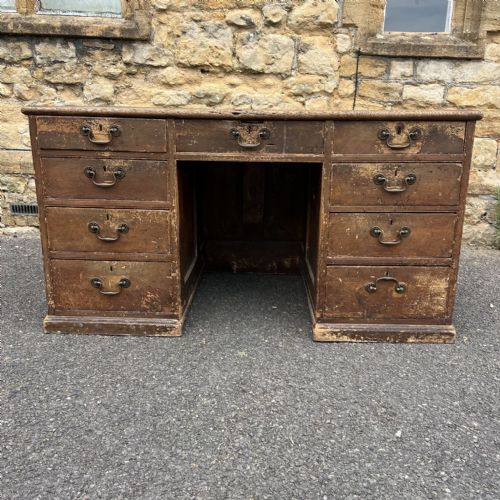
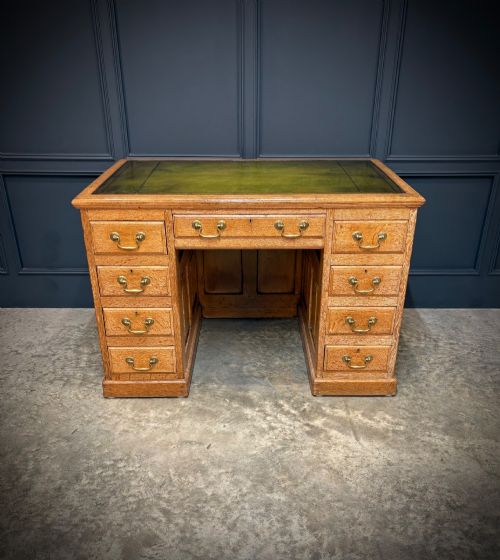
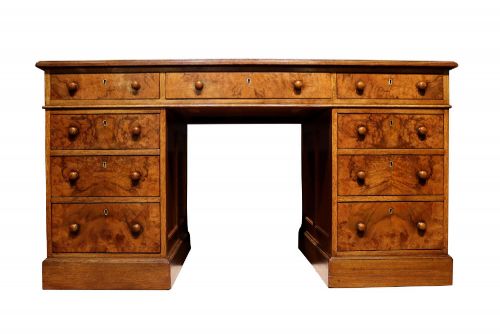
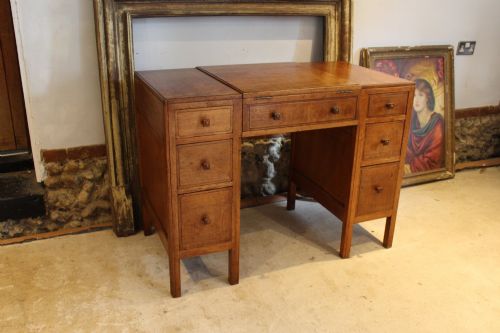
A vintage oak kneehole desk is a pedestal writing table featuring a central recessed space flanked by banks of drawers, typically configured with nine drawers in total. The pieces available span the late nineteenth century through to the early twentieth century, taking in both formal Victorian examples and simpler Edwardian forms.
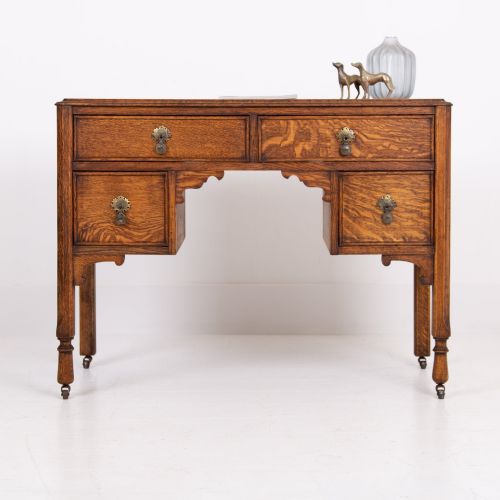
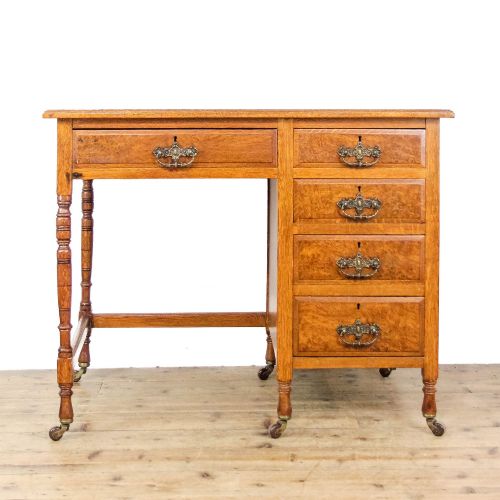
Most entries belong to the Victorian and Edwardian periods, constructed with golden oak or darker patinated timber. Alongside standard pedestal writing desks, the selection includes estate managers' furniture, partners desks, and occasional dressing tables sharing the same kneehole architecture.
The layout prioritises storage and a formal working surface, often accompanied by inset leather writing surfaces and brass drawer pulls. These desks served functional roles in libraries, studies, and country houses, built to endure daily administrative tasks.
How they were made
Makers constructed these desks primarily from solid oak, sometimes combining secondary woods like pine within the drawer carcases, and occasionally incorporating burr walnut veneers for visual contrast. Surfaces frequently received inset tooled leather writing panels, while structural joints relied on traditional dovetailing for the drawer construction.
Hardware played a functional and decorative role, featuring brass drop handles, drawer pulls, and occasionally makers' stamps or brass locks. Carved ornamentation appears on specific revival pieces, ranging from restrained Victorian mouldings to bolder Arts and Crafts motifs.
Materials recorded across the desks include solid oak, burr walnut, pine, padauk, brass hardware, glass, and tooled leather.
What varies in quality
Quality rests in the selection of the timber and the depth of the grain, with finer examples displaying figured golden oak or well-matched burr walnut veneers. The crispness of the drawer dovetails and the integrity of the secondary woods reveal the care taken by the cabinetmaker.
Proportions and hardware also distinguish the range, as pieces with balanced pedestals, original brass fittings, and intact tooled leather writing surfaces represent superior craftsmanship. Maker attribution, through stamps or known workshop designs, further separates standard commercial production from exceptional workshop output.
Heal and Sons·Shapland and Petter·Gillow and Co·Étienne Kohlmann·Maple and Co
The Vintage Oak Kneehole Desk Glossary
- Kneehole desk
- A pedestal desk featuring a central recess for the legs, flanked by two vertical banks of drawers. This configuration provides ample storage whilst maintaining a compact footprint.
- Pedestal desk
- A heavy freestanding writing table supported by two pillars or stacks of drawers resting on the floor. These desks typically offer double-sided or single-sided drawer arrangements.
- Burr walnut
- A prized timber veneer obtained from walnut tree growths, displaying swirling, knotty grain patterns. It was often used on drawer fronts for decorative contrast.
- Dovetail joint
- A traditional woodworking joint interlocking wedge-shaped fingers, used extensively in drawer construction for maximum tensile strength. Its neat execution indicates superior cabinetmaking.
- Partners desk
- A large pedestal desk designed for two people to sit opposite each other, featuring drawers on both sides. They were built for offices, libraries, and boardrooms.
Vintage Oak Kneehole Desk: Frequently Asked Questions
How do I style a kneehole desk?
Pair the desk with a traditional wooden or upholstered chair that fits comfortably within the central recess. Keep the surface uncluttered to showcase the timber grain and any inset leather panels.
Position the piece away from direct heat sources to protect the solid oak and prevent the wood from drying out or splitting over time.
Were these desks used in offices?
These desks served primarily in domestic studies, estate offices, and libraries rather than modern commercial workspaces. Estate managers and professionals relied on the multiple drawers for organising documents and correspondence.
Their robust construction ensured they could withstand heavy daily use in busy household administrative hubs.
How do I tell Victorian from Edwardian desks?
Victorian desks generally feature darker patination, heavier proportions, and sometimes elaborate carving or burr walnut accents. Edwardian examples tend to exhibit lighter golden oak tones and cleaner, more restrained lines.
Examining the secondary woods inside the drawers and any surviving maker stamps can also help narrow down the date of manufacture.
Can I replace the leather top?
Many desks feature replacement tooled leather inserts if the original surface has worn away through decades of use. Sourcing a replacement hide with traditional gold tooling helps maintain the period character of the writing surface.
Consulting a professional restorer ensures the new leather matches the proportions and colour tone of the surrounding oak woodwork.