
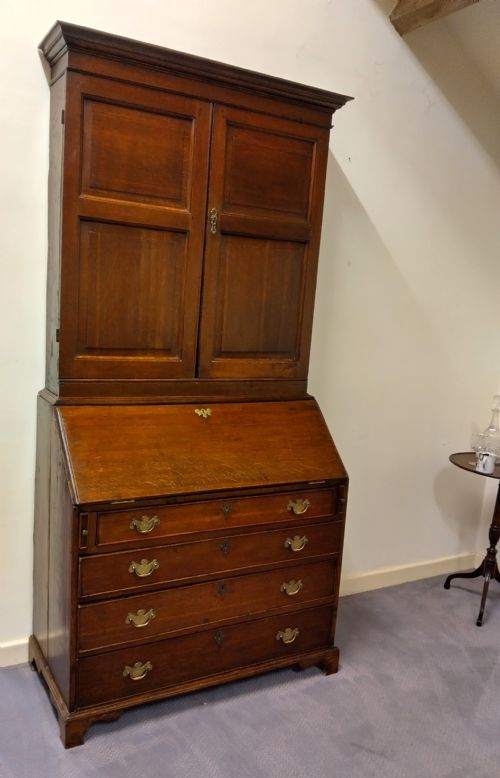


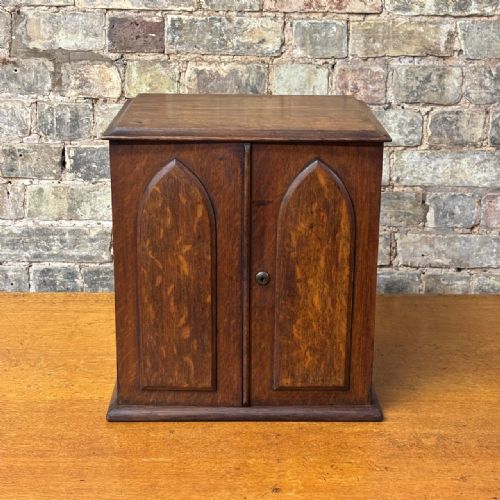


Panelled Oak Desk Cabinet
A panelled oak desk cabinet brings solid timber architecture and concealed writing spaces straight into a study, offering genuine period utility.
Panelled Oak Desk Cabinet
When you search for a panelled oak desk cabinet, you encounter sturdy writing furniture spanning from the seventeen hundreds through to the early twentieth century. These pieces combine enclosed storage with writing surfaces, taking forms such as bureau bookcases, secretaire bookcases, and tabletop cabinets.
The versions most commonly met on this page range from compact Edwardian and Victorian examples to earlier Georgian and seventeen hundred specimens. Many incorporate panelled doors, drop-front writing slopes, and upper bookcase sections designed for domestic workspaces.
Makers adapted these designs across different eras, producing everything from modest tabletop tabletop cabinets to large bureau bookcases adapted for modern living. The structural forms remain fundamentally practical, anchored by heavy timber construction and panel detailing.
Materials and construction
Makers utilised solid oak alongside oak veneer, shaping timber into heavy structural panels for doors and cabinetry. Brass hardware, including drop handles and hinges, provides functional contrast against the dark wood grain.
Glass panels appear frequently in the upper bookcase sections, allowing visibility while protecting books and papers. Occasional inclusions of wood inlay and copper detailing demonstrate varied surface ornamentation across different decades.
Listings span from the seventeen hundreds through to the nineteen twenties, featuring oak, brass, glass, and wood inlay.
Distinguishing quality across periods
Quality reveals itself in the handling of the oak timber and the precision of the panel joinery rather than surface decoration alone. Earlier seventeen hundred examples display hand-cut construction methods that differ markedly from later mass-produced Edwardian workshop output.
The integration of fitted interior drawers and pigeonholes within the writing compartment indicates higher workshop ambition. Material selection also dictates standard, where solid oak construction holds greater integrity than later oak veneer applications.
Gillows
The Panelled Oak Desk Cabinet Glossary
- Secretaire bookcase
- A tall combination piece featuring an upper shelving section above a pull-down writing drawer or flap. This form conceals internal compartments for stationery.
- Bureau bookcase
- A writing desk with a sloping lid that folds down to create a flat surface, topped by a glazed or panelled cabinet. It serves as both a writing station and a bookcase.
- Table cabinet
- A smaller, portable or surface-standing cabinet designed to sit upon another piece of furniture. These items provide compact storage for documents or valuables.
- Oak veneer
- A thin layer of superior oak timber applied over a secondary wood base. This technique allowed cabinetmakers to display attractive grain patterns economically.
- Jacobean Revival
- A nineteenth-century revival style drawing inspiration from seventeenth-century heavy turned supports and geometric panelling. It frequently manifests in dark, robust cabinetwork.
Panelled Oak Desk Cabinet: Frequently Asked Questions
How do I identify a Georgian piece?
Georgian pieces display proportion and construction methods typical of the eighteenth century, often utilising solid oak timbers and traditional hand-cut joinery.
Look for interior fittings and drawer linings that match the period's straightforward, functional aesthetic without later revival embellishments.
What is a secretaire bookcase?
A secretaire bookcase combines a tall upper storage cabinet with a dedicated writing drawer that drops open on hinges.
This reveals a fitted interior of small drawers and pigeonholes designed for correspondence.
How were tabletop cabinets used?
Tabletop cabinets provided secure storage for important documents, letters, or small valuables in rooms without built-in architectural storage.
Owners placed them directly on top of larger tables or chests to keep writing materials accessible.
Are these pieces made of solid oak?
While many examples utilise solid oak throughout their primary framework and panels, some later Edwardian pieces incorporate oak veneer over secondary woods.
Checking the interior construction helps determine whether the timber is solid or veneered.
How do I care for antique oak furniture?
Maintain oak furniture by keeping it away from direct heat sources and sudden humidity changes that cause timber to split.
Apply traditional wax polish sparingly to nourish the grain and preserve the surface sheen.