



Interwar Writing Desk
An interwar writing desk is a practical workspace shaped by early twentieth-century design, offering compact storage and sturdy timber construction for modern studies.
Interwar Writing Desk
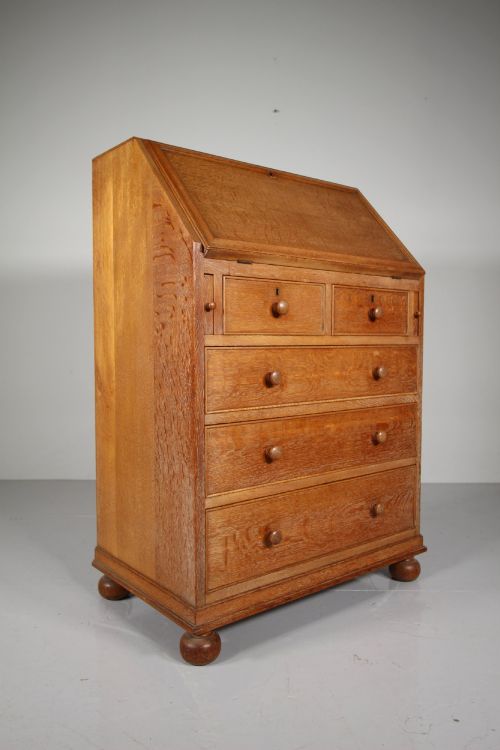
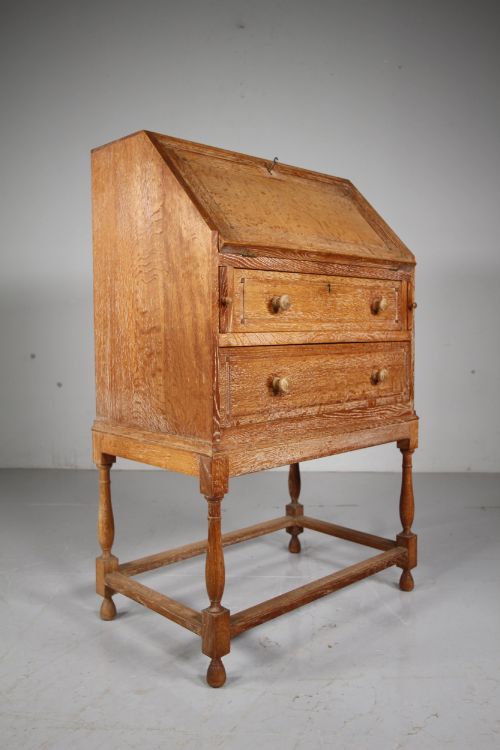
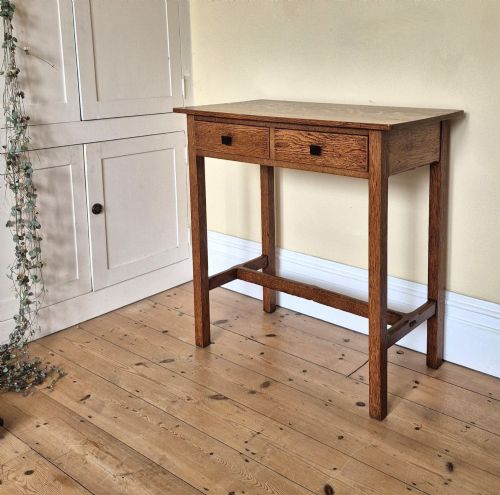
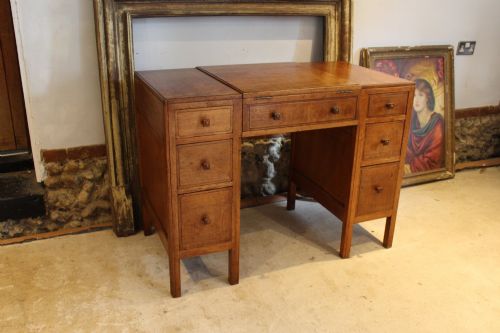
An interwar writing desk covers functional oak bureaux, bureau bookcases, and writing tables produced during the 1920s and 1930s. These domestic items combine traditional storage drawers with dedicated writing surfaces for everyday correspondence.
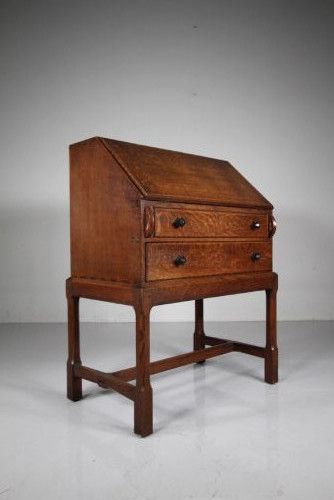
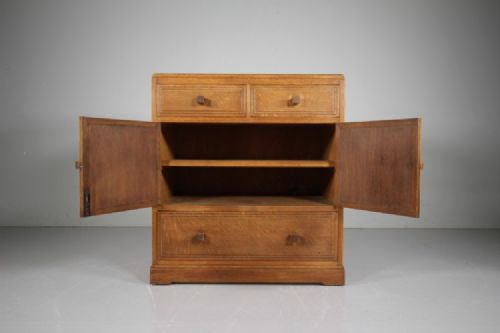
Buyers on this page most frequently encounter solid oak and quarter-sawn oak forms reflecting Arts and Crafts, Jacobean Revival, and Art Deco influences. Pieces range from straightforward two-drawer writing desks to labelled bureau bookcases fitted with glass doors.
How they were made
Maker workshops utilised solid oak and quarter-sawn oak timber to construct heavy, durable frames, occasionally applying oak veneer to specific surfaces. Metal and brass hardware secure drawers, drop-front writing slopes, and internal compartments.
Glazed sections incorporate glass panels within timber framing to create display space for books and papers. Leather inserts frequently line the writing surfaces to provide a smooth plane for ink and paper.
Book box ink stands from the 1930s let writers conceal their writing gear inside clever faux-book bindings.
What varies in quality
Quality rests upon the selection of timber figure, particularly the distinct medullary rays visible in quarter-sawn oak boards. Superior execution appears in clean joinery, balanced proportions, and well-figured grain rather than applied surface decoration.
Provenance and maker attribution elevate certain examples, particularly pieces bearing original workshop labels or specific cabinetmaker signatures. Hardware selection and the clever integration of storage compartments separate standard commercial production from bespoke studio work.
Heals of London·Stanley Webb Davies·Bryn Mawr·Hubert Simpson
The Interwar Writing Desk Glossary
- Bureau
- A desk featuring a sloping hinged writing flap that conceals a fitted interior of pigeonholes and small drawers. This form allows correspondence materials to be tucked away swiftly.
- Quarter-sawn
- Timber cut radially from the log ring, producing stability and a decorative flecked grain pattern often prized in period furniture.
- Veneer
- A thin layer of choice wood adhered to a secondary timber base to display an attractive surface figure without excessive weight or cost.
- Jacobean Revival
- A furniture style popular in the early twentieth century that imitates seventeenth-century heavy turned supports, panelled doors, and dark oak finishes.
- Arts and Crafts
- A design movement valuing visible construction, honest materials, and functional utility over mass-produced ornamentation.
Interwar Writing Desk: Frequently Asked Questions
What is an interwar writing desk?
An interwar writing desk is a domestic workspace produced during the 1920s and 1930s, typically constructed from oak.
These pieces range from simple two-drawer writing tables to fitted drop-front bureaux designed for home administration.
How were bureau bookcases used?
Bureau bookcases combined upper glass-fronted shelving for volumes with a fold-down writing desk below.
They served as compact libraries and administrative stations in smaller twentieth-century homes.
How do I identify a 1920s desk?
Desks from the 1920s often show Arts and Crafts simplicity or Jacobean Revival turned legs alongside oak construction.
Makers frequently utilised quarter-sawn oak boards and brass hardware characteristic of the period.
Where should I place a bureau?
Bureaux suit studies, living rooms, or bedrooms where floor space is limited yet closed storage is required.
The drop-front surface opens when writing is needed and shuts to conceal paperwork.