
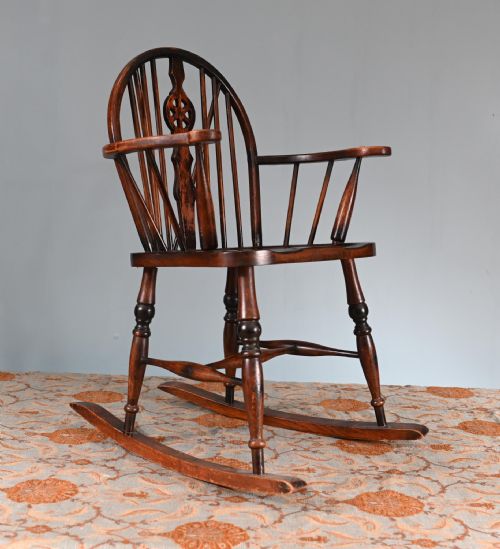


1930s Oak Chairs
These 1930s oak chairs bring sturdy interwar character and distinctive period design to domestic spaces.
1930s Oak Chairs
When you search for 1930s oak chairs, you encounter a robust selection of domestic seating shaped by the interwar period. These pieces range from heavy kitchen and dining sets to occasional armchairs, rocking chairs, and garden room seating.
The styles bridge traditional vernacular forms and early modern movements. You meet ladderback and Windsor chairs alongside geometric Art Deco armchairs and Arts and Crafts designs.
Dining chairs appear frequently as sets of four, six, or eight, often accompanied by refectory tables. Single armchairs and pairs of occasional chairs provide flexible seating for sitting rooms and dressing tables.
How they were made
Makers constructed these frames predominantly from solid oak, sometimes utilising golden oak or heavier timbers for kitchen seating. Traditional joinery techniques ensured structural longevity in everyday domestic environments.
Seating surfaces and supports incorporated a variety of materials depending on the style. Workshops used woven rush, leather, rattan, and Lloyd Loom fibre alongside upholstered pads covered in fabric and velvet.
Listings feature oak combined with fabric, leather, rush, velvet, Lloyd Loom, and rattan across dining chairs, armchairs, rocking chairs, and dressing table sets.
What varies in quality
The calibre of 1930s oak chairs rests upon the integrity of the timber and the distinction of the design. Workshops employing seasoned solid oak and precise joinery produced seating that retained structural rigidity through decades of use.
Attribution and maker marks elevate certain examples above standard commercial output. Pieces bearing stamps or provenance from notable interwar workshops and designers demonstrate superior craftsmanship and distinct stylistic vision.
Edward Barnsley·Dicon Nance·Heals·Mouseman·Gordon Russell
The 1930s Oak Chairs Glossary
- Solid oak
- Timber used unveneered for the structural framework of the chair. This material provides the substantial weight and durable grain seen across interwar British seating.
- Lloyd Loom
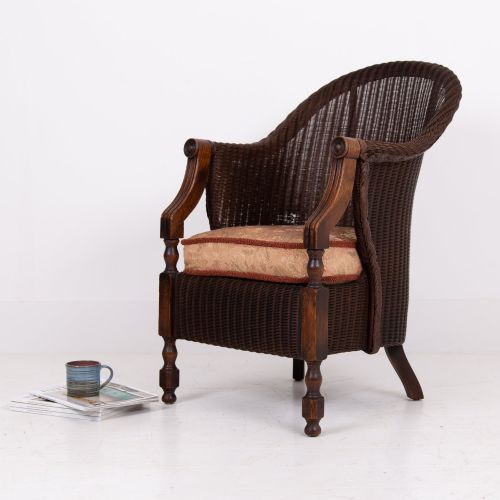
- A patented material made from twisted paper wire woven over a metal frame. It appears on armchairs intended for garden rooms and lighter domestic interiors.
- Ladderback
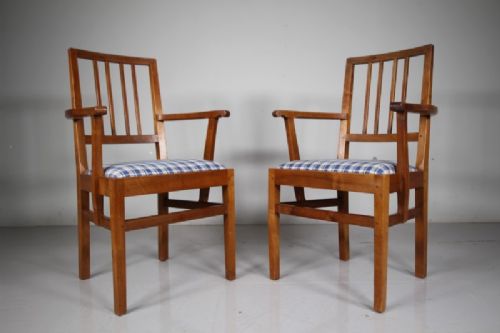
- A chair back featuring horizontal wooden slats between the upright posts. This traditional form was reinterpreted by interwar makers in dining and occasional formats.
- Bridge chair
- A compact upholstered armchair designed for card games and small spaces. These pieces combine wooden frames with supportive padded seating.
- Rush seat
- A woven seating surface made from dried marsh grasses. It provides a flexible and traditional texture on ladderback chairs.
1930s Oak Chairs: Frequently Asked Questions
How do I identify Art Deco oak chairs?
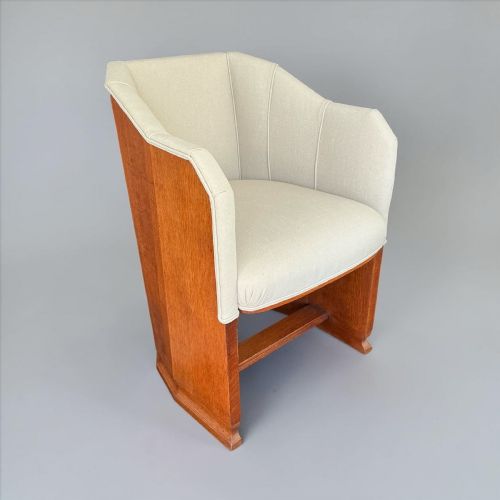
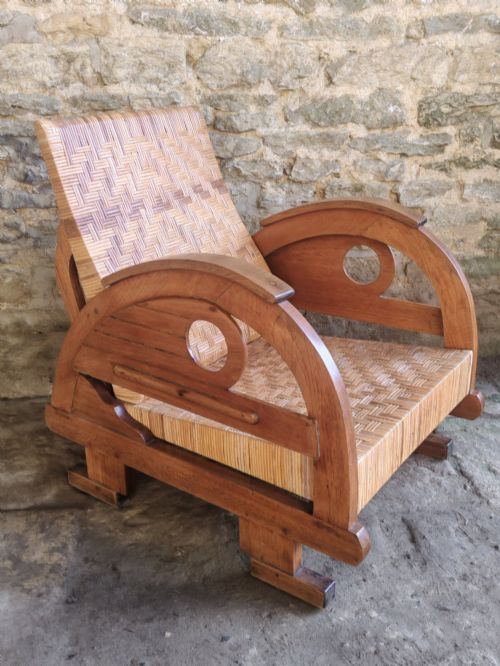
Art Deco oak chairs typically feature geometric lines, stylised curves, and distinct framing that breaks from traditional Victorian proportions. They often utilise exposed solid oak combined with upholstered seat pads.
Look for symmetrical forms and stepped details on the wooden frames. These elements separate the modern interwar aesthetic from earlier rustic farmhouse styles.
Are 1930s dining chairs suitable for daily use?
Interwar dining chairs were built for practical household service using solid oak and sturdy joinery. Many sets retain their structural integrity and handle regular sitting comfortably.
Check that the joints remain tight and the frames are stable. Upholstered or rush seats may require maintenance depending on their condition.
What is a Lloyd Loom armchair?
A Lloyd Loom armchair uses a woven cellulose fibre material stretched over a reinforced frame. This technique was developed in the early twentieth century to create durable and lightweight furniture.
These armchairs often incorporate oak framing elements alongside the woven body. They suit lighter interior settings such as garden rooms and sunrooms.
How can I tell studio chairs apart from commercial sets?
Studio chairs often display maker stamps, carved signatures, or distinctive handcrafted details. Workshop pieces reflect the individual approach of designers working outside mass production.
Commercial dining sets, by contrast, prioritise uniformity across larger numbers of side and armchairs. Construction methods and timber selection reveal the origin of the seating.