
Pair Carved Carver Chairs
These pair carved carver chairs bring matched seating and substantial armrests to a room, offering historical character alongside functional comfort.
Pair Carved Carver Chairs
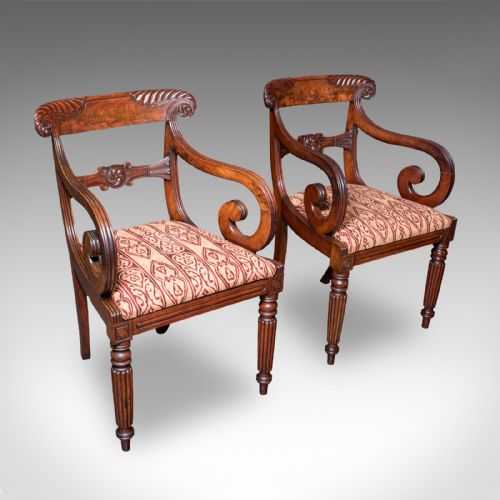
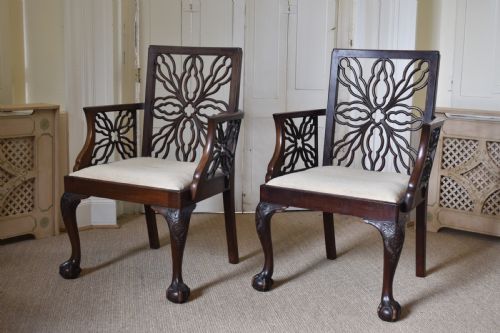
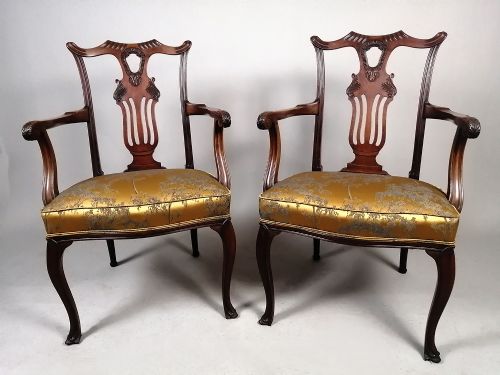
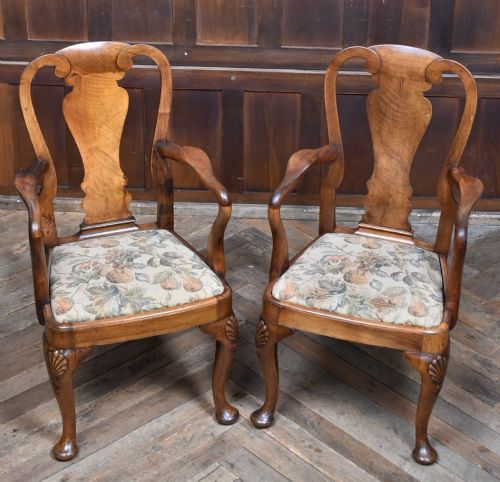
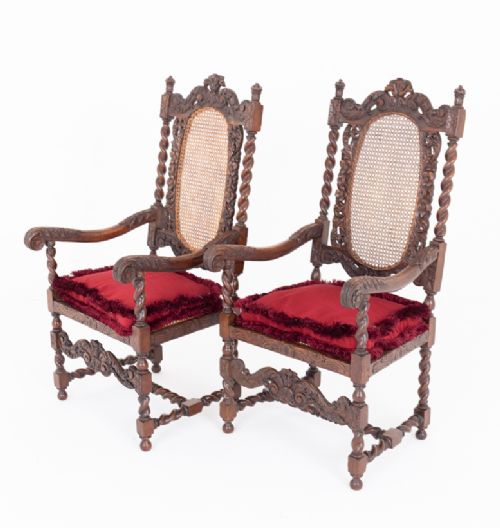
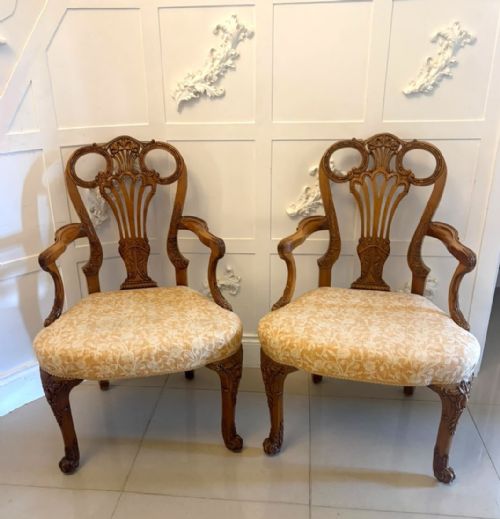
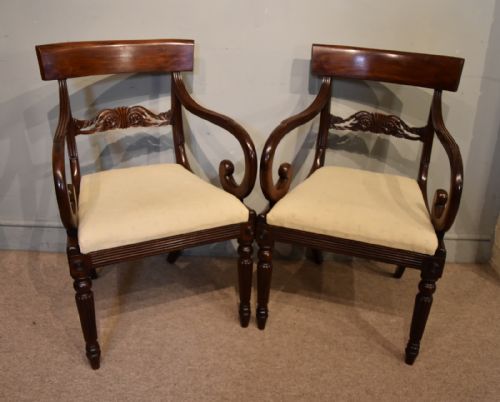
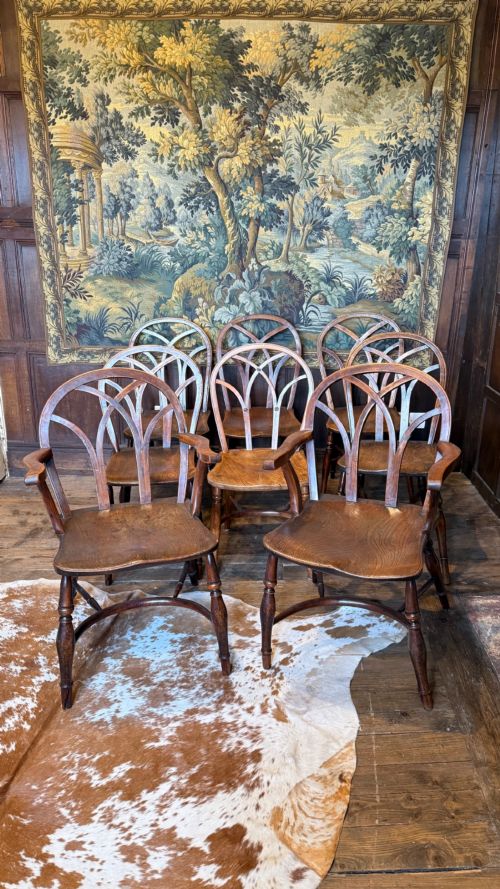
A pair carved carver chairs designates matched armchairs featuring decorative woodwork across the frame, commonly utilised as reception, desk or dining seats. These double items appear frequently in forms influenced by historical revival movements and earlier Georgian or Regency periods.
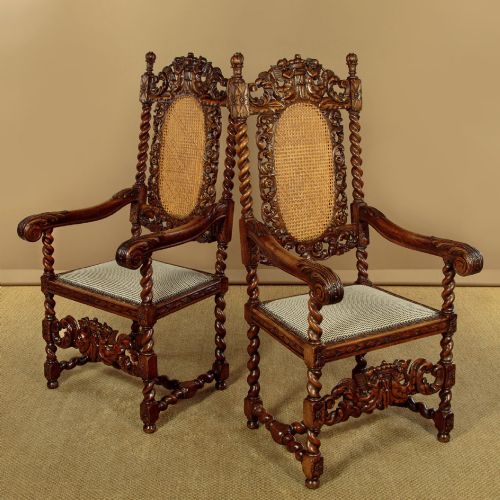
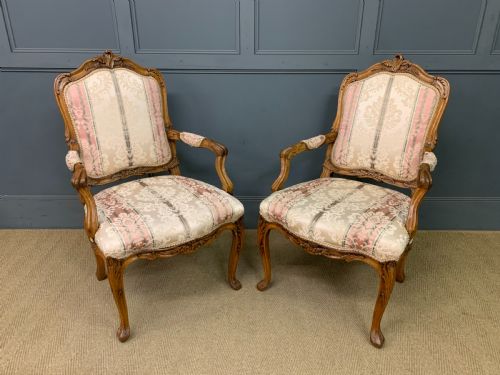
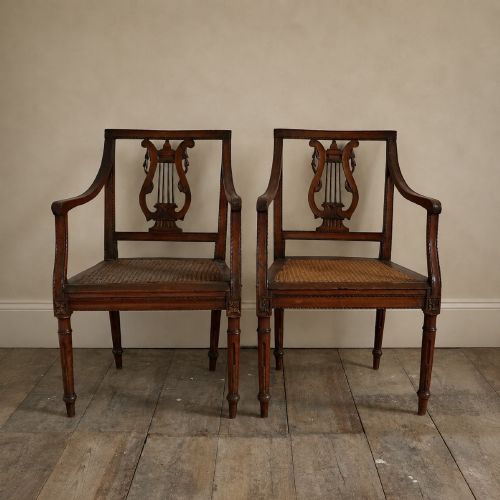
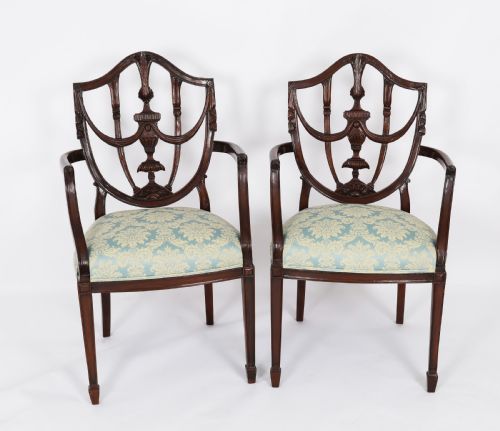
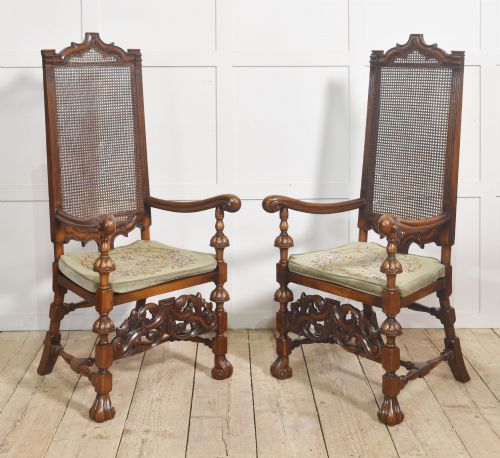
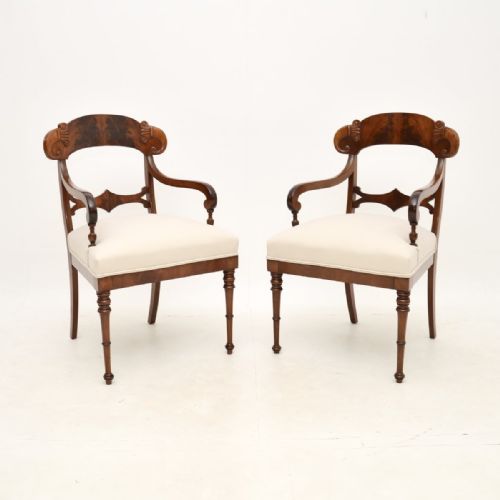
The selection ranges from substantial oak throne styles to light mahogany lyre-back armchairs and walnut desk seats. Makers produced these matching pairs to sit at the head and foot of a dining table or to flank a fireplace in a morning room.
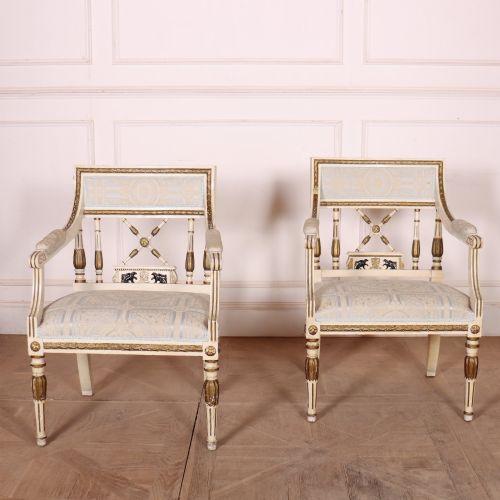
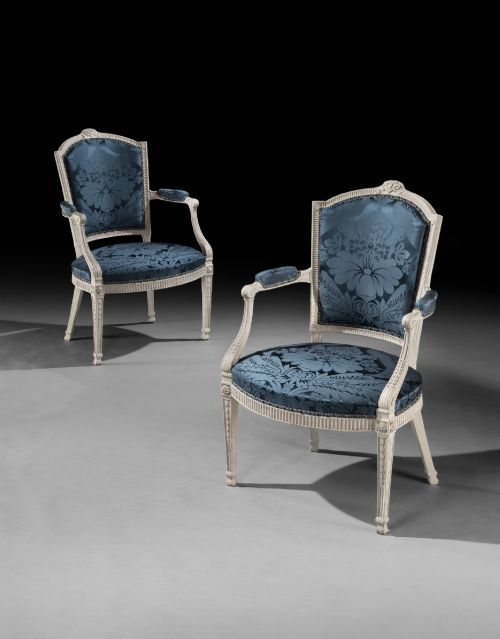
The evidence shows examples emerging from English, French, Italian and Swedish workshops across the nineteenth and early twentieth centuries. Buyers frequently encounter revival interpretations such as Chippendale, Hepplewhite and Jacobean styles alongside authentic period pieces.
Materials and construction methods
Cabinetmakers constructed these frames primarily from dense hardwoods including mahogany, walnut and oak, selecting timber for strength to support the arms and carved details. Workshops applied hand-carved ornamentation directly into the solid wood rails, splats and knees.
Seating portions incorporate woven cane, leather, brass detailing and various upholstery fabrics or velvet fixed over webbing and stuffing. Giltwood and painted finishes also appear on continental European frames from the eighteenth and nineteenth centuries.
Some nineteenth-century carvers have survived as couples because they spent their entire lives facing each other across the same parlour fireplace.
Distinctions in quality
Quality rests upon the crispness of the hand-carving and the structural integrity of the joints connecting the heavy armrests to the seat frame. Superior pairs exhibit deep, well-defined timber relief work rather than shallow or mechanical pressing.
The choice of primary timber density and the proportional balance between the open arms and the back support dictate the visual weight of the seating. Matching grain patterns and evenly matched timber pairs separate standard workshop production from finer commissions.
The Pair Carved Carver Chairs Glossary
- Carver chair
- An armchair, traditionally placed at the head of a dining table, featuring substantial armrests. These pieces match in pairs to provide balanced seating.
- Elbow chair
- An alternative term for an armchair with low elbow rests, frequently found in nineteenth-century morning rooms and reception spaces.
- Lyre back
- A chair back featuring an open splat shaped in the profile of a musical lyre. This motif appears frequently on nineteenth-century mahogany frames.
- Shield back
- A chair back designed in the outline of a heraldic shield, popularised during the eighteenth century and revived in later decades.
- Caning
- Woven rattan material utilised for chair seats and backs. This technique provides a resilient, lightweight support surface.
Pair Carved Carver Chairs: Frequently Asked Questions
Where should I place pair carved carver chairs?
These matching armchairs suit positions at opposite ends of a large dining table or flanking a central fireplace in a reception room.
Their substantial arms and decorative frames also make them effective as desk chairs or standalone accent seats in a hallway.
How do I care for wooden carved arms?
Dust the carved recesses regularly with a soft brush and apply a microcrystalline wax periodically to nourish the hardwood grain.
Avoid placing timber furniture near direct heat sources to prevent the wood joints from drying and loosening.
What periods do these chairs represent?
The available selection spans from eighteenth-century originals through nineteenth-century Victorian and Regency periods up to early twentieth-century revivals.
Many pieces date from around nineteen hundred, reflecting popular historical design revivals of earlier furniture eras.
Are these chairs comfortable for daily use?
Their upholstered pads, supportive armrests and upright backs provide steady seating suited for dining or desk work.
Many examples feature webbed bases and padded seats designed to offer physical support during extended sitting.