



Vintage Oak Elbow Chairs
These vintage oak elbow chairs combine sturdy timber construction with supportive armrests, offering practical seating shaped by centuries of regional design.
Vintage Oak Elbow Chairs
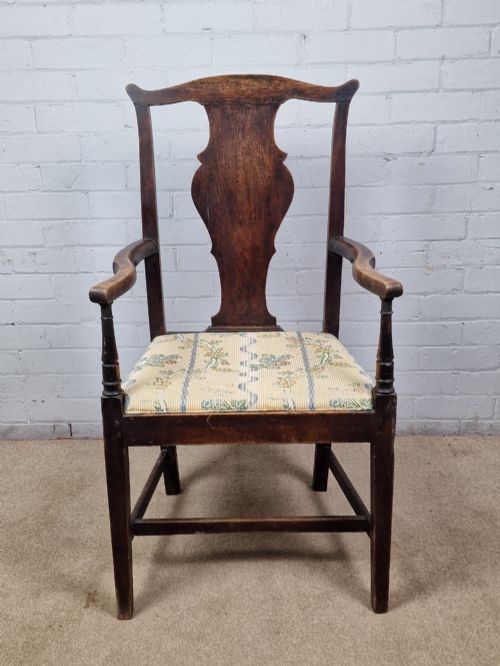
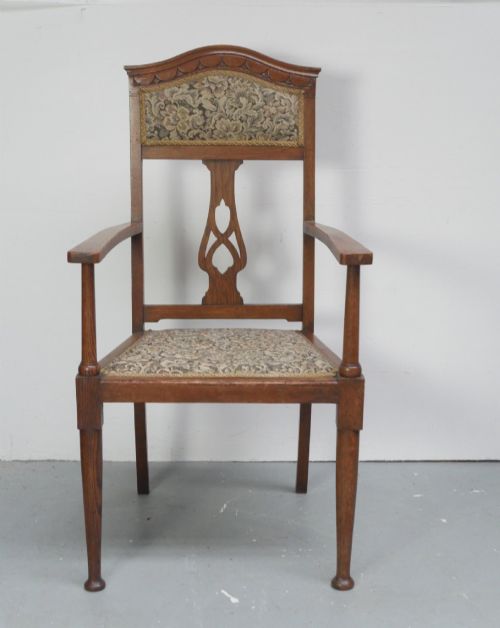
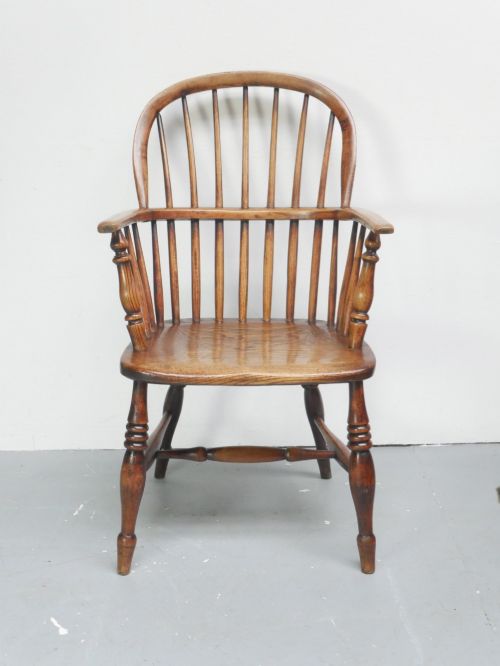
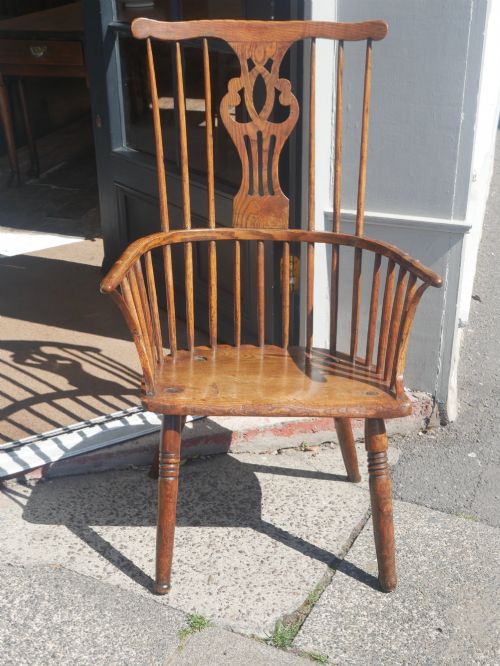
Vintage oak elbow chairs span a broad domestic landscape, taking the form of sturdy armchairs, desk chairs, and carver seats suited for everyday use. When searching for vintage oak elbow chairs, buyers encounter everything from vernacular Windsor seating to formal revival pieces.
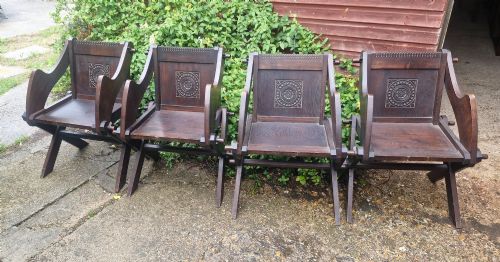
The selection ranges across the Georgian, Victorian, and Edwardian eras, alongside pieces from around nineteen hundred. Regional country pieces sit alongside distinctive Arts and Crafts workshops and revival styles such as Jacobean and Carolean.
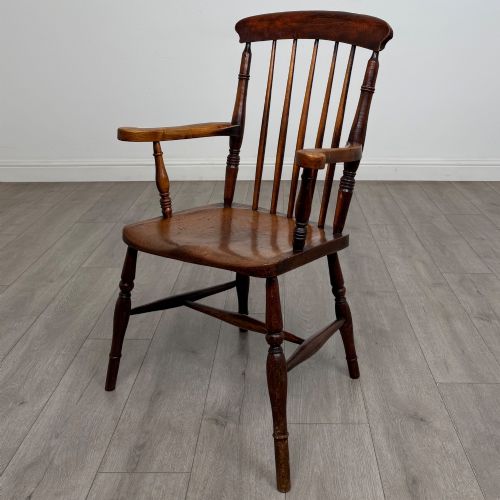
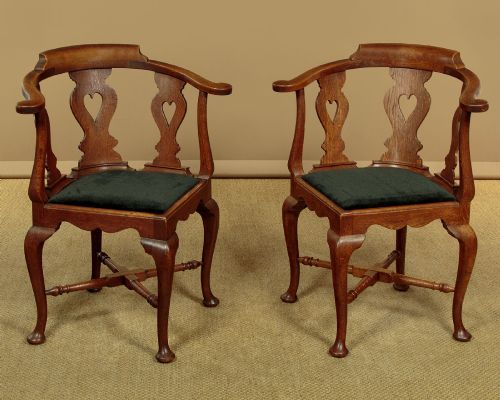
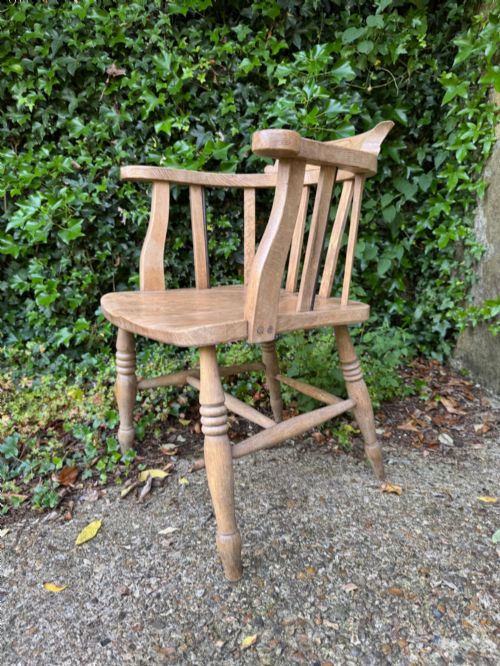
Hoop-backs, stick-backs, and low ladder-backs appear frequently among the listings, often featuring rush, cane, or upholstered pads. Corner chairs and children's versions also surface, showing how diverse domestic seating became across the nineteenth and early twentieth centuries.
How they were made
Makers relied on solid timber construction, combining oak for frames with secondary woods such as elm, ash, and beech for spindles, bent parts, and structural underpinnings. Turning lathes shaped spindles and legs, while steam-bending yielded curved hoop-backs and armbows.
Seats utilised woven rush and cane alongside drop-in pads or full upholstery covered in leather, fabric, velvet, and tapestry. Joinery methods relied on traditional mortise and tenon joints, pegged frames, and turned components secured without modern adhesives.
Listings feature oak alongside ash, elm, and beech, demonstrating traditional mixed-timber construction across nineteenth-century seating.
What varies in quality
The integrity of the timber frame and the precision of the joinery dictate the standard of construction, separating robust daily seating from fragile examples. Grain selection and the quality of hand-carved details in revival pieces also mark out superior workshops.
Original seating materials like hand-twisted rush or tightly woven cane show distinct levels of craftsmanship, as do period upholstery methods. The balance of proportions and the preservation of original patination on the timber surface define the finer examples.
Liberty & Co·Morris and Co
The Vintage Oak Elbow Chairs Glossary
- Elbow chair
- A seating term describing any chair fitted with side arms to support the arms of the sitter. These pieces function as desk chairs, carvers, or occasional seating.
- Windsor chair
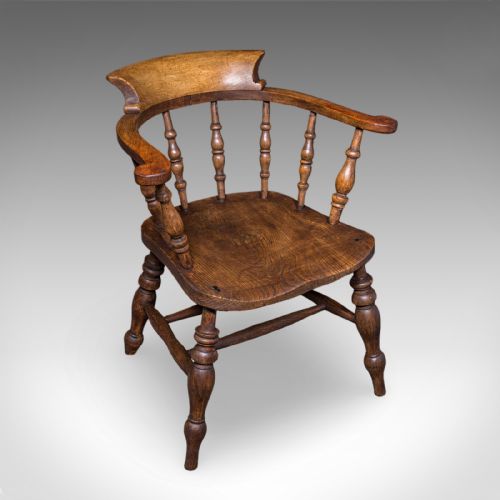
- A chair built with a solid wooden seat into which the legs and back spindles are wedged directly. Regional variations include comb-backs, hoop-backs, and smokers bows.
- Rush seat
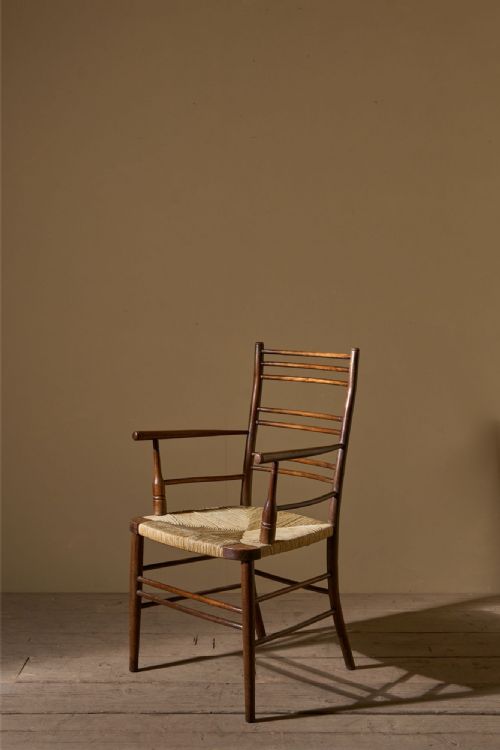
- A seating surface woven from dried marsh rushes around a wooden frame. This technique appears frequently on Arts and Crafts and country ladder-back chairs.
- Carver chair
- An armchair designed to match a set of single dining chairs, traditionally placed at the head of a table. They share stylistic motifs with their smaller dining counterparts.
- Corner chair
- A square-seated chair designed to fit neatly into room angles, featuring a diagonal front leg and a curved back rail supported by turned pillars.
Vintage Oak Elbow Chairs: Frequently Asked Questions
What is a smokers bow chair?
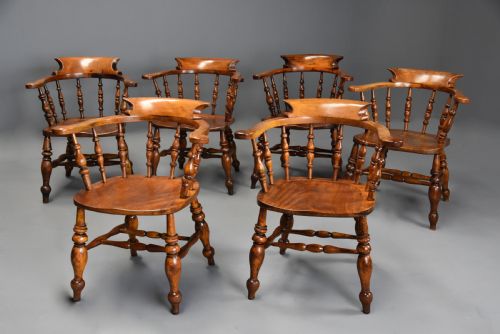
A smokers bow is a sturdy, low-backed Windsor variant featuring a continuous curved arm rail supported by turned spindles. These comfortable elbow seats emerged in country houses and public spaces during the nineteenth century.
They pair solid elm or oak seats with bentwood bows, offering reliable support for daily use at a desk or table.
How do I identify an Arts and Crafts chair?
Arts and Crafts elbow chairs emphasise honest construction, exposed joinery, and functional simplicity over heavy surface ornamentation. They frequently incorporate straight lines, ladder backs, and natural rush seating.
Associated with makers like Liberty, these pieces prioritize traditional handcraft methods and straightforward materials such as English oak.
Are rush seats durable?
Woven rush seats offer surprising strength and flexibility when maintained in dry indoor environments. Dried marsh grasses twisted into cords create a resilient surface that supports daily sitting.
Over decades, original rush develops a smooth, aged texture, though excessive moisture can weaken the natural fibres.