




Warm Brown Oak Armchairs
These warm brown oak armchairs offer honest country character and sturdy construction, bringing tactile history and practical seating directly into your home.
Warm Brown Oak Armchairs
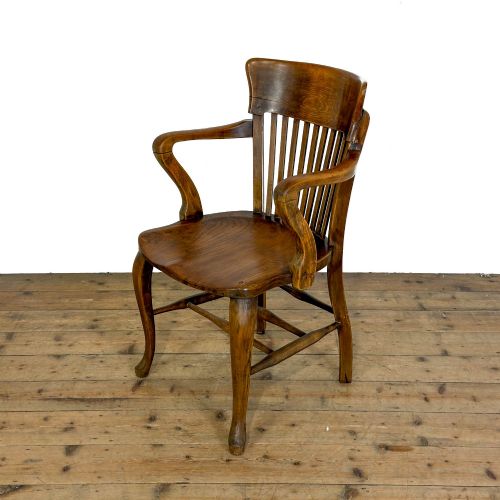
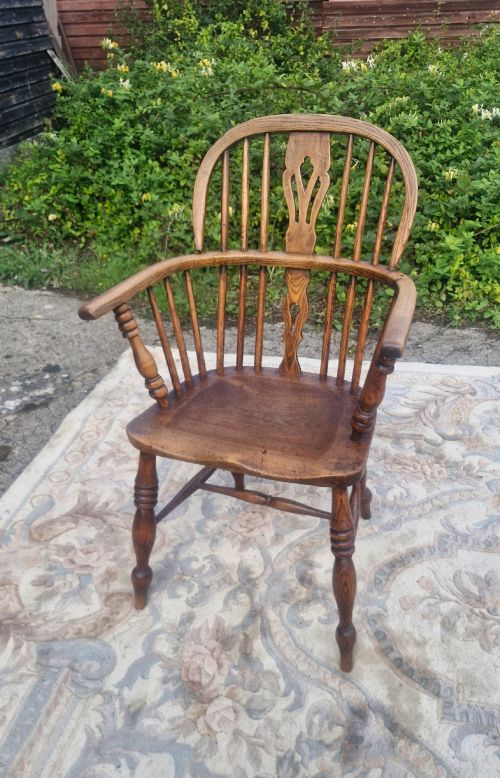
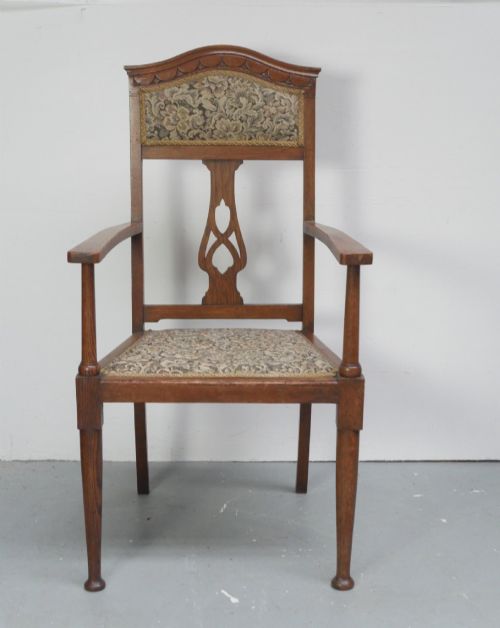
When you search for warm brown oak armchairs, you encounter a robust lineage of vernacular seating spanning the eighteenth century through to the early decades of the twentieth century. These pieces encompass sturdy desk chairs, low-back Windsor designs, and substantial farmhouse seating built for daily utility.
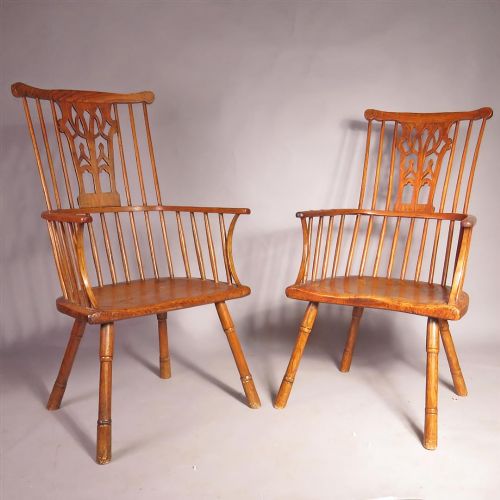
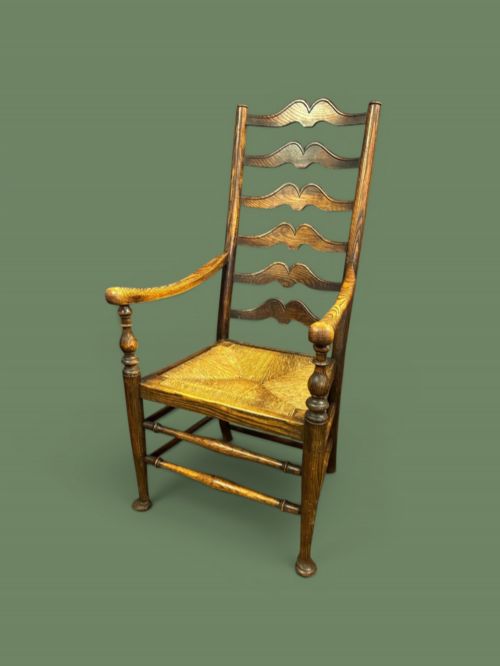
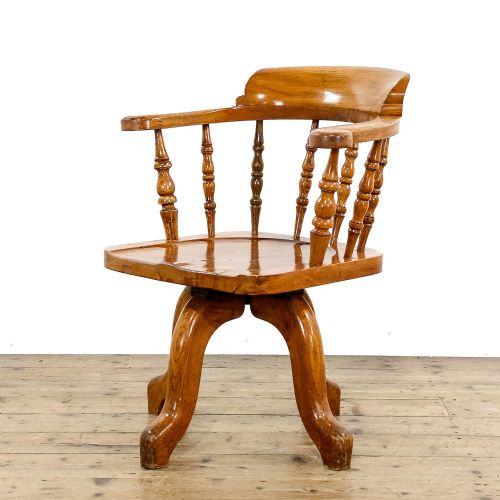
The selections on this page lean heavily into Victorian country interpretations and traditional eighteenth-century forms. You will find examples featuring comb backs, splat lathe backs, and captain's chairs that showcase the enduring appeal of regional English craftsmanship.
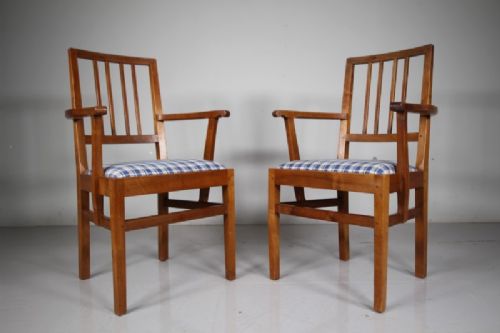
Makers ranged from humble country joiners to notable designers like Edward Barnsley. Their collective output prioritised practical comfort, resulting in seating that remains remarkably functional in modern spaces.
Construction and materials
The primary structure relies on solid oak, frequently paired with contrasting timbers such as elm for scooped seats and beech or ash for turned spindles and structural stretchers. Yew also appears in select country frameworks, adding tonal depth to the rich brown patination.
Some nineteenth-century armchairs show distinct ink stains on the wooden arms, hinting at long-forgotten paperwork.
Assessing quality and character
Quality in these armchairs rests in the depth of the timber's grain and the natural patination accumulated through generations of use. Superior examples display honest wear without compromising the structural integrity of the frame or the stability of the joints.
The nuance of regional turning, the weight of the solid oak, and the careful shaping of elm seats distinguish finer workshop output from simpler utilitarian seating. Authenticity of period components, from stamped maker marks down to original rush weaving, elevates the standing of an individual piece.
Edward Barnsley
The Warm Brown Oak Armchairs Glossary
- Windsor armchair
- A chair built with a solid wooden seat into which the back and legs are separately bored and wedged. This form provides robust structural integrity through its stick-back construction.
- Rush seat
- A seating platform woven from dried marsh rushes around a wooden frame. It offers a springy and durable surface favoured in traditional country ladderback chairs.
- Smokers bow
- A low-backed Windsor chair featuring a continuous arm and back rail supported by turned spindles. These were traditionally found in nineteenth-century smoking rooms and parlours.
- Comb back
- A Windsor chair variation where the vertical spindles of the low back extend upward into a higher headrest rail resembling a hair comb. It offers enhanced upper back support.
- Lathe back
- A chair back featuring flat, vertical wooden splats shaped on a lathe or by hand rather than rounded spindles. This style is frequently seen in Victorian vernacular seating.
Warm Brown Oak Armchairs: Frequently Asked Questions
What defines a smoker's bow chair?
A smoker's bow is a sturdy, low-backed armchair featuring a rounded continuous arm rail supported by turned wooden spindles. It sits lower than a standard dining chair and provides a comfortable, enveloping seat.
These pieces were widely used in nineteenth-century domestic and public spaces as smoking or parlour chairs. Their compact proportions make them versatile for modern reading corners.
How do I care for rush seats?
Rush is a natural dried material that requires gentle maintenance to prevent drying out and splitting over time. Keep these chairs away from direct heat sources and damp environments.
Dust the woven surface regularly with a soft brush and avoid saturating the material with water during cleaning. Occasional light conditioning helps preserve the flexibility of the natural fibres.
Are these chairs suitable for desks?
Several variations, particularly captain's chairs and low-back Windsor designs, function exceptionally well at writing desks. Their supportive curved armrests and solid wooden seats offer comfortable posture for seated work.
Check the seat height and clearance beneath your desk before selecting a piece. Nineteenth-century models often provide a lower, more relaxed seating position than modern office furniture.
How can I tell the age?
Dating relies on observing construction techniques, tool marks, timber shrinkage, and the natural patination of the wood. Eighteenth-century examples often feature hand-carved elements and pegged joints distinct from later Victorian production.
Secondary woods used in the undercarriage and the wear patterns on the seat offer further clues to a piece's era. Comparing the form to documented regional styles helps narrow down the period of manufacture.