
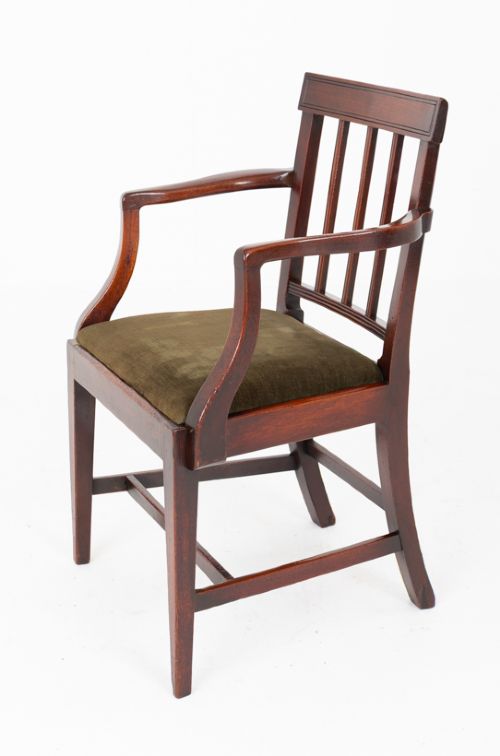
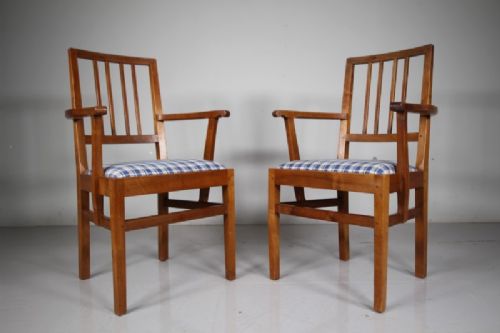
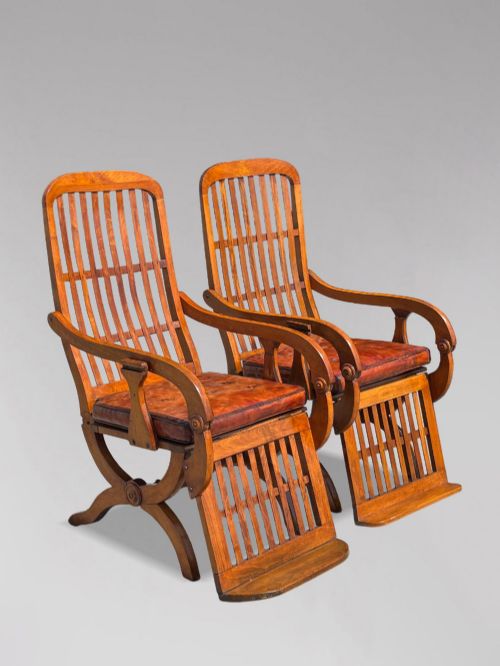
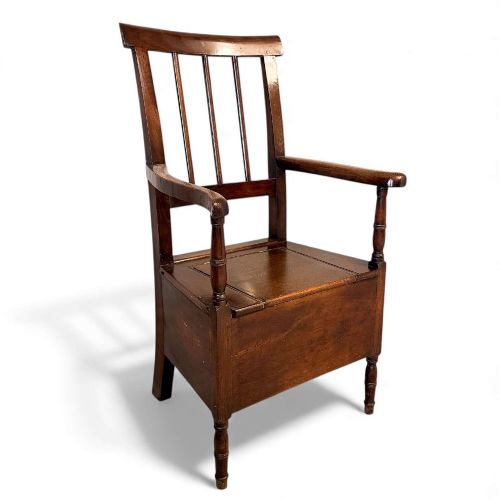




Slat Back Armchair
Slat back armchairs bring solid vernacular form and timber character to a room, offering sturdy upright seating shaped by generations of practical design.
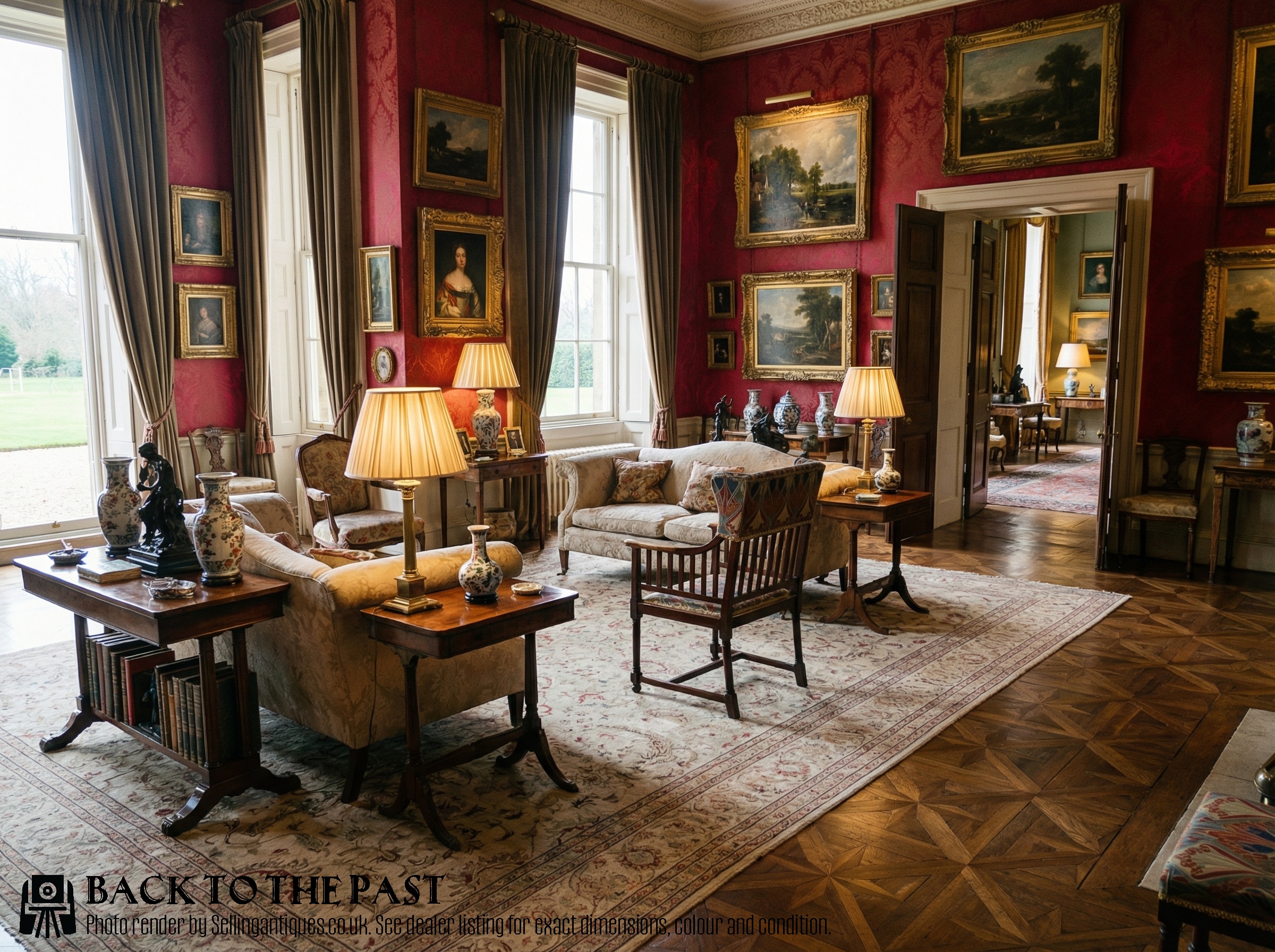
Slat Back Armchair
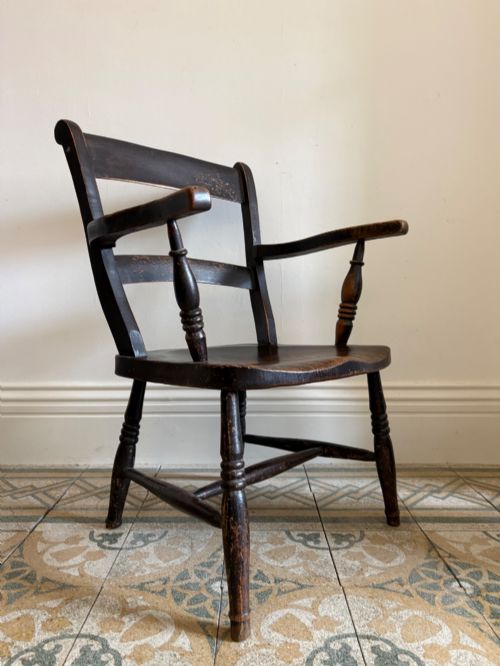
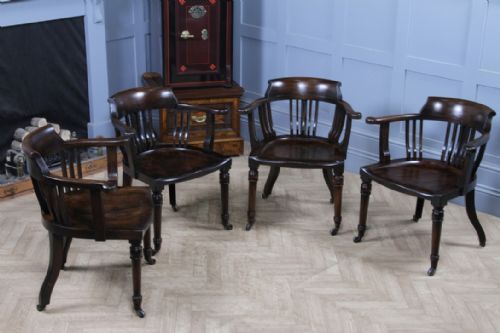
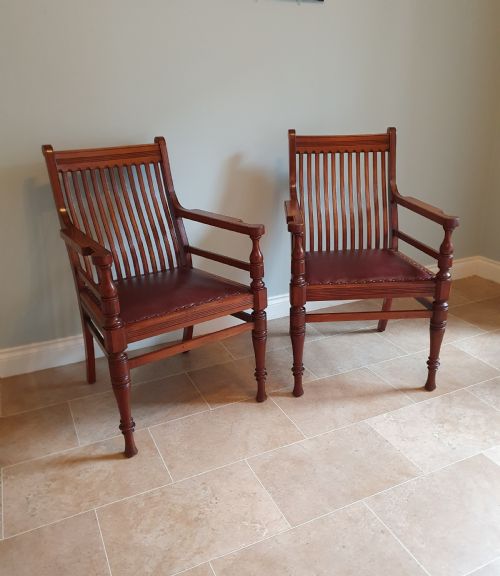
A slat back armchair is a seating form defined by its vertical wooden slats supporting the backrest, combining domestic comfort with robust construction. When searching for a slat back armchair, buyers encounter pieces ranging from country kitchen seating to refined formal library chairs.
The selections span centuries of woodworking traditions, moving from vernacular 18th-century elm and ash Windsor forms to 19th-century Victorian fireside chairs and early 20th-century Arts and Crafts iterations. Elm, oak, beech and mahogany dominate the physical evidence, often paired with wooden or rush seats.
Regional variations appear across the records, including Thames Valley Windsordetails, Scottish crofter chairs and Georgian country pieces. Buyers are most likely to encounter Victorian and Edwardian examples built for fireside, desk or occasional use.
Materials and construction
Makers relied on contrasting timbers for strength and visual weight, frequently combining elm seats with ash or beech spindles and slats. Hardwoods such as oak and mahogany formed the frames of formal dining and desk armchairs.
Traditional joinery governed the assembly, utilising pegged mortise and tenon joints, steam-bent components for crest rails, and turned wooden uprights. Seats were often hand-carved from solid elm blocks to create a deep saddle shape.
Slat Back Armchair Retail Price Guide 2026
Typical asking prices for slat back armchair among the pieces listed under this phrase on Sellingantiques today, from the lower quarter to the upper quarter. They describe what is for sale here now, not the wider market.
The listings span from 17th-century oak fireside seats to 1930s revolving office chairs, showing continuous evolution in desk and parlour seating.
Assessing quality and integrity
Quality rests in the honesty of the construction and the retention of original surfaces, where untouched patination on elm and oak separates honest vernacular items from heavily sanded examples. The integration of the arms to the main uprights dictates structural longevity.
Proportion and timber selection mark the divide between standard utility seating and master cabinetmaker production. Finer George III and Edwardian pieces demonstrate crisp turning and careful grain matching across the slat back.
Edward Barnsley·E W Godwin·James Shoolbread
The Slat Back Armchair Glossary
- Slat back
- A chair back constructed with vertical wooden slats secured between the crest rail and the seat. This form provides robust lumbar support and appears in both rustic and formal seating.
- Windsor chair
- A chair built with a solid wooden seat into which the legs, back sticks and arms are directly socketed. They often feature carved elm saddles and bentwood hoops.
- Carver armchair
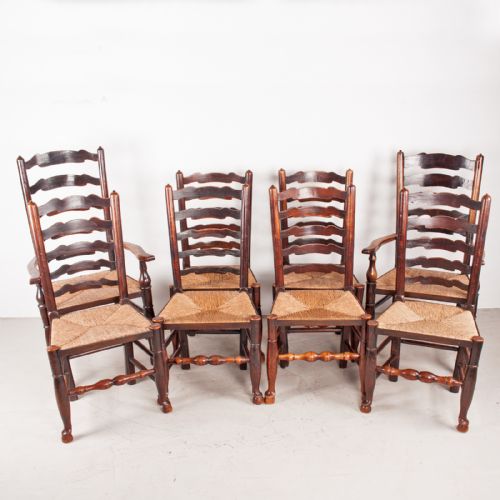
- An armchair designed in the style of the matching dining side chairs to sit at the head of a table. They frequently appear in sets alongside simpler chairs.
- Vernacular furniture
- Items made by local craftsmen following regional traditions rather than metropolitan pattern books. These pieces prioritise utility and local timber availability.
- Rush seat
- A seating surface woven from dried marsh rushes around a wooden frame. This technique creates a textured, flexible pad common in traditional country seating.
Slat Back Armchair: Frequently Asked Questions
How do I date a slat back armchair?
Dating relies on timber choice, construction methods, and stylistic cues present in the turning and arm design. Early pieces from the 18th century often utilise vernacular elm and ash, while Victorian and Edwardian examples incorporate machine-sawn elements or inlaid mahogany.
Examining the wear patterns on the wooden seat and the joining techniques underneath helps confirm the period of manufacture.
Where should I place an antique armchair?
These armchairs suit studies, living rooms and bedrooms as occasional or fireside seating. Their solid wooden frames make them practical for everyday use at a desk or in a hallway.
Pairing a vernacular elm chair with modern interiors adds textural warmth and historical contrast to a room.
Are these chairs comfortable for daily use?
Most slat back armchairs were designed with ergonomic principles tailored to specific tasks like writing at a desk or relaxing by a hearth. Many feature sculpted wooden seats shaped to the body or incorporate reclining mechanisms.
Adding a loose cushion or pad can increase comfort for prolonged sitting.