
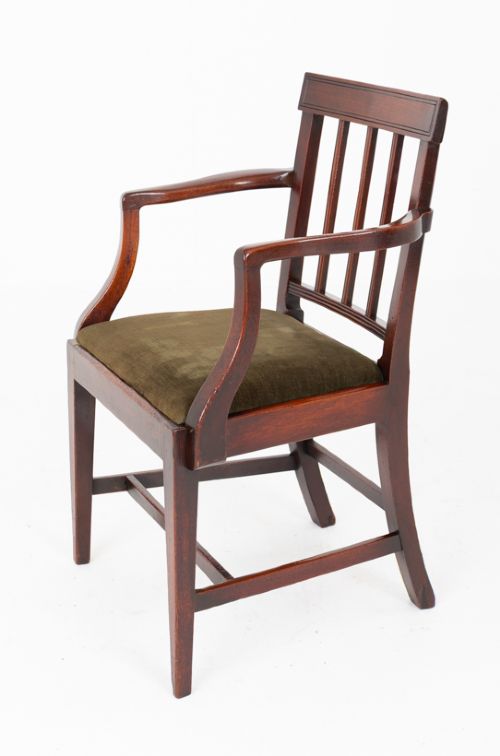
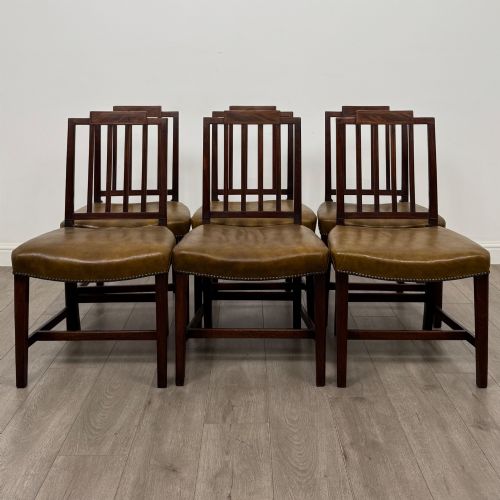
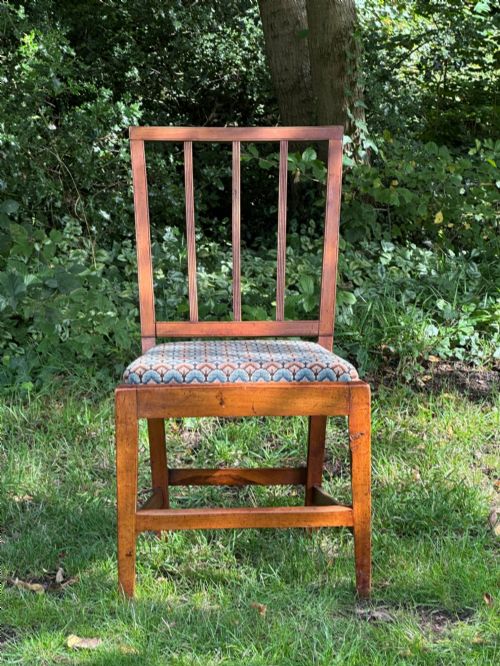
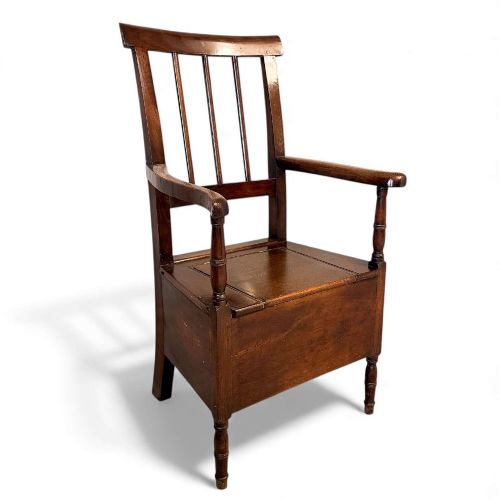


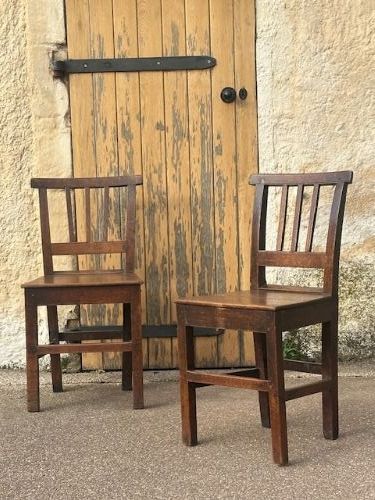


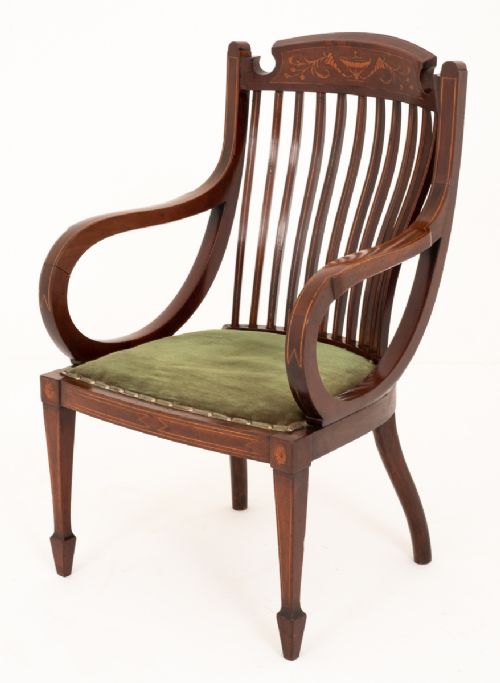
Georgian Slatted Back Chair
A georgian slatted back chair brings tactile warmth and honest country craft straight into a modern interior.
Georgian Slatted Back Chair
A georgian slatted back chair encompasses robust vernacular seating alongside refined formal dining forms produced across the long eighteenth century and into the nineteenth century. Buyers encounter everything from simple elm country armchairs to sets of mahogany dining chairs and occasional corner chairs.
The regional variety is wide, spanning English pieces to Scottish vernacular examples and Welsh oak armchairs. Regional workshops shaped local timbers into distinct regional patterns that survive in domestic settings today.
How they were made
Cabinet makers and vernacular joiners utilised solid woods such as mahogany, oak, elm, birch and walnut. These timbers were often locally sourced, particularly in regional workshops where elm and oak predominated.
Joinery techniques relied on sturdy pegged joints, turned spindles and steam-bent wooden slats to create resilient frameworks. Seats were frequently fitted with drop-in pads upholstered in leather, velvet, fabric or tapestry.
Listings span the eighteenth and nineteenth centuries, featuring mahogany, oak, elm and birch across dining, armchair and corner chair forms.
What varies in quality
Quality rests on the integrity of the timber selection and the retention of original structural surfaces. Untouched timber with deep patination commands greater attention than heavily restored frameworks.
The harmony of proportion and the crispness of vernacular joinery separate ordinary utilitarian seating from pieces demonstrating accomplished regional craftsmanship.
The Georgian Slatted Back Chair Glossary
- Vernacular
- Unpretentious furniture made by local craftsmen for everyday domestic use rather than following metropolitan high style. It often employs regional timbers and practical construction methods.
- Commode chair
- An enclosed seat designed with a concealed interior receptacle for chamber pots. These pieces were standard bedroom or dressing room furniture before plumbed sanitation.
- Corner chair
- A square-plan seat designed to fit neatly into room angles, featuring a diagonal orientation for the sitter. They typically have a semicircular top rail supported by turned columns and a central splat.
- Elm
- A durable, tough timber frequently utilised for vernacular country seating due to its resistance to splitting. It possesses a characteristic interlocking grain that makes it difficult to work.
- George III
- The period of British design spanning from seventeen sixty to eighteen twenty, noted for refined classical restraint and the extensive utilisation of mahogany.
Georgian Slatted Back Chair: Frequently Asked Questions
How do I care for antique wood?
Maintain antique timber by keeping it away from direct heat sources and sudden humidity fluctuations. Apply a traditional beeswax polish sparingly to nourish the dry grain.
Avoid modern silicone sprays which can damage the historic surface sheen over time.
Can I use these for dining?
Many of these pieces were originally constructed as dining sets and remain entirely suitable for daily meal times. Ensure the structural joinery is secure before regular use.
Pairing antique chairs with a sturdy table brings historical character directly into a modern dining room.
How do I identify regional styles?
Regional pieces often reveal themselves through local timber choices, such as Welsh oak or Scottish birch. Construction details and vernacular turning methods also point to specific geographic workshops.
Comparing the proportions and joinery habits helps pinpoint whether a chair originated in the country or a metropolitan centre.