




Oak Box Armchair
An oak box armchair is a solid vernacular seat built to keep out draughts, combining sturdy timber construction with enclosed sides.
Oak Box Armchair
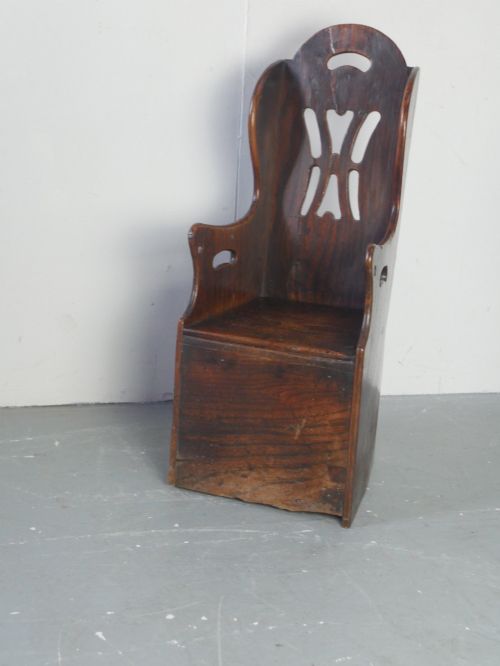
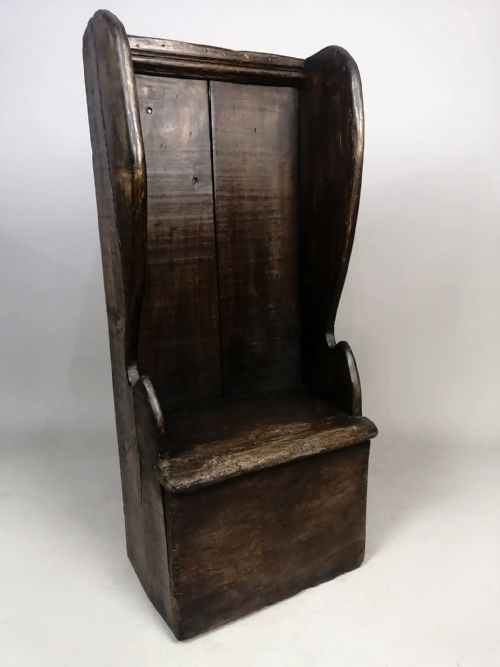
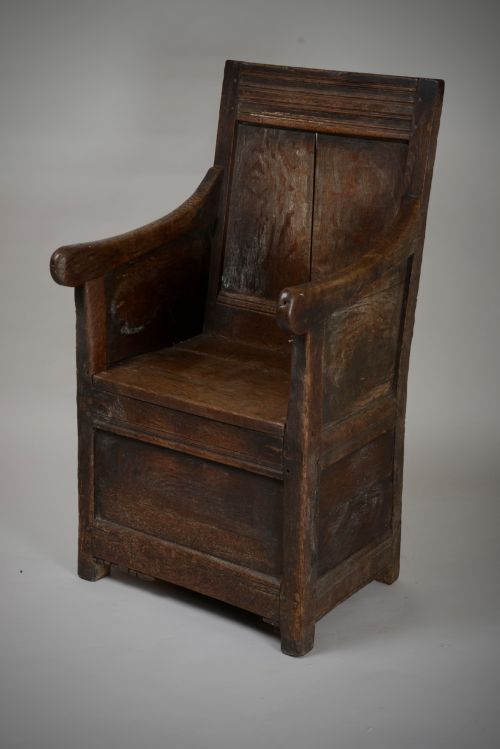
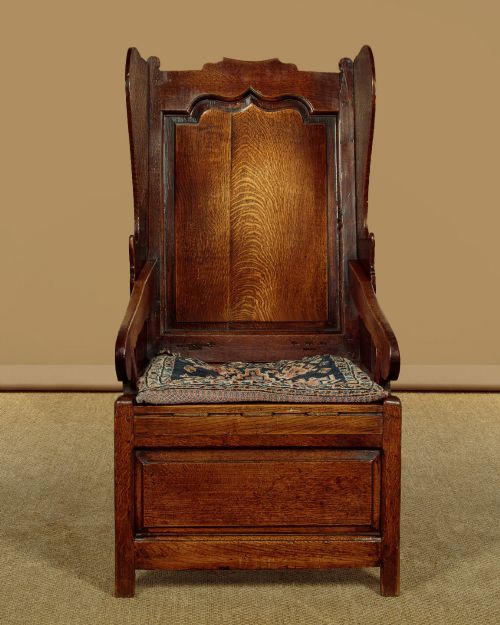
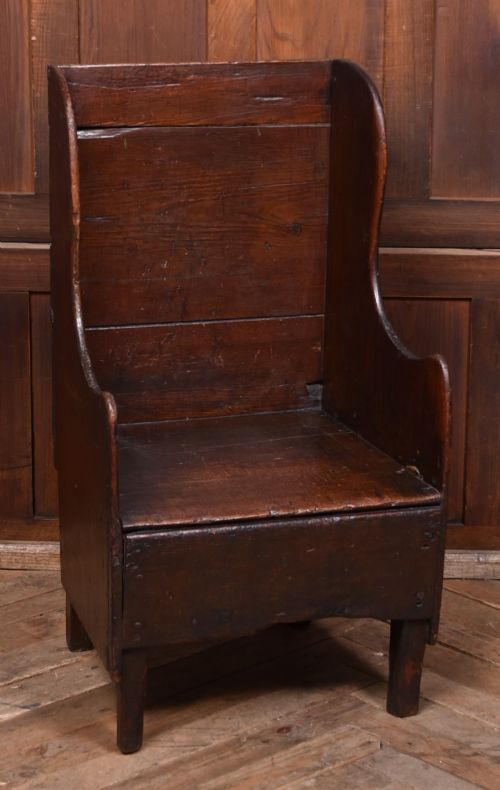
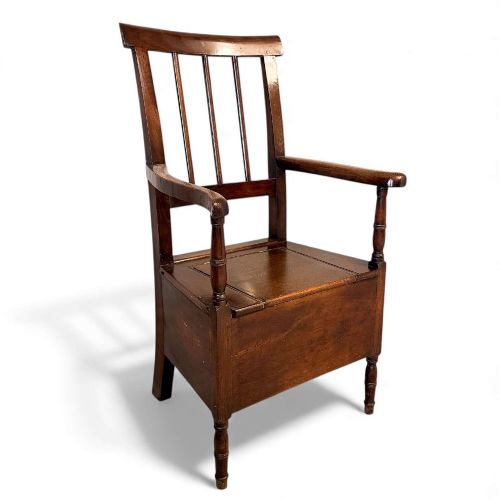
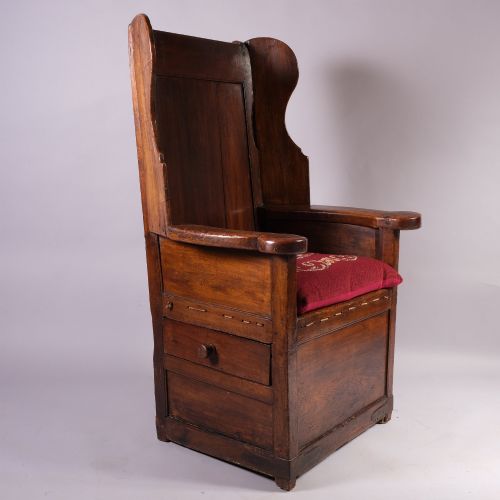
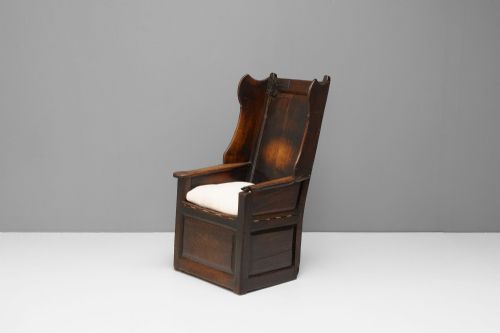
An oak box armchair is a traditional form designed for warmth and utility, featuring enclosed sides or a box-like seat structure that shelters the sitter from cold rooms. When you explore this selection, you encounter pieces spanning from the sixteenth century through the nineteenth century, reflecting regional vernacular traditions across England, Wales, Scotland, and the Netherlands. The typical specimens range from sturdy child-sized lambing chairs to full-sized enclosed armchairs and commode variants.
The materials and styles visible in these listings point heavily toward country workshops rather than metropolitan cabinet makers. You find robust examples in 17th century vernacular, Elizabethan, Jacobean, and Georgian country styles, often constructed with panelled box seats or high winged hoods. These chairs served practical domestic roles in farmhouses and cottages, evolving from simple enclosed seats into specialised forms like commode chairs and lambing chairs.
Judging quality and integrity
The distinction between ordinary and superior pieces rests on the integrity of the timber and the retention of original structural elements. Chairs that retain their early panelwork, original box bases, and untouched surface patination command greater appreciation than those with extensive timber replacement or aggressive re-polishing. The harmony of regional proportions, particularly in specialised forms like lambing chairs and commode variants, defines the aesthetic merit of the piece.
Makers working in provincial idioms relied on straightforward joinery, yet the precision of the cuts and the thickness of the oak panels signal the workshop's standards. Surviving examples that demonstrate honest wear without major structural compromise represent the pinnacle of this vernacular tradition.
Some seventeenth-century chairs carry the initials of early owners carved directly into the oak panels, recording a personal mark from over three hundred years ago.
The Oak Box Armchair Glossary
- Lambing chair
- An enclosed armchair featuring high wings and a solid box-like lower section designed to shield the occupant from draughts. This form frequently appears in 18th century and earlier country settings.
- Commode chair
- A seated chair incorporating a concealed chamber pot or enclosed pan within the box seat structure. Early Georgian and 18th century examples often disguise this utility beneath panelled lids.
- Vernacular furniture
- Objects made by local jobbing carpenters and regional joiners rather than urban guild cabinet makers. These pieces prioritise utility and local timber availability over fashionable London trends.
- Box stretcher
- A horizontal framework connecting the lower legs of a chair on all four sides to provide structural rigidity. This feature is common in heavier oak and fruitwood seating.
- Panelled construction
- A method of framing thin panels of timber within grooved stiles and rails to allow for natural wood expansion and contraction. It forms the solid sides and base of enclosed armchairs.
Oak Box Armchair: Frequently Asked Questions
What is a lambing chair?
A lambing chair is a traditional vernacular armchair with high panelled sides and a hooded top designed to block cold draughts in farmhouse interiors. They often include a solid box base beneath the seat.
These chairs date across the 17th and 18th centuries, serving as functional seating near the hearth where warmth mattered most.
How do I date an oak box armchair?
Dating relies on examining the joinery methods, tool marks, timber shrinkage, and stylistic details such as panel mouldings and leg turns. Sixteenth and seventeenth-century pieces show heavy pegged framing and simpler panel construction.
Later Georgian and nineteenth-century examples often incorporate refined proportions or functional adaptations like integrated commode compartments while retaining the basic box form.
Were these chairs used for storage?
The boxed base beneath the seat of many early armchairs naturally created an enclosed cavity, though its primary purpose was structural stability and draught exclusion rather than active storage.
In commode variants, this same enclosed space housed a sanitary pan, demonstrating how domestic utility dictated the internal design of the box seat.
Where were oak box armchairs made?
These chairs originated in regional workshops across England, Wales, Scotland, and the Netherlands, reflecting local rural building traditions rather than centralised manufacturing. Welsh, Lakeland, and Scottish country makers produced distinct regional variants.
Local timber availability determined whether the builder used native oak, elm, walnut, or fruitwood for the frame and panels.
How should I care for antique oak?
Antique oak requires a stable indoor environment away from direct heat sources and dramatic humidity fluctuations that cause timber to split. Regular dusting with a soft cloth preserves the dry-scraped or waxed surface patination.
Avoid modern silicone polishes, applying traditional beeswax sparingly only when the wood appears dry to maintain its natural finish.