



1930s Hall Table
A 1930s hall table brings architectural presence to an entrance, offering surface space and period character.
1930s Hall Table
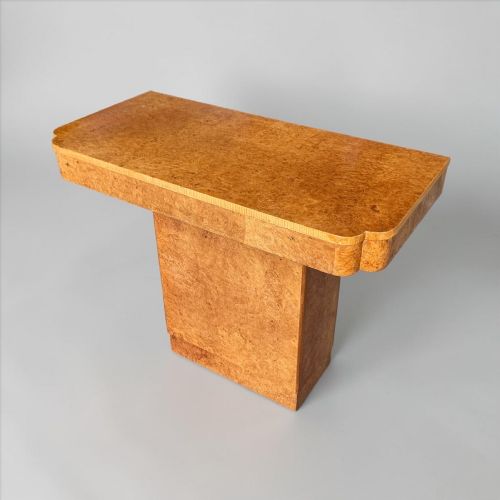
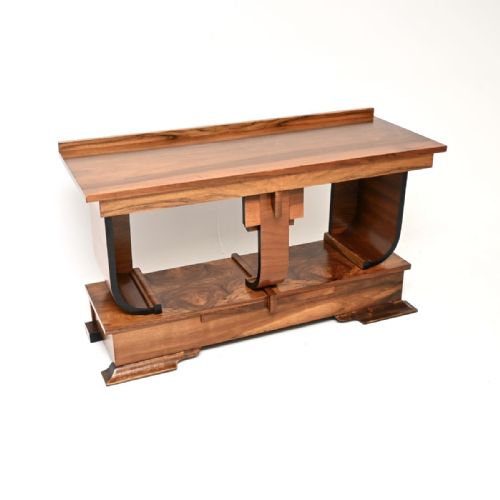
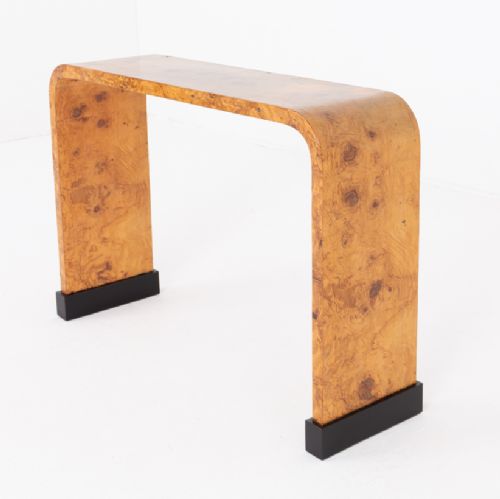
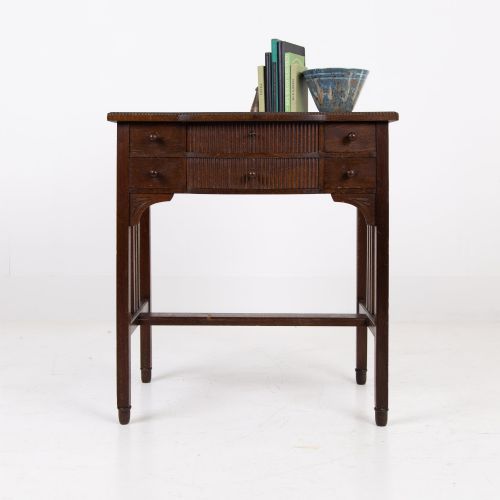
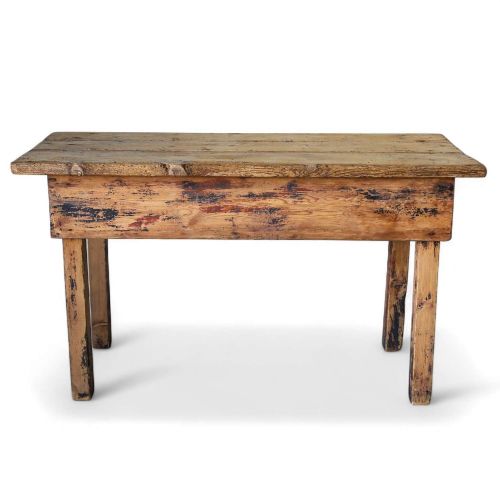
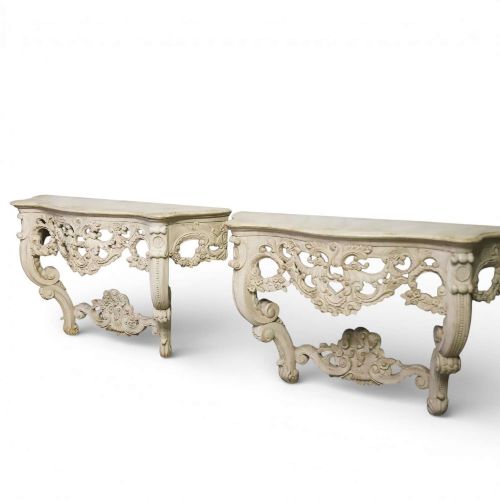
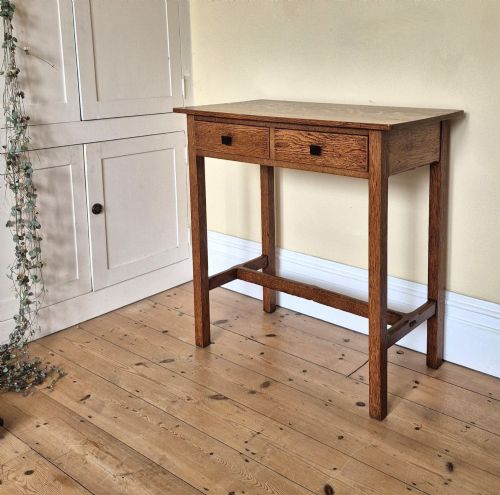
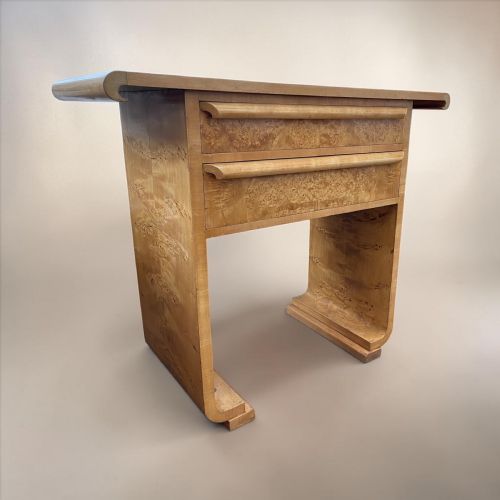
A 1930s hall table serves as a functional centrepiece for an entrance, appearing primarily in console, side, and centre table forms. These pieces often adopt the bold geometric lines of Art Deco or the traditional mass of Jacobean Revival and rustic farmhouse styles.
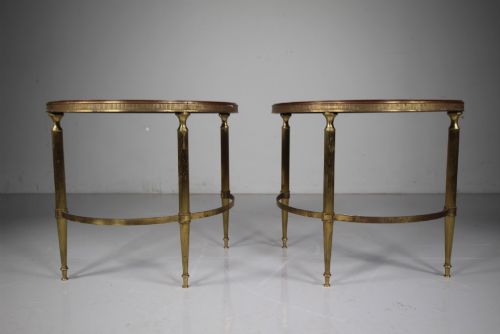
The materials span from rich figured walnut and burr walnut to solid oak, mahogany, elm, and birch, frequently accented with brass or marble tops. Workshops produced these items to suit narrow corridors as well as grander vestibules.
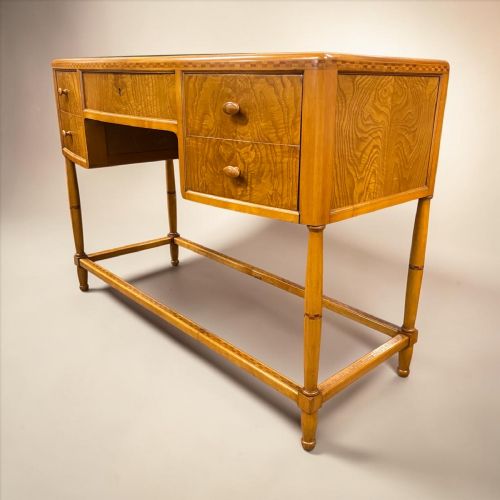
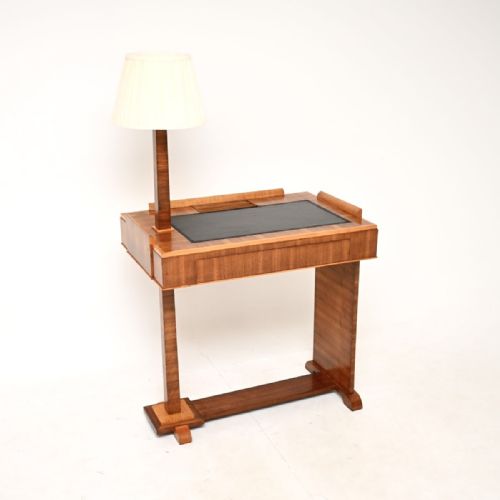
Buyers will encounter console tables with integrated lamps, side tables with barley twist legs, and trestle designs. Origins range from British workshops to French and Scandinavian makers.
How they were made
Cabinetmakers utilised dense timbers such as walnut, oak, and mahogany, often applying burr walnut or sycamore veneers to create striking grain patterns on table tops. Hand-carved details and inlaid birch appeared alongside painted finishes.
Structural elements incorporated brass fittings, leather inserts, and marble surfaces set into timber frames. Artisans built these tables using traditional joinery combined with early modernist techniques.
The furniture spans Art Deco, Jacobean Revival, Arts and Crafts, and Rustic Farmhouse styles.
What varies in quality
The grade of timber veneer dictates much of the visual appeal, with highly figured burr walnut and exotic ebony macassar representing the upper tier of craftsmanship. Superior examples display seamless matching of grain across broad console surfaces.
Execution of carved ornamentation and the integration of functional elements, such as built-in lighting or fitted drawers, separate standard production pieces from high-end workshop commissions.
Hille·Fortnum and Mason·Hubert Simpson of Kendal·Elkington and Co
The 1930s Hall Table Glossary
- Console table
- A table designed to stand against a wall, frequently supported by brackets or decorative legs. These pieces suit narrow hallways where floor space is limited.
- Art Deco
- A design style emerging in the interwar period characterised by sleek geometric shapes, stylised motifs, and modern industrial materials.
- Burr walnut
- A wood harvested from the abnormal growth of a walnut tree, yielding complex, swirling grain patterns highly prized by cabinetmakers.
- Demi lune
- A half-moon shape used for small tables designed to fit flush against a wall.
- Barley twist
- A carved wooden furniture leg shaped in a helical spiral resembling twisted barley sugar.
1930s Hall Table: Frequently Asked Questions
Where should I place a 1930s hall table?
These tables fit naturally in entrance halls and narrow corridors against flat walls.
Console and side variants take up minimal depth while providing a surface for daily items.
How do I identify an Art Deco hall table?
Look for symmetrical geometric forms, stepped outlines, and rich veneer surfaces such as walnut or ebony.
Many examples abandon traditional floral carving in favour of streamlined, modern silhouettes.
Did 1930s hall tables use solid wood or veneer?
Cabinetmakers utilised both solid timbers like oak and mahogany alongside structural carcases covered in figured walnut or burr veneer.
Veneering allowed workshops to display striking decorative grain patterns across wide table tops.
What is the difference between a console and a centre table?
A console table stands flat against a wall and often relies on wall support or two front legs.
A centre table is freestanding and finished on all sides to sit in the middle of a room.