



1930s Glass Shade
A 1930s glass shade brings the geometric lines and luminous textures of the interwar period directly into a modern room.
1930s Glass Shade
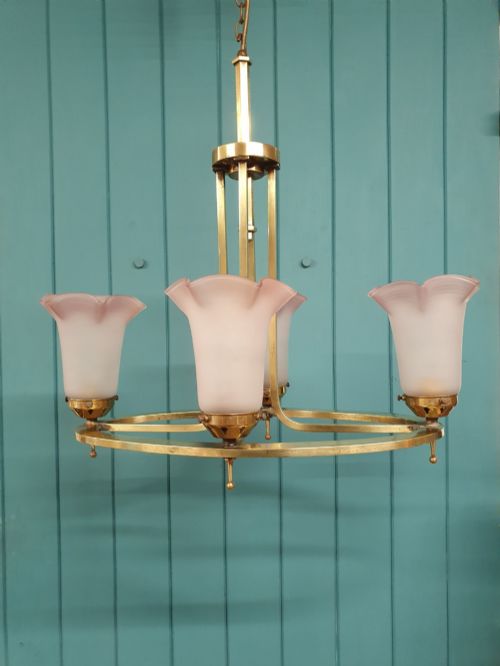
A 1930s glass shade represents the lighting hardware and diffusers produced during the Art Deco era, appearing as slip shades, pendants, and table lamp fixtures. These pieces reflect the dominant design language of the 1930 period, favouring symmetry and clean geometric forms over Victorian clutter.
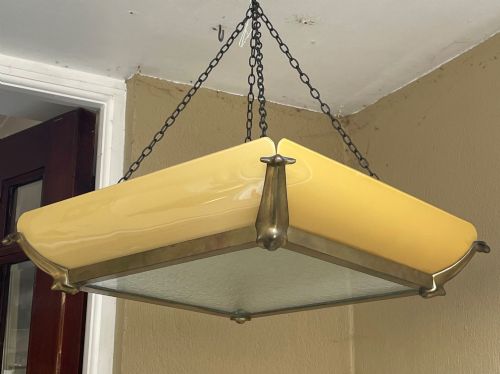
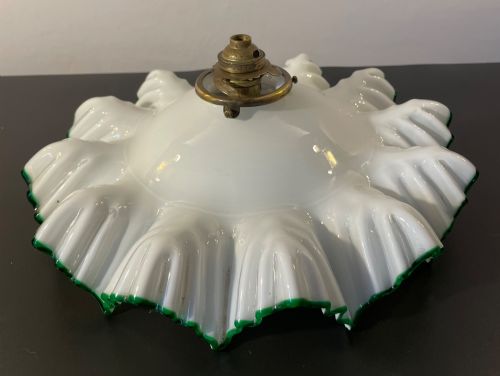
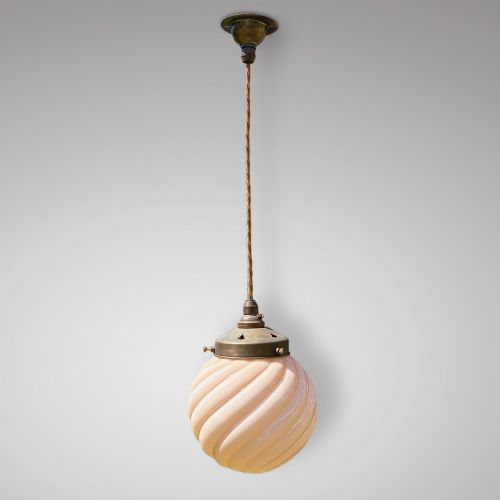
The version most commonly met on this page is the pendant or ceiling light shade cast in opaline, frosted, or opalescent glass. Such pieces were designed to soften the glare of early electric bulbs while casting a warm, even glow across a room.
Materials and construction methods
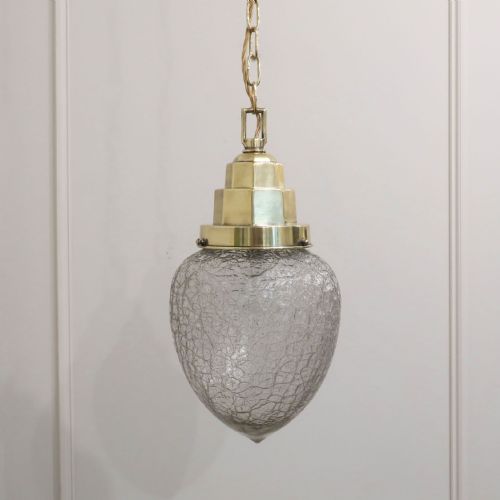
Glass production in this decade relied heavily on moulding and pressing techniques, producing heavy frosted, crackle, and opaline surfaces. Manufacturers often utilised cast metal, brass, and chrome galleries to support the weight of the thick glass diffusers.
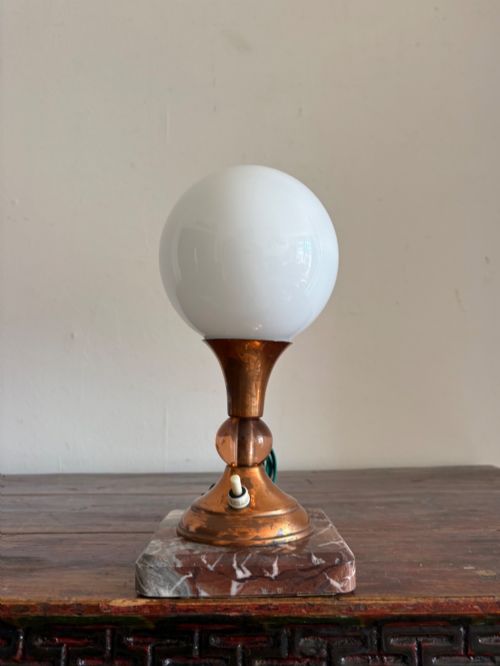
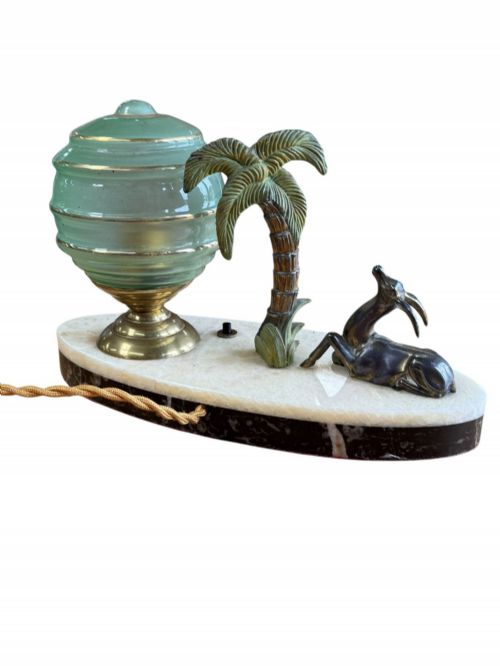
Many shades feature intricate surface textures or geometric patterns achieved through specialised mould-blowing and acid-etching. Bases and mounting hardware paired the glass with marble, wrought iron, or nickel elements to complete the fixture.
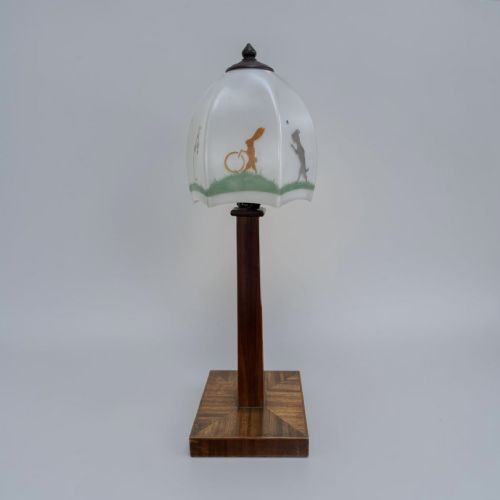
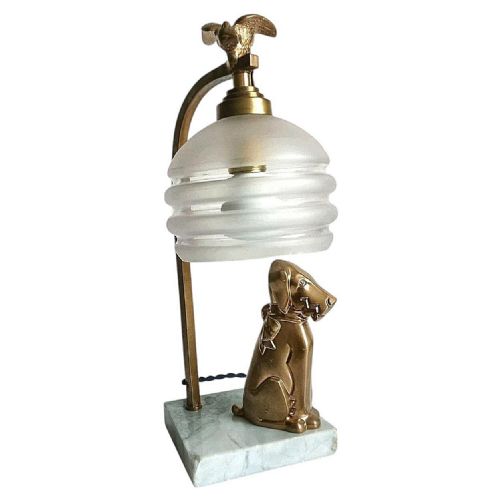
Several playful table lamps feature novelty dogs and parrots keeping watch beside the glass.
Distinguishing quality in interwar lighting
Quality rests in the weight and clarity of the glass, alongside the precision of the moulding. Thicker opalescent and frosted pieces display a deeper diffusion of light compared to thinner, more utilitarian pressings.
The integration of the supporting metalwork, whether cast brass, nickel, or wrought iron, dictates the overall integrity of the piece. Superior examples maintain crisp, unrubbed decorative details on both the glass body and its mounting collar.
Émile-Jacques Ruhlmann·Daum·Muller Bros·Degue
The 1930s Glass Shade Glossary
- Opaline glass
- A milky, semi-translucent glass developed to diffuse light softly without heavy glare. It appears frequently in pendant and table lamp shades from the period.
- Slip shade
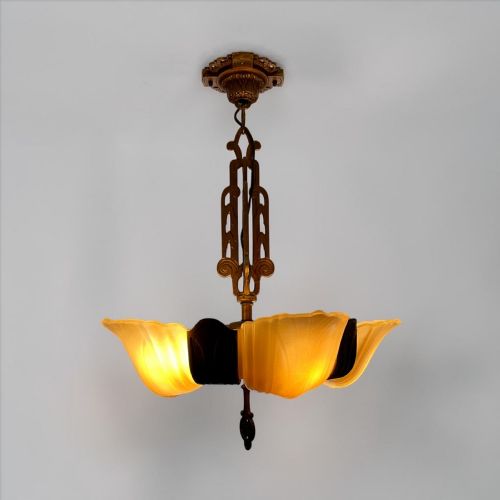
- A moulded pane of glass designed to slide directly into a metal frame or multi-arm ceiling fixture. These pieces form the characteristic stepped profiles of American Art Deco lighting.
- Pendant light
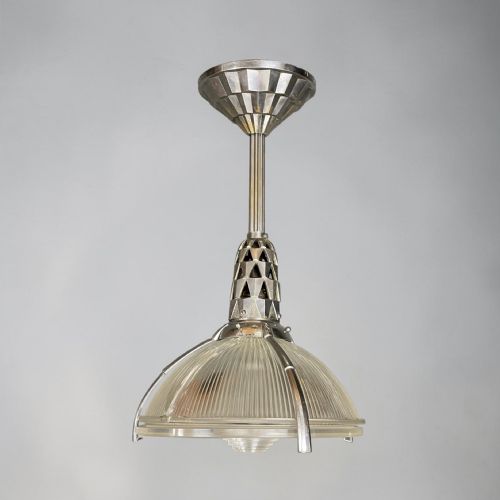
- A hanging light fixture suspended from the ceiling by a cord, chain, or metal rod. The glass shade directs illumination downwards or diffuses it outward.
- Torchiere
- A tall floor lamp designed to cast light upwards towards the ceiling. The associated shade concentrates the beam vertically to provide ambient illumination.
- Plafonnier
- A ceiling-mounted light fixture set flush or close to the plaster surface. These shallow glass bowls sit tightly against the ceiling rose.
1930s Glass Shade: Frequently Asked Questions
How do I hang a vintage shade safely?
Most ceiling shades require a standard brass or chrome gallery to secure the top rim of the glass. Ensure the fitter size matches your suspension cord and that the electrical components are tested by a professional.
Because 1930s glass can be heavy, check the weight capacity of your ceiling hook before installation. Using a certified electrician guarantees the vintage hardware meets current safety standards.
Can I use modern LED bulbs?
Modern LED bulbs work exceptionally well with these glass shades because they emit very little heat. This protects fragile vintage glass from thermal stress over prolonged periods of use.
Opt for warm white LED filaments to replicate the soft glow of 1930s electricity. The frosted and opaline surfaces will diffuse the light evenly without harsh hotspots.
How do I clean frosted and opaline glass?
Wash the glass gently in lukewarm water using a mild, non-abrasive dish soap. Avoid harsh chemical cleaners that might strip the original surface finish or vintage patina.
Dry the shade thoroughly with a lint-free microfibre cloth to prevent water spots. Handle heavy moulded pieces with both hands, supporting the base rather than the rim.
How do I date a 1930s lighting fixture?
Examine the mounting hardware for signs of period manufacturing techniques, such as heavy brass, nickel plating, or wrought iron. The presence of slip-moulded or opalescent glass typically points directly to the interwar decades.
Stylistic cues like stepped motifs and geometric symmetry confirm the Art Deco influence. Makers' signatures etched near the rim of the glass offer the most direct confirmation of origin.