


Geometric Glass Lamp
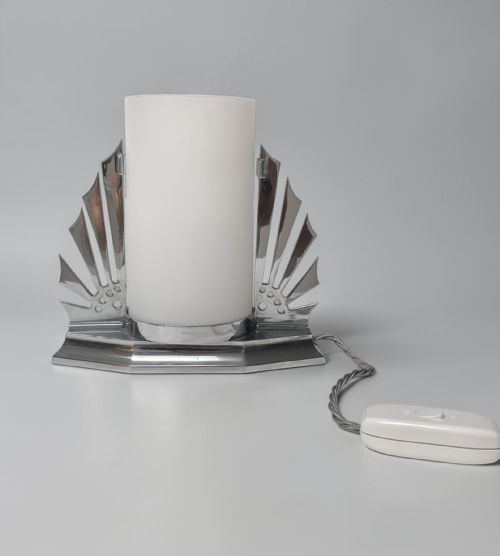
These geometric glass lamps bring sharp angles and diffused light straight from the interwar decades into modern rooms.
Geometric Glass Lamp
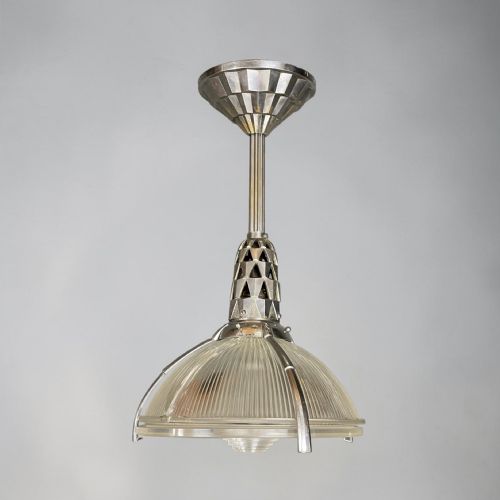
A geometric glass lamp combines angular forms with substantial glass shades, spanning table lamps, wall lights, and pendant fixtures. When searching for a geometric glass lamp, buyers encounter pieces primarily anchored in the Art Deco style alongside select 20th Century and Mid-Century Modern designs.
The majority of these pieces originate from the 1920s, 1930s, and 1940s, capturing the mechanical optimism of the period through stepped profiles and symmetrical arrangements. Table lamps and ceiling lights dominate the selection, often pairing heavy moulded or frosted shades with architectural bases.
Earlier examples bridge the nineteenth-century traditions into the new century, while later pieces embrace bold zig-zag motifs and skyscraper silhouettes. Every version relies on the interplay of structured illumination and hard lines to define its presence in a room.
Materials and construction
Makers shaped heavy glass through moulding and frosting techniques to scatter light evenly while obscuring the bulb within. Coloured glass, including peach tones, added depth to the geometric facets.
Metalwork provided the rigorous structural frame for the glass panels, utilising chrome, brass, copper, and wrought iron. Bakelite and mahogany also appeared as base materials, grounding the luminous shades with contrasting solid textures.
Listings for a geometric glass lamp feature pieces predominantly dated to the 1920s and 1930s, constructed from moulded glass, chrome, and brass.
Evaluating craftsmanship and design
Quality rests on the crispness of the glass moulding and the integration between metal mounts and glass panels. Superior examples display precise symmetry in stepped or skyscraper forms without relying on surface decoration alone.
The choice of secondary materials dictates the overall finish, where solid patinated brass or heavy chrome plating elevates a piece above standard production. Maker attribution through signed shades or documented workshop designs further separates exceptional lighting from standard commercial output.
Émile-Jacques Ruhlmann·Muller Bros·Karl Palda·Walther and Sohne
The Geometric Glass Lamp Glossary
- Pendant light
- A lighting fixture suspended from the ceiling by a cord, chain, or metal rod. These units direct illumination downwards over tables or open spaces.
- Frosted glass
- Glass treated with acid or sandblasting to create a textured, opaque surface. This finish softens harsh glare while preserving luminous intensity.
- Bakelite
- An early synthetic thermosetting plastic moulded into switches, bases, and decorative elements. Its dark, dense finish is characteristic of interwar electrical goods.
- Skyscraper style
- An architectural design trend celebrating towering vertical setbacks and stepped profiles. Lighting fixtures in this mode mimic the silhouette of modern skyscrapers.
Geometric Glass Lamp: Frequently Asked Questions
How do I date a geometric glass lamp?
Dating relies on stylistic markers such as stepped skyscraper tiers or organic motifs, alongside the primary materials used in the base. Chrome and Bakelite points strongly towards the interwar decades.
Examining the wiring methods and construction fixings offers additional clues regarding the period of manufacture. Earlier pieces from the turn of the century tend to use heavier patinated brass frames.
Where should I place a ceiling light version?
Ceiling lights and plafonniers suit hallways, landings, or rooms with standard ceiling heights where flush or semi-flush installation is required. Their diffused glass shades spread ambient light evenly across the space.
Pendant variants work effectively suspended above dining tables or reading areas where direct downward illumination is desired. The geometric glass softens the light source to prevent harsh shadows.
Are these lamps suitable for daily use?
These lamps function well for daily lighting when fitted with modern compatible bulbs that respect the wattage limits of the original fittings. Many pieces provide both direct task lighting and soft background ambience.
Rewiring may be necessary for safe integration into contemporary electrical systems. Professional installation ensures the vintage metal and glass components remain secure.
What distinguishes Art Deco from earlier styles?
Art Deco lighting embraces strict symmetry, industrial chrome plating, and sharp zig-zag angles rather than the flowing organic lines of earlier periods. The focus shifts toward mechanical precision and modern geometric forms.
Earlier Arts and Crafts or turn-of-the-century designs prioritised visible handcraftsmanship and patinated brass. By contrast, the 1920s and 1930s celebrated mass production aesthetics and streamlined silhouettes.