
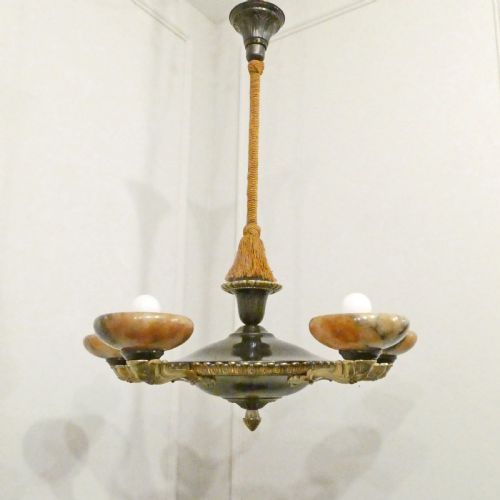


Art Deco Bowl Pendant
These art deco bowl pendant fixtures are striking ceiling lights designed to suspend shallow glass or stone basins from cords or metal chains.
Art Deco Bowl Pendant
An art deco bowl pendant is a suspended ceiling light featuring a shallow basin or dish suspended from above. These fixtures illuminate rooms with a diffused, downward glow suited to interwar interiors.
The selections available range from alabaster dishes hung on brass suspension wires to opalescent glass shades and pink clam shell chandeliers. Most examples date from the 1920 and 1930 decades, capturing the distinct geometric and streamlined ethos of the period.
Pendant lights and ceiling light fittings take several distinct forms, including plafonniers and multi-tiered chandeliers. English and Swedish workshops both contributed notable carved stone and frosted glass variations to this category.
Materials and construction
Glass techniques of the era include opalescent, frosted, mirrored, and pink glass moulded into clam shell or plain dish shapes. Fabric cords also appear as suspension elements, pairing with wood and metal components to support the hanging bowls.
Current listings feature lighting from the 1920 and 1930 periods, incorporating alabaster, brass, bronze, wood, and frosted glass.
Assessing quality in hanging bowl fixtures
Quality rests on the depth of carving in stone bowls and the purity of glass moulding in the shades. Heavy alabaster with distinct natural veining represents a higher standard of manufacture than simpler pressed glass alternatives.
The sophistication of the metalwork determines the overall caliber of the pendant. Patinated brass and cast bronze mounts demonstrate superior craftsmanship compared to plain or generic metal hardware.
The Art Deco Bowl Pendant Glossary
- Alabaster
- A fine-grained stone used for carving translucent bowls that diffuse light softly. It varies in opacity and natural veining.
- Plafonnier
- A ceiling light fixture mounted flush or suspended closely, featuring a bowl-shaped glass or stone shade. This French term applies widely across interwar lighting.
- Opalescent glass
- Glass containing ingredients that create a milky, pearlescent appearance with shifting tones when illuminated. It softens the glare of internal bulbs.
- Patinated brass
- Brass treated to produce a deeper, aged surface finish rather than a bright, polished metallic look. This treatment is common on period suspension hardware.
Art Deco Bowl Pendant: Frequently Asked Questions
How do I hang an art deco bowl pendant safely?
These fixtures require secure anchoring to ceiling joists because alabaster and thick glass bowls carry substantial weight. Professional electrical installation ensures the brass chains and suspension cords bear the load correctly.
Position the pendant at a height that clears head traffic while adequately illuminating the room's centre. Dining tables and hallways remain traditional placements for suspended bowl lights.
What is the difference between an alabaster dish and an opaline shade?
Alabaster is a carved natural stone with dense, opaque qualities and visible mineral veins. It emits a warm, muted glow when lit from within.
Opaline glass is a manufactured material with a milky, translucent finish that scatters light brightly. Glass shades often feature moulded shapes like clam shells or smooth geometric curves.
How do I date an art deco bowl pendant?
Pieces generally originate from the 1920 and 1930 decades, reflecting the design sensibilities of those years. Stylistic markers include streamlined brass hardware, carved stone bowls, and opalescent glass shades.
Examine the suspension materials, such as patinated brass chains and fabric cords, for period manufacturing techniques. English and Swedish variants often display regional working methods distinct to those decades.