
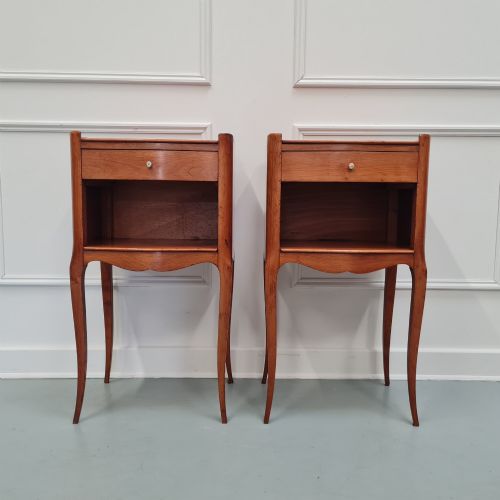


1930s French Side Table
A 1930s French side table brings geometric clarity and rich timber tones into a modern interior.
1930s French Side Table
A 1930s French side table encompasses diverse low surface forms including bedside tables, nesting sets, console tables, and occasional centre tables from the interwar period. These pieces originate primarily from the 1930 style era, though related examples emerge from adjacent decades.
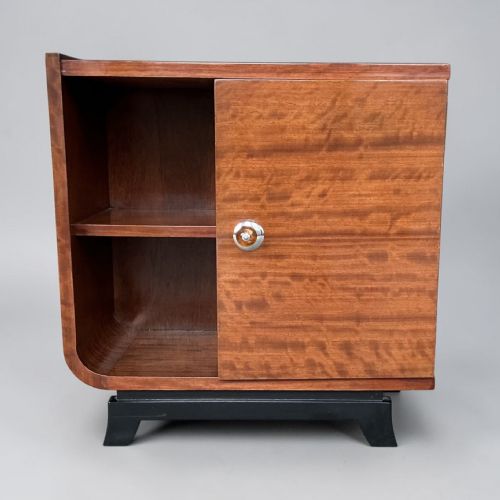
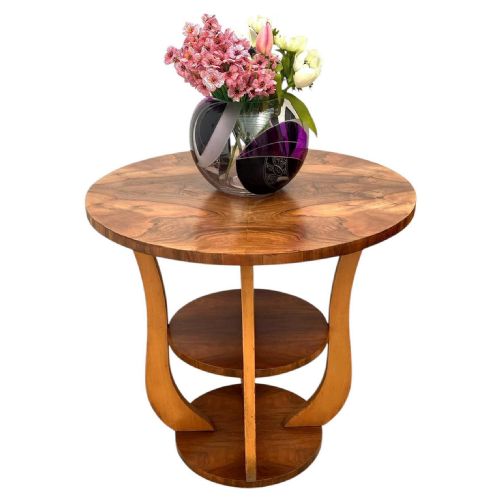
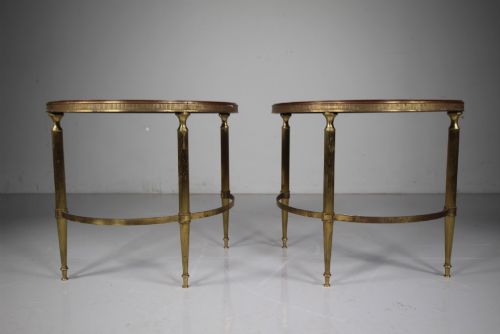
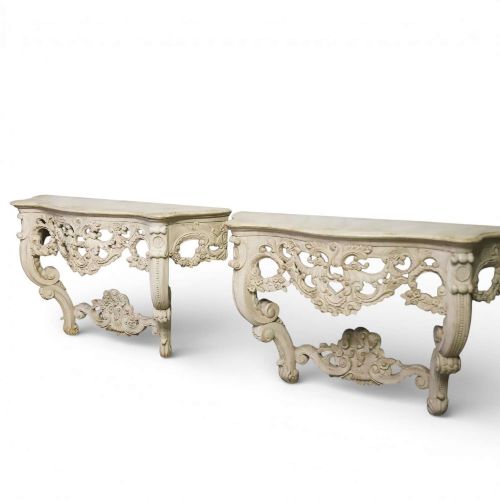
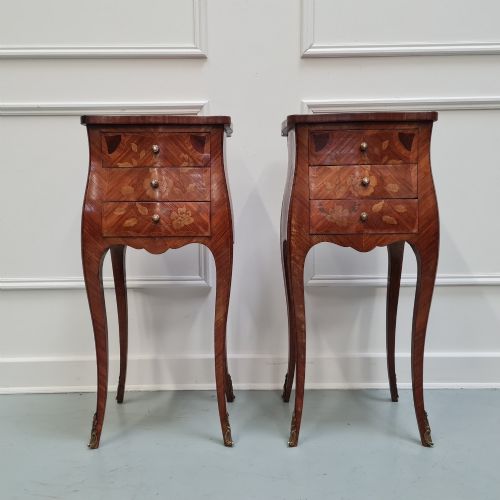
The most common form you will meet on this page is the Art Deco bedside cabinet or side table, often constructed in figured walnut or kingwood. Alongside these, buyers find occasional tables, demi-lune brass pieces, and modernist gueridons designed for practical placement beside seating or beds.
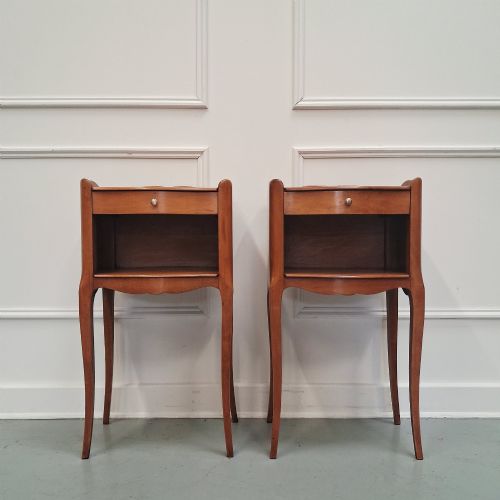
Design vocabulary shifts between streamlined Art Deco geometries and traditional revivals like French Louis XV style, demonstrating how makers blended modernism with historicist nods. Forms range from three-tier occasional tables to serpentine bedside units and nests of four tables.
Materials and construction methods
Makers utilised rich hardwoods such as walnut, kingwood, mahogany, cherry wood, and ebony macassar, often veneered over sturdy carcases to display striking grain patterns. Metal elements in brass, chrome, wrought iron, and nickel appear alongside glass, marble, and fabric.
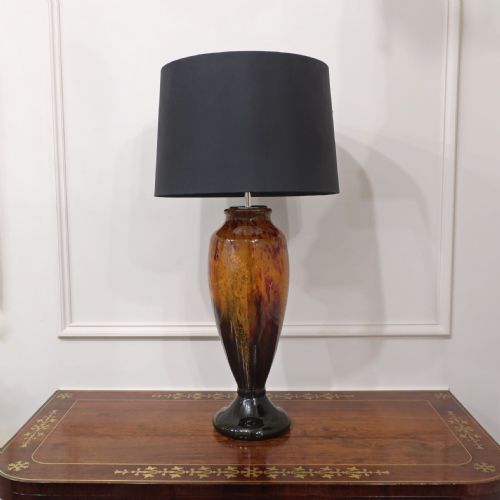
Carpentry techniques combined traditional hand-carving with advanced veneering methods, particularly visible in serpentine fronts and multi-tiered occasional tables. Metalwork was cast or forged to support glass tops and lamp structures, integrating industrial materials with cabinetmaking.
Some tables double as pottery jardinières, ensuring your ferns sit in proper interwar style.
Factors that define quality
Quality rests upon the selection of timbers and veneers, where book-matched walnut or kingwood displays deliberate symmetry and depth. Finishes that preserve the natural lustre of the wood without masking the grain elevate a piece significantly.
Structural integrity and the refinement of secondary materials separate standard items from superior examples. Heavy gauge brass, substantial marble inserts, and precise joinery in drawers and tiers indicate superior craftsmanship.
Charles Schneider·Michel Dufet·Muller Bros
The 1930s French Side Table Glossary
- Art Deco
- A design style dominant in the 1920s and 1930s characterised by sleek geometric shapes, stylised motifs, and modern industrial materials. It replaced heavy historicism with streamlined elegance.
- Demi-lune
- A half-moon shape used for console tables and small side tables designed to sit flush against a wall. This profile saves floor space while providing a functional surface.
- Gueridon
- A small French occasional table, typically round, supported by one or more central columns or legs. Modernist versions from the period embraced functional simplicity.
- Kingwood
- A dense, richly figured tropical timber prized by cabinetmakers for its dark purple-brown colouring and decorative grain. It frequently surfaces on high-end bedside cabinets.
- Serpentine
- A furniture front or edge that curves outward in the centre and inward at the sides. This contour demands advanced woodworking skill to execute cleanly.
1930s French Side Table: Frequently Asked Questions
What defines a 1930s French side table?
These tables are defined by their interwar French origins, merging Art Deco geometry or modernist lines with rich timbers like walnut and kingwood. They include bedside cabinets, occasional tables, and console formats.
Many incorporate contrasting materials such as marble, brass, or glass to achieve a balanced, decorative silhouette suited to compact or grand domestic spaces.
How were these tables used originally?
They served functional roles beside beds, seating arrangements, and hallways as resting places for lamps, books, and decorative objects. Nests of tables offered flexible surface space for entertaining.
Consoles and wall-mounted tables provided decorative anchors in reception rooms, often paired with matching mirrors or lighting fixtures.
How do I fit one into my home?
A side table or bedside cabinet from this era works well beside contemporary or vintage upholstery, adding warmth through figured wood veneers. Their modest footprints suit living rooms and bedrooms alike.
Pairing a walnut or kingwood table with metallic accents like brass or chrome echoes the original material combinations of the 1930s.
How can I tell the period?
Dating relies on stylistic markers such as stepped geometric veneers, modernist ironwork, and characteristic Art Deco silhouettes. Woods like ebony macassar and kingwood point directly to interwar French workshops.
Construction details, including drawer joinery and the use of nickel or chrome alongside traditional timber, confirm the manufacturing era.