

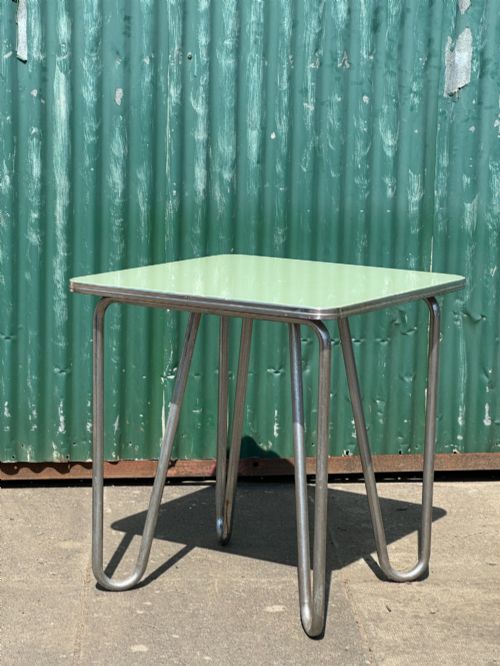
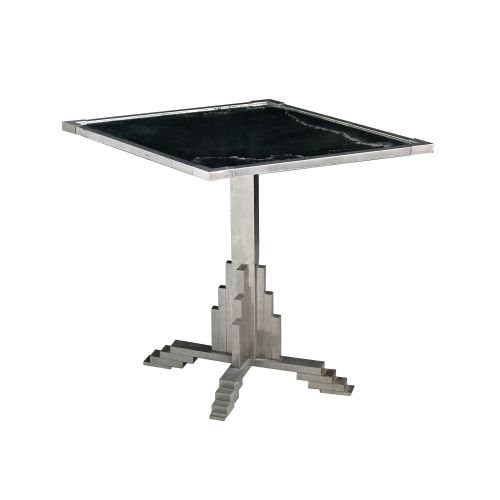


Chrome Side Table
A chrome side table brings gleaming industrial polish to a room, offering sleek modernist geometry and reflective surfaces that catch the light.
Chrome Side Table
A chrome side table typically emerges from the Art Deco and Mid-Century Modern periods, aligning closely with designs from the nineteen-thirties and nineteen-twenties. These occasional pieces encompass compact bedside stands, two-tier display surfaces, and reading stands designed for practical placement beside seating or beds.
The predominant forms reflect French, English, and American modernist aesthetics, combining metallic frameworks with contrasting tops in glass, mirrored glass, walnut, and mahogany. While side tables form the core of the selection, related occasional forms and modernist table lamps share the same period vocabulary.
Buyers encountering this selection meet pieces that bridge functional domestic utility with avant-garde design principles of the early twentieth century. The forms range from straightforward tubular steel frames to tiered architectural constructions.
How they were made
Construction relies heavily on tubular steel and chrome-plated metal to create sturdy, gleaming skeletons. These metallic supports are paired with inset glass panels, mirrored glass, or polished hardwoods such as walnut and mahogany.
Makers utilised precise bending techniques for tubular steel alongside traditional cabinetmaking methods for wooden elements like walnut and mahogany. Surfaces were plated to achieve a durable reflective finish that defines the aesthetic of the era.
What varies in quality
Quality separates standard production items from pieces bearing specific design attribution, such as those associated with known architects or makers like Oliver Percy Bernard and Michel Dufet. Superior examples demonstrate rigorous architectural proportions and sophisticated material combinations, such as dual-tier walnut and chrome configurations.
The refinement of the plating and the precision of the joints distinguish finer works from simpler utilitarian pieces. Exceptional items maintain integrity between the metallic frame and inset glass or timber surfaces.
Oliver Percy Bernard·PEL·Peter Ghyczy·Michel Dufet
The Chrome Side Table Glossary
- Art Deco
- A design style spanning the nineteen-twenties and nineteen-thirties characterised by streamlined geometric forms, sleek materials, and modernist luxury. It dominates the aesthetic of these metallic occasional tables and lamps.
- Tubular steel
- Hollow metal piping bent into structural frames, widely adopted by modernist designers in the nineteen-thirties for furniture construction. It provides both strength and a clean industrial silhouette.
- Gueridon
- A small French occasional table, often round, supported by a central column or legs. The form frequently appears in nineteen-thirties modernist interpretations.
- Occasional table
- A versatile small table intended for specific, temporary uses rather than permanent placement. These pieces include bedside stands and reading tables.
- Mirrored glass
- Reflective glass panels integrated into tabletops to enhance luminosity and visual depth. This material is characteristic of nineteen-twenties and thirties American and European modernist pieces.
Chrome Side Table: Frequently Asked Questions
What periods do these tables come from?
The pieces span the nineteen-twenties and nineteen-thirties, reflecting the height of Art Deco and early modernist design movements.
Occasional items from this era prioritise metallic frames and geometric silhouettes.
How were these tables used originally?
These pieces served as bedside stands, reading supports, and compact occasional surfaces in modern domestic interiors.
Their lightweight metal construction allowed easy repositioning beside seating or beds.
What materials are typical for these tables?
Construction combines chrome-plated metal and tubular steel with inset glass, mirrored glass, walnut, or mahogany tops.
This pairing of cold metal with warm timber creates the characteristic contrast of the period.
How do French designs differ from English ones?
French pieces often embrace avant-garde modernist Gueridon forms and named designer attributions from figures like Michel Dufet.
English and American examples frequently focus on two-tier walnut and chrome combinations or specialised reading stands.