



Metal Pedestal Table
A metal pedestal table anchors a room with structural weight and metallic sheen, bringing functional elegance to a corner or beside a seat.
Metal Pedestal Table
A metal pedestal table brings together a central support shaft and a plateau, appearing frequently across nineteenth-century and twentieth-century periods in forms such as side tables, gueridon tables, plant stands, and occasional tables. These pieces span stylistic movements from Victorian and French Empire to Art Deco and Art Nouveau, reflecting diverse aesthetic choices from their respective eras.
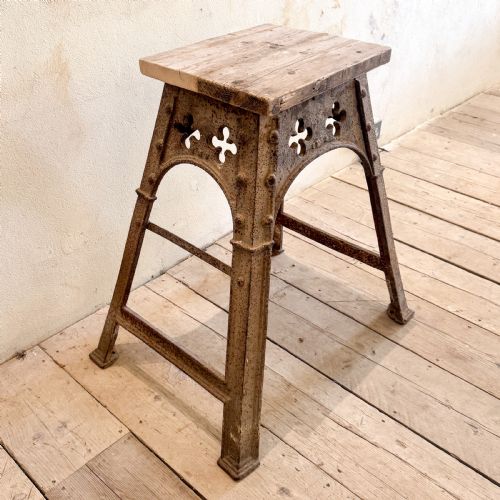
Buyers encounter variations ranging from utilitarian industrial stands to ornate marble-topped variants and polished chrome or brass designs. The selection draws on materials and structural forms recorded from the 1860s through to the 1940s, offering options suited to both classical and modernist interiors.
How they were made
Construction relies on cast iron, brass, bronze, copper, and white-metal, often paired with contrasting elements of marble, glass, onyx, or wood. Artisans utilised techniques such as casting, hammering, and plating to shape the metallic frames and pedestals.
Decorative surfaces display engraved detailing, openwork patterns, and applied ormolu mounts, with stone tops secured to metal columns to create stable, weighted furniture.
Some nineteenth-century makers concealed extra height inside adjustable stands, ensuring every plant found its level.
What varies in quality
Quality rests in the precision of the casting and the crispness of surface ornamentation, distinguishing hand-finished chasing from mass-produced output. The integration between the heavy metal base and the top, whether marble, glass, or onyx, determines the overall solidity and balance.
Material selection dictates distinction, where heavy gauge brass, fine bronze ormolu, and genuine imported marble elevate a piece far above simpler cast iron or plated alternatives.
W M F
The Metal Pedestal Table Glossary
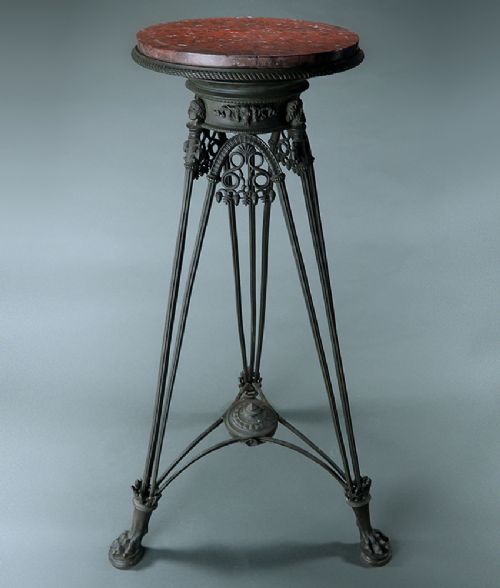
- Guéridon
- A small round table on a central pillar, originating in France during the seventeenth century. These pieces often feature marble tops and gilt or bronze mounts.
- Ormolu
- Gilt bronze produced by applying a finely ground gold-mercury amalgam to a bronze object. The technique creates a rich golden finish characteristic of nineteenth-century French pieces.
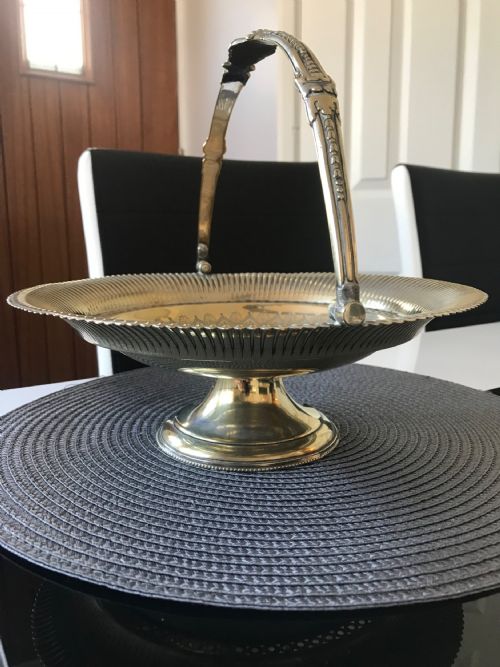
- Tazza
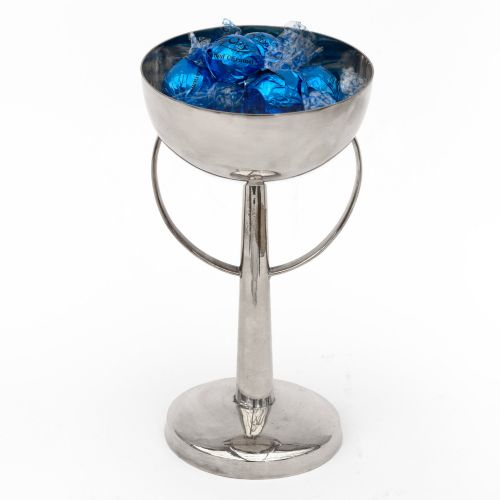
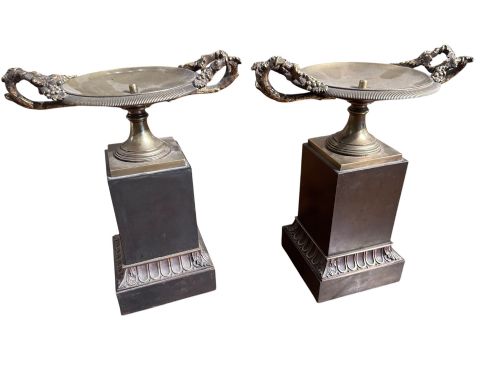
- A shallow saucer-like dish or bowl mounted on a stem and foot, used as a centrepiece or decorative stand. They appear in silver plate, bronze, and glass.
- Jardinere
- A decorative stand or receptacle designed to hold plants or flowers. These items are frequently constructed from brass or copper with supportive pedestal bases.
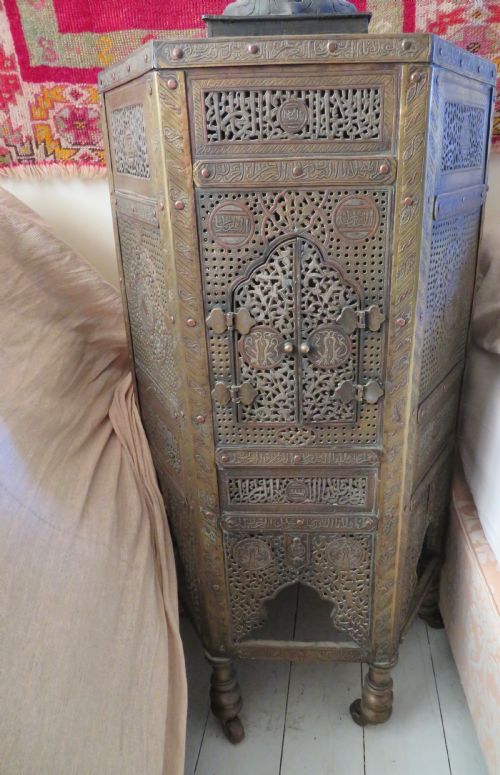
- Cairoware
- Metalwork inlaid with silver and copper, typically originating from Egypt and popular during the late nineteenth and early twentieth centuries. Pieces often feature intricate geometric patterns.
Metal Pedestal Table: Frequently Asked Questions
What is a gueridon table?
A gueridon is a small round table supported by a single central pillar rather than standard legs. These surfaces often incorporate marble tops and serve as decorative side tables or plant stands.
Originating in France, they appear across nineteenth-century designs in materials such as bronze, brass, and gilt wood, providing compact utility.
How do I identify Art Deco metalwork?
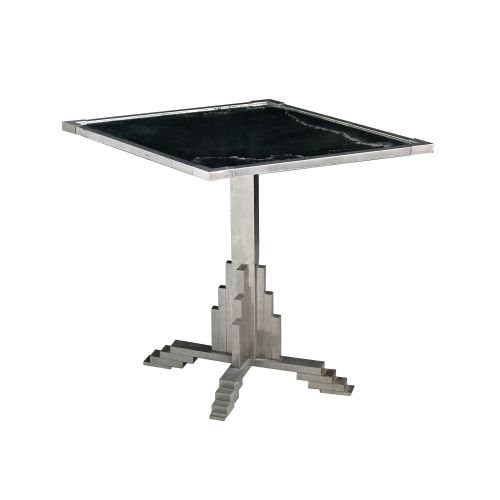
Art Deco metalwork relies on geometric lines, streamlined forms, and modern industrial materials like chrome, polished white metal, and nickel. Designers embraced symmetry and simplified silhouettes during the 1920s and 1930s.
Surface treatments often include contrasting elements like parchment leather, mirrored glass, or Bakelite, moving away from ornate nineteenth-century revivals.
Where should I place a pedestal table?
A pedestal table fits well beside a sofa or armchair as a convenient surface for lamps, drinks, or books. Their single-column design allows them to occupy minimal floor space in hallways or corners.
Smaller plant stands and lamp tables work effectively in conservatories or beside windows, showcasing decorative objects or greenery.
What is ormolu?
Ormolu describes gilded bronze decoration applied to furniture, clocks, and decorative objects. The process involves fusing finely pounded gold to a bronze base using mercury.
This technique produces a bright golden lustre that resists tarnishing, frequently seen on nineteenth-century French Empire and neoclassical tables.