


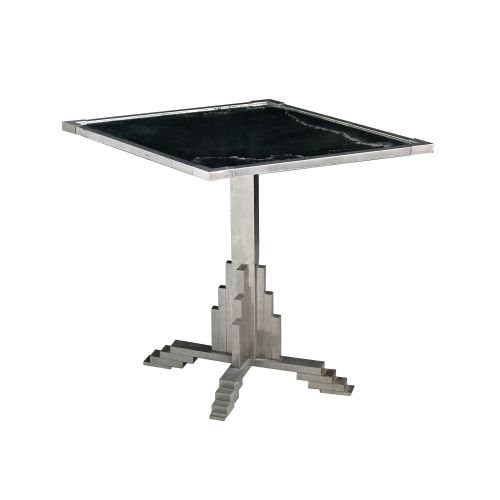

Vintage Chrome Table
A vintage chrome table brings the gleam of the 1930s into a room, offering sleek metal and glass surfaces designed for modern living.
Vintage Chrome Table
A vintage chrome table embodies the sleek lines of the 1930s, alongside designs from the 1920s, 1940s, 1950s, and 1960s. Buyers searching this phrase meet side tables and coffee tables produced during these decades.
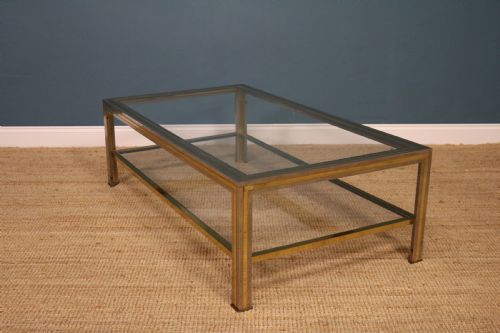
Many examples emerge from the Art Deco and Machine Age periods, often incorporating two-tier surfaces or mirrored tops. These functional pieces reflect the modernist shift towards industrial materials in domestic spaces.
Origins span England, France, and America, connecting buyers to international modernist workshops. The forms range from compact occasional furniture to substantial low tables paired with walnut.
Materials and construction methods
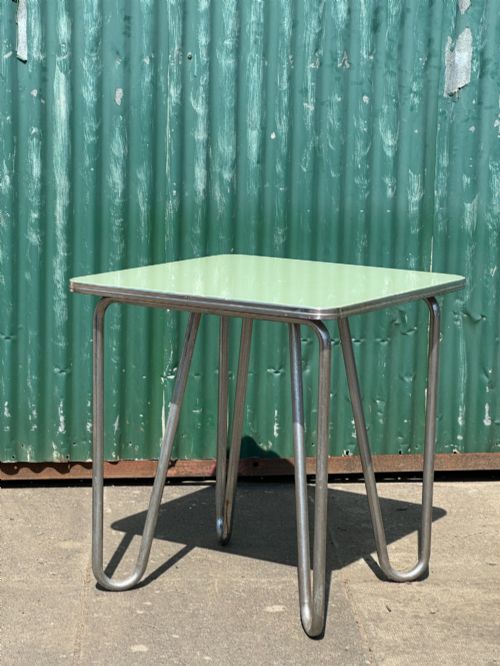
Makers shaped tubular metal and steel into rigid frames, finishing surfaces with a bright chrome plate. This technique gave furniture a durable, reflective shell suited to industrial aesthetics.
Construction frequently combined metal with contrasting elements like walnut timber and glass. Bakelite details and brass accents appear alongside fabric and marble to complete the composition.
A solitary airplane table lighter once sold here, proving that the 1930s appetite for aviation extended right onto the living room furniture.
Distinguishing quality in chrome furniture
Superior examples demonstrate precision in metal bending and joinery, maintaining stability without visual bulk. The depth of the plating and the integrity of the underlying steel dictate longevity.
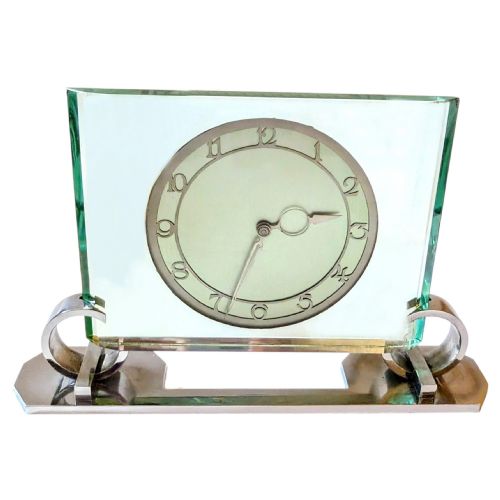
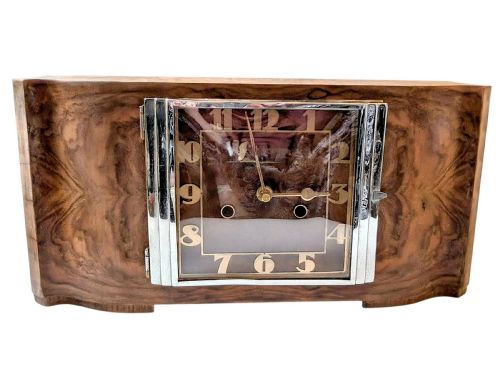
The integration of secondary materials defines the tier of the piece. High-end items pair thick glass, figured walnut, or moulded bakelite with the chrome frame, whereas simpler builds rely on basic sheet metal.
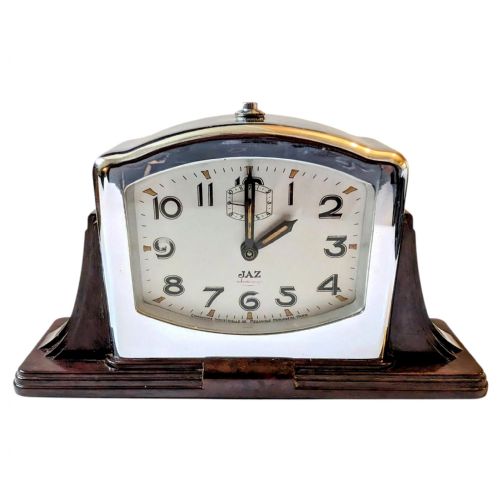
Eileen Grey·Romeo Rega·Oliver Percy Bernard·Jaz·Smiths Clockmakers·Mauthe·Herbert Terry·Elliott·Hagenauer·Smith Clock Company·Mappin and Webb·Harrods of London·Julien Glass·Rudolf Hlousek·DEP·Blangy
The Vintage Chrome Table Glossary
- Chrome plate
- An electrolytic coating of chromium over steel or base metal that provides a bright, corrosion-resistant finish. This process defines the reflective surface characteristic of the era.
- Art Deco
- A design style spanning the 1920s and 1930s marked by geometric forms, streamlined shapes, and modern industrial materials. It dominates the aesthetic of these metal tables.
- Machine Age
- An early twentieth-century design movement celebrating industrial technology, speed, and functionalism. Objects from this era emphasise clean metallic lines.
- Bakelite
- An early synthetic thermosetting plastic frequently moulded into dark knobs, clock housings, and decorative inlays. It provides a tactile contrast to cold metal.
- Two tier
- A furniture configuration featuring a primary upper surface supported above a lower shelf. This layout increases display space on compact occasional tables.
Vintage Chrome Table: Frequently Asked Questions
What periods do these tables represent?
The selection spans several decades, with the 1930s representing the strongest concentration of designs. Pieces also originate from the 1920s, 1940s, 1950s, and 1960s.
Art Deco and Machine Age movements heavily influence the visual vocabulary of this era. Mid-Century Modern and Hollywood Regency styles also appear among the selections.
How do I clean chrome surfaces?
Maintain the metallic finish using a soft cloth and mild soapy water, avoiding abrasive pads that scratch the plating. Dry the metal thoroughly after cleaning to prevent moisture retention.
Apply a specialised metal polish periodically if the manufacturer finish permits. Protect inset glass or walnut sections with appropriate wood and glass cleaners.
Are these tables sturdy enough for daily use?
Constructed from steel and tubular metal frames, these items were built for practical domestic application. Their robust skeletons support everyday items like lamps and books.
Joints and fixings benefit from occasional checks to ensure stability over time. The inclusion of heavy walnut or glass shelves further anchors the overall structure.
How do I identify Art Deco furniture?
Look for geometric symmetry, stepped forms, and streamlined silhouettes that reject Victorian ornamentation. The pairing of polished chrome with rich walnut is a hallmark of the style.
Details often include contrasting materials such as bakelite, brass, and mirrored glass. These elements work together to project an industrial yet luxurious aesthetic.