






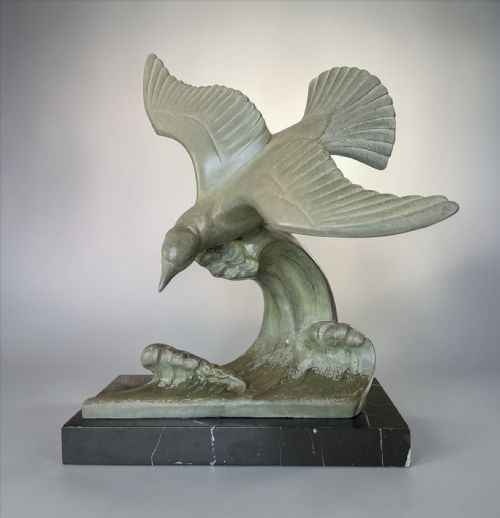


1930s French Figurine
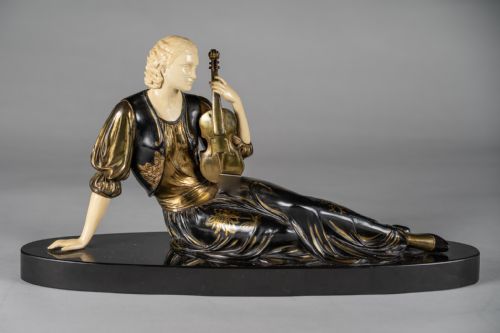
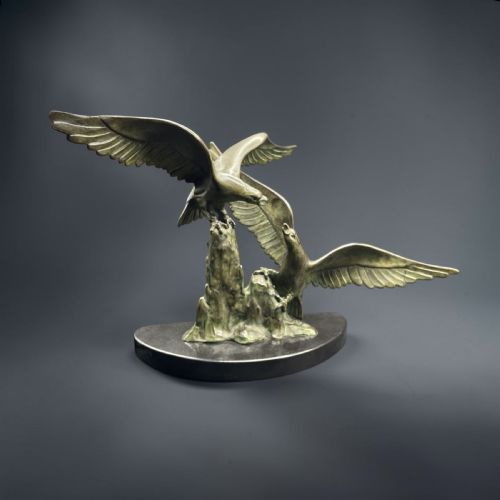
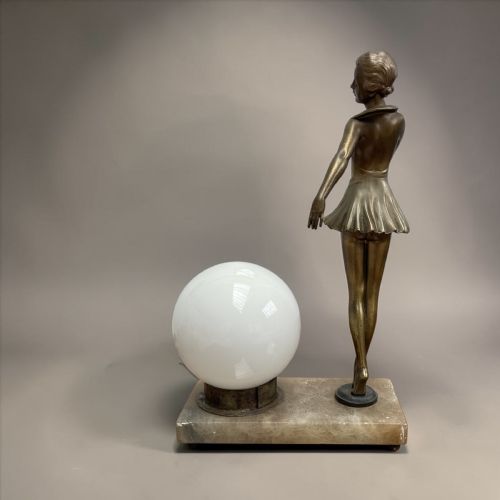
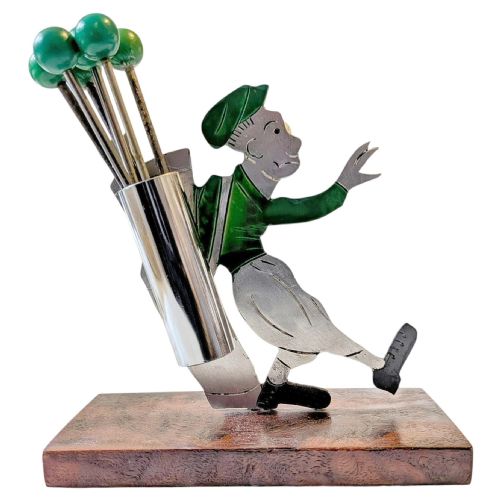
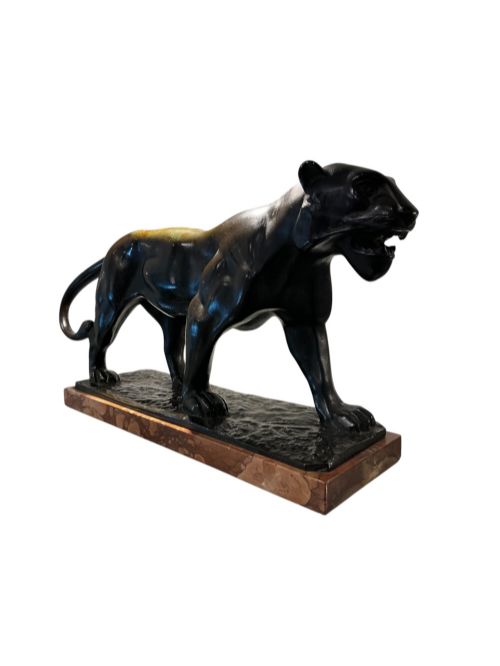
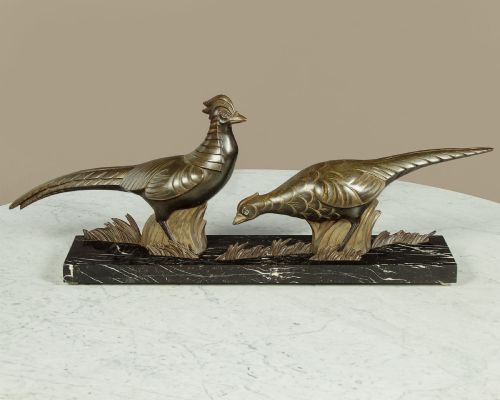
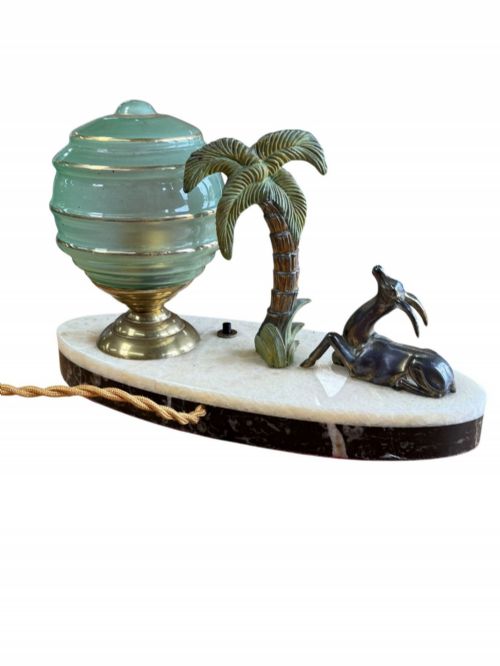
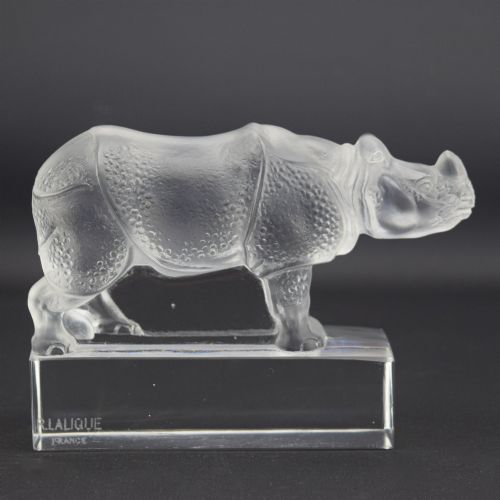
These pieces are a 1930s French figurine, capturing the bold stylisation and dynamic movement of the interwar period.
1930s French Figurine
A 1930s French figurine encompasses bronzes, spelter casts, glazed ceramics, and frosted glass works rooted firmly in the Art Deco idiom. Subjects range from athletic figures and dancers to animals such as panthers, hounds, and pheasants.
Figures from this era often double as functional objects, appearing as table lamps, cocktail stick holders, powder boxes, and paperweights. The most common manifestations on this page are bronze and spelter sculptures mounted on multi-coloured marble or onyx bases.
The dominant aesthetic draws heavily on speed, athleticism, and stylised human and animal anatomy. Pieces vary from single dancers to complex figure groups depicting sporting events and wildlife.
Materials and casting methods
Foundries utilised both traditional lost-wax bronze casting and cheaper metal alloys like spelter to meet the demand for decorative sculpture. Spelter pieces typically received patinated finishes to imitate the heavier, costlier bronze metal beneath.
Bases were constructed from contrasting materials, frequently pairing veined marble or onyx with metal figures. Glass pieces relied on pressing and frosting techniques, sometimes enhanced with blue staining or enamel highlights.
Ceramic and porcelain works incorporated moulded body shapes with hand-painted details or glaze finishes. Metal sculptures often featured inlaid ivory elements or glass eyes to heighten the textural contrast.
1930s French Figurine Retail Price Guide 2026
Typical asking prices for 1930s french figurine among the pieces listed under this phrase on Sellingantiques today, from the lower quarter to the upper quarter. They describe what is for sale here now, not the wider market.
Listings feature materials spanning bronze, spelter, marble, onyx, terracotta, and frosted glass across the 1920 to 1940 period.
Assessing quality in period sculpture
The selection of the base material separates standard commercial output from superior works. Dense, finely polished marble and onyx plinths display superior joinery and weight compared to inferior composite bases.
Signatures inscribed directly into the metal or carved into the marble base indicate named artistry, lifting a piece above anonymous factory production.
Jean de Roncourt·Rene Lalique·Sibylle May·Alexandre Kelety·Demetre Chiparus·Geo Maxim
The 1930s French Figurine Glossary
- Spelter
- A zinc-based alloy commonly utilised as an economical alternative to bronze for Art Deco figures. It takes patination well but is softer and lighter than genuine bronze.
- Patinated metal
- Metal treated with chemical solutions to produce a specific surface colour or aged finish. This technique highlights sculptural contours and protects the metal from oxidation.
- Chryselephantine
- A term describing statues made from a combination of bronze and ivory. The medium allows for contrasting flesh tones against metallic drapery.
- Frosted glass
- Glass treated with acid or sandblasting to create a matte, translucent surface. It diffuses light effectively and was favored by glassmakers for decorative paperweights and lamp shades.
- Onyx
- A banded variety of chalcedony quartz frequently utilised for heavy decorative plinths. Its natural striping provides visual depth beneath mounted metal sculptures.
1930s French Figurine: Frequently Asked Questions
What materials make up a 1930s French figurine?
These pieces employ a diverse mix of mediums, including cast bronze, spelter, frosted glass, terracotta, and glazed porcelain. Many incorporate mixed media elements such as marble bases or ivory details.
Foundries often selected materials based on intended cost, meaning heavy bronze and pressed glass occupy the upper tiers while spelter offered a more commercial alternative.
How were these figures used originally?
While many served purely as decorative sculptures, a significant portion integrated practical functions into their design. Examples include lamp bases, cigarette strikers, powder bowls, and desk paperweights.
This duality reflected the period's preference for merging artistic sculpture with everyday domestic utility.
How can I identify a signed piece?
Signatures typically appear cast directly into the metal surface or engraved into the marble base near the feet of the figure. They correspond to the sculptor or the foundry responsible for the edition.
Matching the signature style to known historical signatures confirms the origin of the casting.
How do I care for marble and bronze?
Bronze surfaces require occasional dusting with a soft, dry cloth to prevent grime accumulation without disturbing the patination. Marble and onyx bases benefit from gentle wiping with a damp cloth followed by immediate drying.
Harsh chemical cleaners should be avoided entirely to preserve the original finish of both the metal and the stone.