




1930s French Bedside Cabinets
These 1930s French bedside cabinets bring practical surface space and distinct period character directly beside the bed.
1930s French Bedside Cabinets
When you search for 1930s French bedside cabinets, you are looking at small storage pieces designed for the bedroom during the early twentieth century. These furnishings function as compact bedside tables and side cabinets to keep nighttime essentials close at hand.
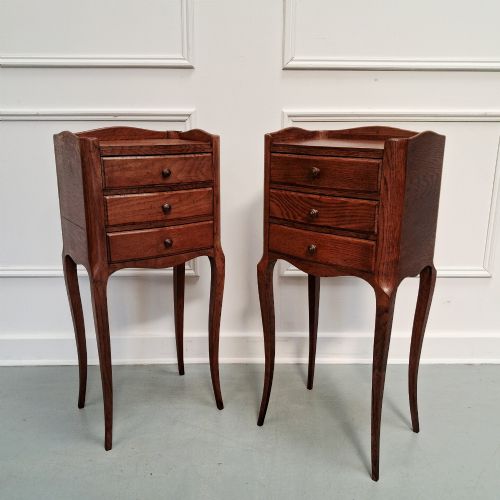
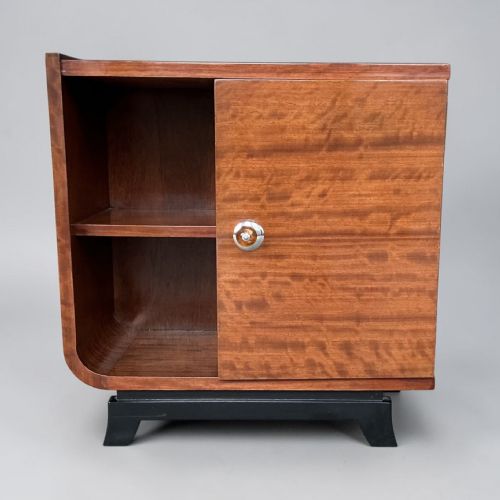
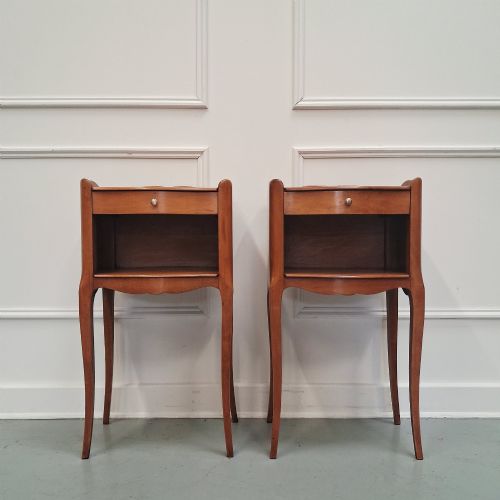
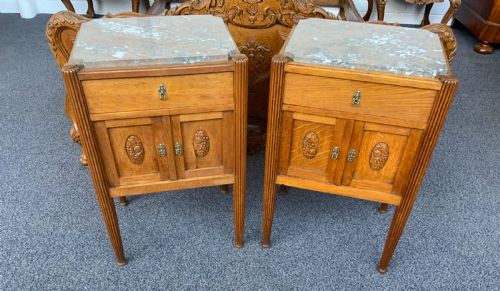
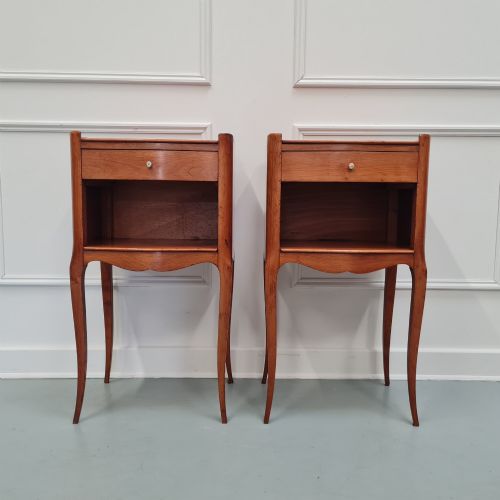
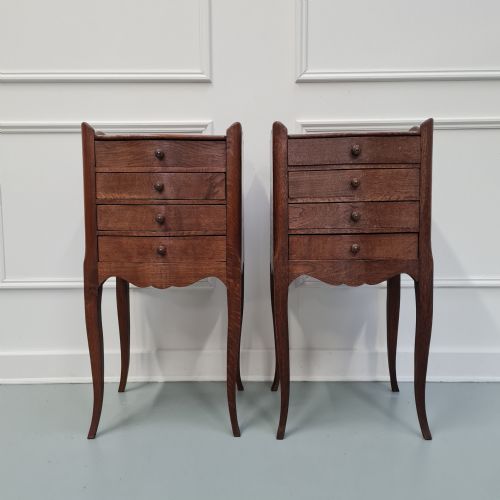
The selections on this page span the 1920 and 1930 periods, showing both streamlined Art Deco forms and traditional revival shapes. Most examples appear as matched pairs, offering symmetry across twin beds or larger sleeping quarters.
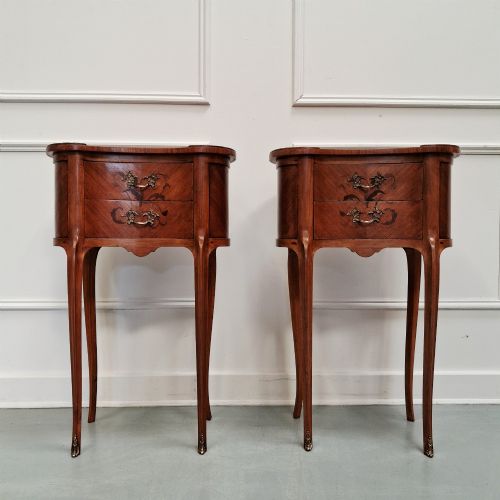
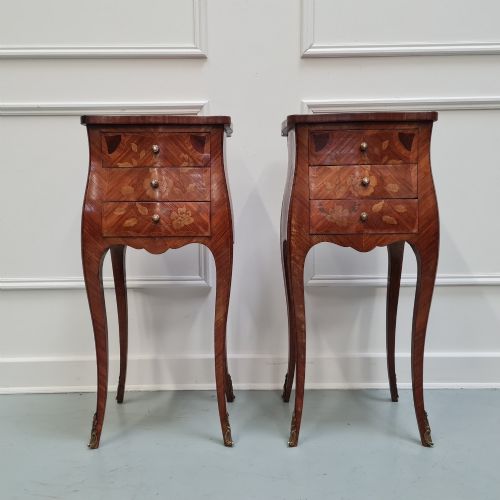
Makers in France produced these bedside cabinets in various formats, including serpentine fronts and kidney bean shapes. They serve as functional storage while anchoring the stylistic theme of the bedroom.
How they were made
Cabinet makers utilised a rich palette of timber such as walnut, kingwood, mahogany, oak, cherry wood, and ebonised wood. Artisans frequently applied walnut veneer over foundational carcases to create striking grain patterns across the cabinet doors and drawer fronts.
Metal and stone details complete the construction, with polished brass hardware providing contrast against the dark wood surfaces. Many tops feature fitted marble slabs that offer a durable, wipe-clean finish for daily use.
Kidney bean bedside tables require extra care when dusting the curved drawers.
What varies in quality
Quality in these bedside cabinets rests upon the choice of timber and the precision of the veneer work. The distinction between standard production and finer pieces lies in the selection of figured kingwood or matched walnut grain across the front panels.
The integration of materials also defines the tier of the piece, particularly where shaped marble tops meet curved serpentine or kidney bean wooden frames. Superior examples maintain crisp lines in their Art Deco geometry or smooth transitions in revival mouldings.
The 1930s French Bedside Cabinets Glossary
- Art Deco
- A design style of the 1920s and 1930s characterised by geometric symmetry, stylised motifs, and sleek lines. It dominates the aesthetic of many cabinets from this era.
- Kingwood
- A dense, heavy timber with rich violet-brown colouring and darker stripes, often utilised in fine French cabinet making. It creates a highly decorative surface finish.
- Serpentine
- A furniture shape featuring a front edge that curves inward centrally and bows outward at the sides. This contour adds visual movement to bedside tables.
- Ebonised wood
- Timber treated with a finish to imitate ebony, providing a deep black appearance. This technique offers high contrast against brass mounts and marble tops.
- Veneer
- A thin layer of choice wood applied over a base timber carcase to display superior grain patterns. Walnut veneer is particularly common among these pieces.
1930s French Bedside Cabinets: Frequently Asked Questions
What are 1930s French bedside cabinets?
These pieces are small bedroom storage items designed in France during the early twentieth century. They function as bedside tables, nightstands, and side cabinets.
Most examples from this era date from the 1920 and 1930 periods. They combine practical enclosed storage with distinctive surface materials.
Are these cabinets sold as pairs?
Many listings feature matched pairs designed to sit symmetrically on either side of a bed. Single cabinets also appear for individual bedroom layouts.
Matching pairs share identical wood types, hardware, and structural profiles. This symmetry is typical for French bedroom furniture of the period.
What materials do makers use?
Construction relies heavily on timbers such as walnut, kingwood, mahogany, oak, and cherry wood. Walnut veneer and ebonised wood also feature prominently.
Fitted marble tops and brass hardware provide functional surfaces and decorative accents. These materials work together to define the Art Deco and revival styles.
How do I identify the style?
The pieces generally fall into Art Deco or French revival styles like Louis XV. Art Deco items display geometric forms and clean lines.
Revival pieces show curved contours and traditional ornamentation. Shapes range from standard rectangular bedside tables to serpentine and kidney bean silhouettes.