

Vintage Marble Nightstands
Vintage marble nightstands bring practical stone tops and timber frames together beside the bed, offering enduring utility and continental character.

Vintage Marble Nightstands
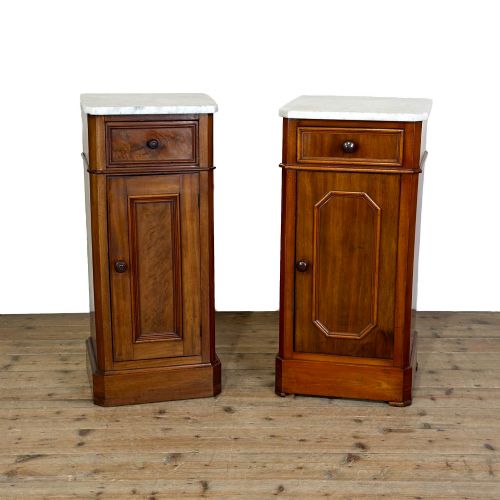
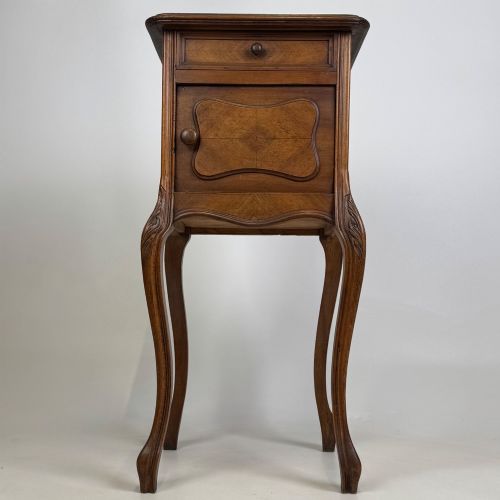
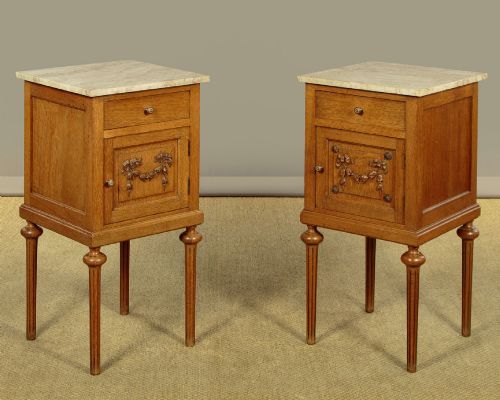
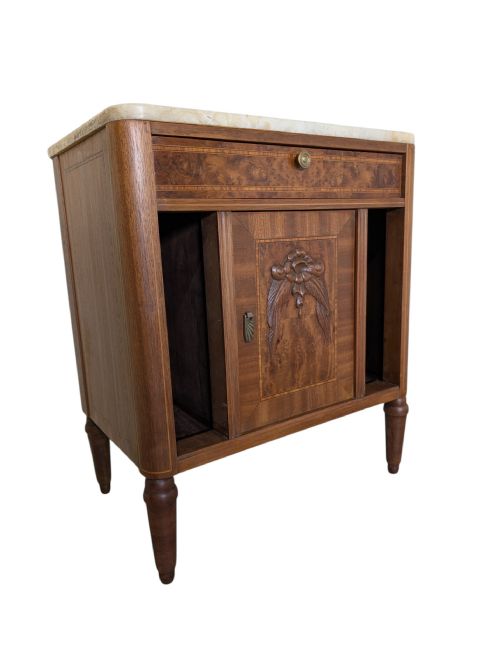
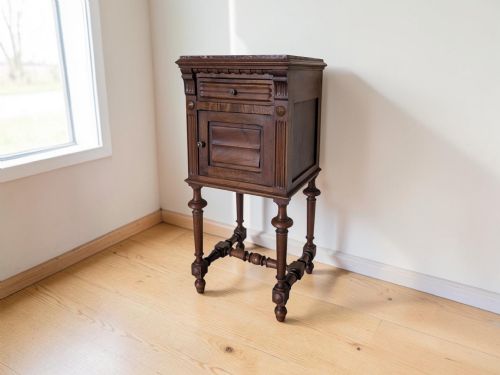
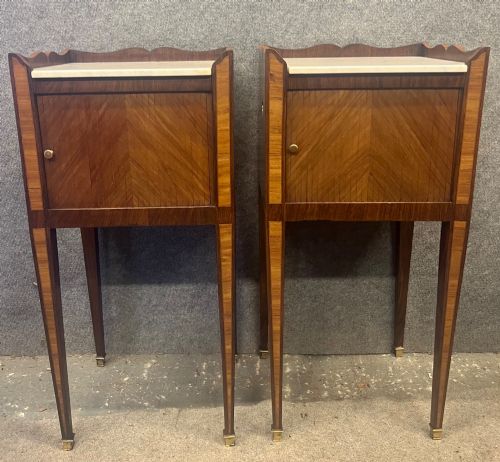
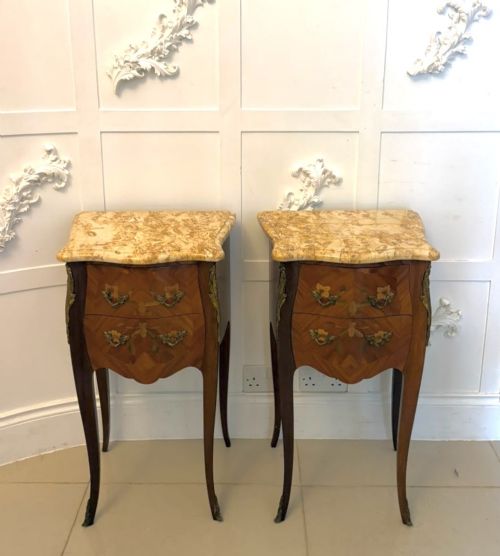
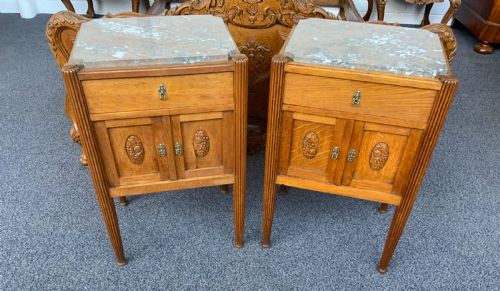
Vintage marble nightstands are compact bedside pieces designed with stone surfaces, appearing frequently as pairs in French walnut, oak, kingwood, and mahogany forms. These tables originate primarily across the nineteenth and early twentieth centuries, spanning periods from Victorian and Edwardian eras to Art Deco designs.
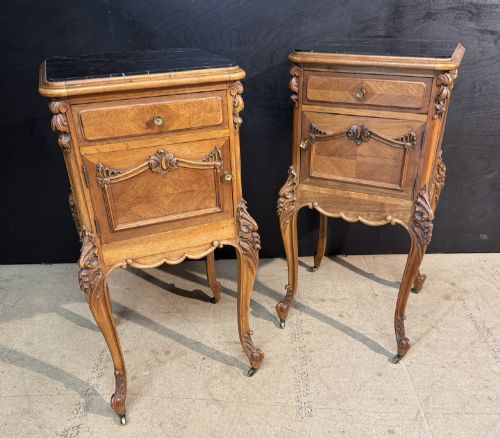
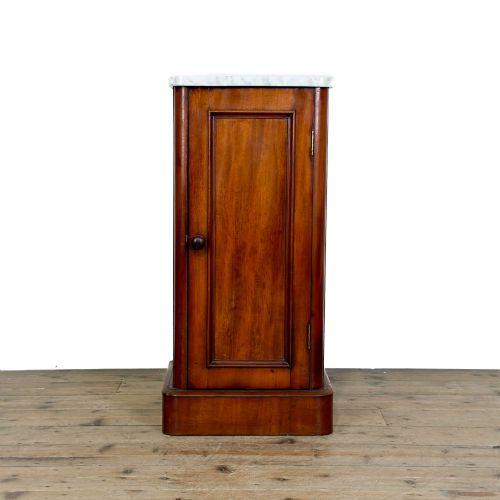
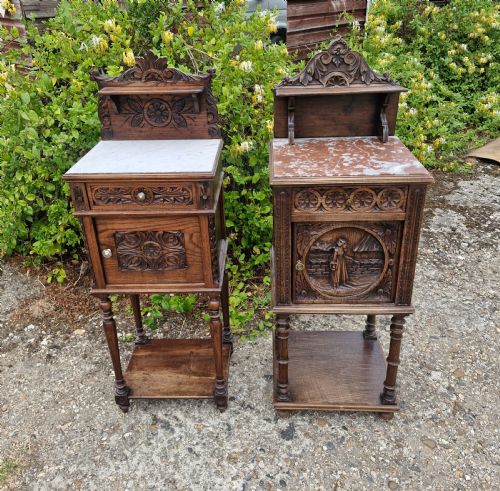
The selection here encompasses bedside cabinets, lamp tables, and bedside chests featuring inset marble tops. Cabinet bodies range from simple carved oak structures to elaborate marquetry and inlaid fruitwood veneers.
Continental workshops produced many of these surviving examples, incorporating styles such as Louis XVI Revival, French Provincial, and geometric Art Deco lines. Buyers encounter both single cabinets and balanced pairs ready for domestic placement.
How vintage marble nightstands were made
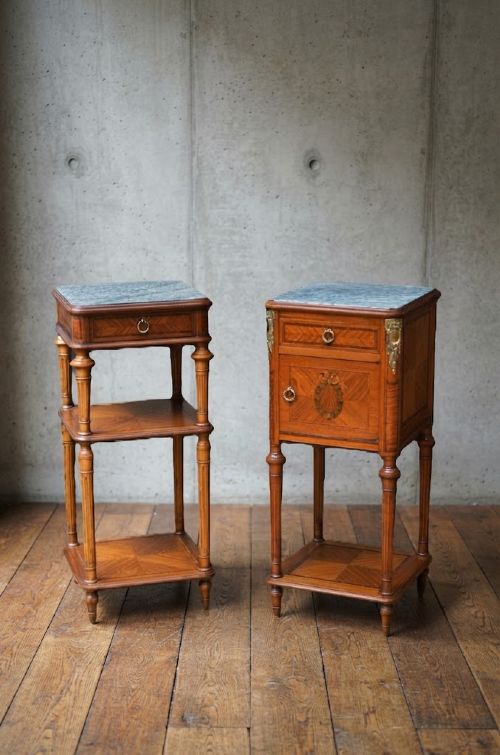
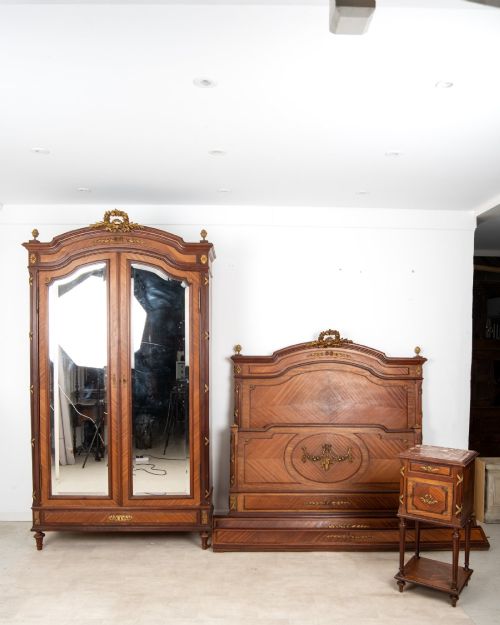
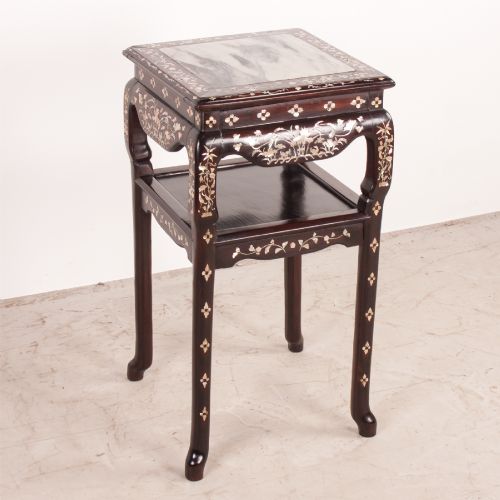
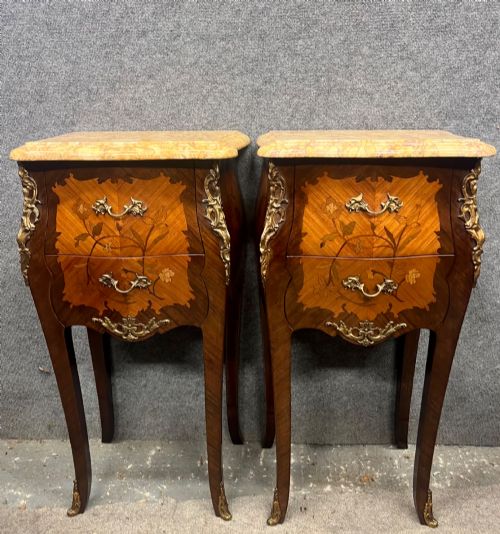
Cabinetmakers constructed the frames using solid timbers such as walnut, oak, and mahogany, often applying decorative veneers including kingwood, burr walnut, and satinwood to the exterior surfaces. Marquetry inlay and mother of pearl details frequently adorn the drawer fronts and side panels of finer examples.
The stone surfaces consist of heavy marble slabs cut to fit the top profile of each cabinet, sometimes featuring shaped serpentine edges. Ormolu mounts, brass handles, and cast metal accents complete the construction of many continental pieces.
Listings feature bedside pieces spanning the Victorian and Edwardian eras alongside 1920s Art Deco designs.
What varies in quality
Quality reveals itself in the precision of the timber joinery and the selection of veneer grains used across the cabinet body. Finely matched marquetry and crisp carving separate standard utilitarian tables from master cabinetmaker productions.
The thickness, veining, and polish of the marble top significantly influence the overall standard of the piece. Well-integrated stone slabs with clean edge profiles reflect higher tiers of period craftsmanship.
François Linke
The Vintage Marble Nightstands Glossary
- Marquetry
- Decorative veneer patterns formed by fitting small pieces of contrasting wood and shell together into geometric or pictorial designs. This technique requires meticulous hand cutting and fitting.
- Ormolu
- Gilded bronze mounts and decorative accents applied to furniture frames during the eighteenth and nineteenth centuries. The technique involves coating cast bronze with a mercury and gold amalgam.
- Serpentine
- A curved furniture edge design featuring a convex centre flanked by concave curves. This undulating shape demands advanced woodworking skill to execute cleanly.
- Bedside cabinet
- A small enclosed storage piece designed to sit beside a bed, typically featuring a cupboard door and an interior shelf beneath the main surface.
Vintage Marble Nightstands: Frequently Asked Questions
Are these nightstands sold in pairs?
Many of the bedside cabinets and chests appear as matched pairs, though single tables also occur frequently within the selection. Sourcing a matched pair offers a balanced appearance for twin bedside placements.
Buyers searching for symmetrical bedroom styling will find numerous dual sets spanning Edwardian and Art Deco periods.
What wood types are most common?
Walnut, oak, and mahogany form the structural framework for the majority of these bedside pieces. Cabinetmakers also utilised exotic veneers like kingwood and fruitwood for decorative surface work.
Lighter woods such as satin birch and satinwood appear in specific regional European pieces from the late nineteenth century.
How do I identify Art Deco styles?
Art Deco bedside pieces typically feature streamlined geometric forms, burr walnut veneers, and minimal surface ornamentation compared to earlier revival styles. These twentieth-century designs often incorporate contrasting wood grains and simplified architectural silhouettes.
The integration of alabaster or spelter lamps alongside the furniture further characterises the modernist aesthetic of the period.
Where were these cabinets made?
A significant portion of the inventory originates from French workshops, encompassing styles from Louis XV and Louis XVI revivals to provincial designs. Other pieces reflect Edwardian English production and nineteenth-century Scandinavian craftsmanship.
Regional variations in timber choice and hardware often point directly to the country of origin.