
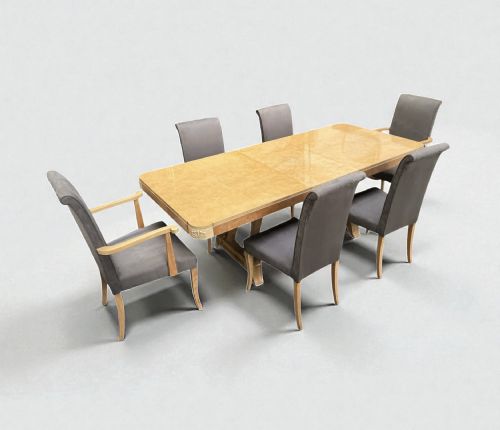


1930s Dining Chairs Set
These 1930s dining chairs set combinations bring distinctive period character to a room, offering robust construction alongside striking modernist silhouettes.
1930s Dining Chairs Set
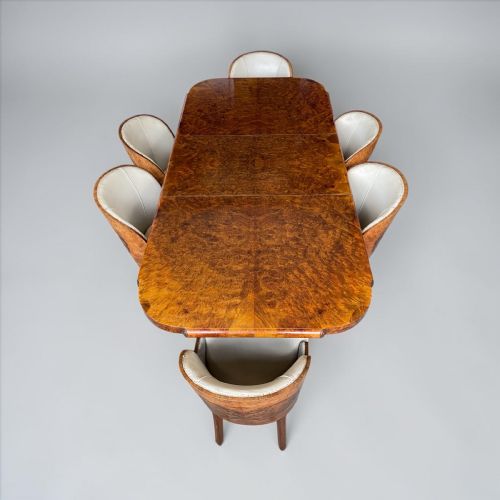
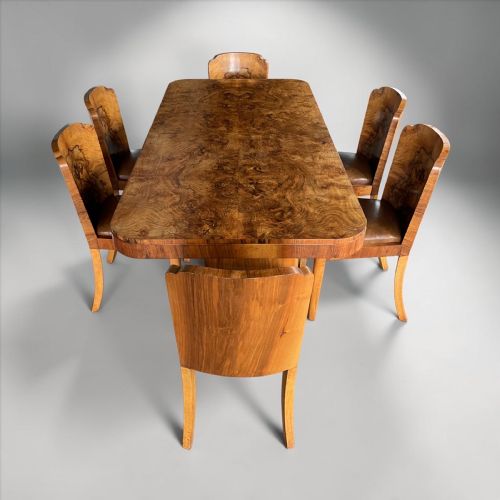
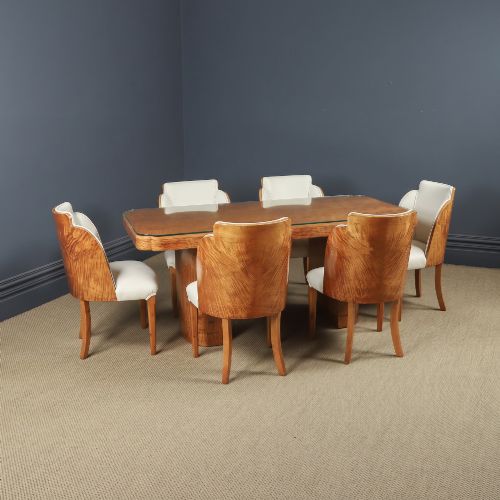
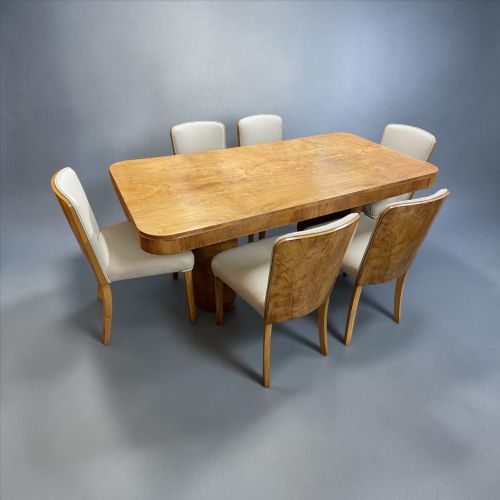
A 1930s dining chairs set typically comprises matching groups of four, six, or eight seats designed for domestic dining spaces. You will frequently encounter sets paired with matching tables as part of comprehensive dining suites.
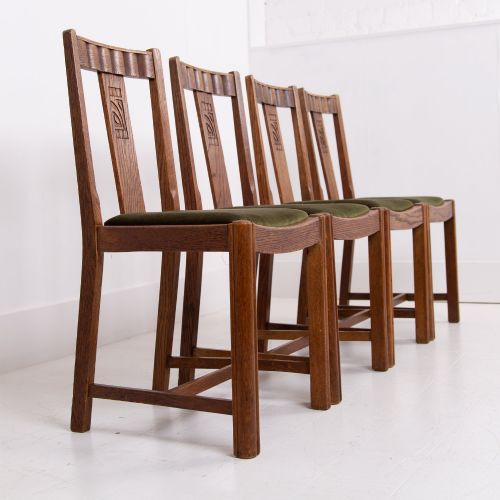
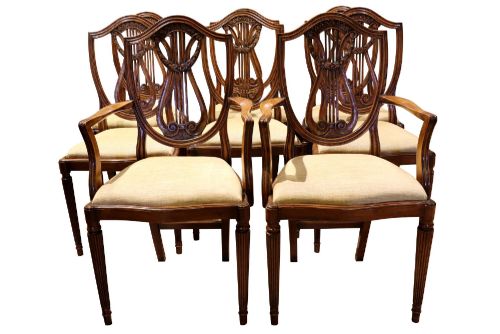
The dominant aesthetic across these listings is Art Deco, though variants span from rustic oak ladderback designs to revival styles such as Hepplewhite and Chippendale. English and continental workshops produced both streamlined modern forms and traditional timber seating during this decade.
These sets appear in various timbers and upholstered finishes, ranging from substantial oak frames to highly figured walnut and exotic veneers. Most surviving groups accommodate family dining through sturdy side chair configurations, sometimes supplemented by matching carver chairs.
Materials and construction
Makers utilised a diverse palette of solid timbers and decorative veneers, including oak, walnut, burr walnut, mahogany, satinwood, maple, and calamander. Selected pieces incorporate bentwood techniques or feature distinct elm and fruitwood frames.
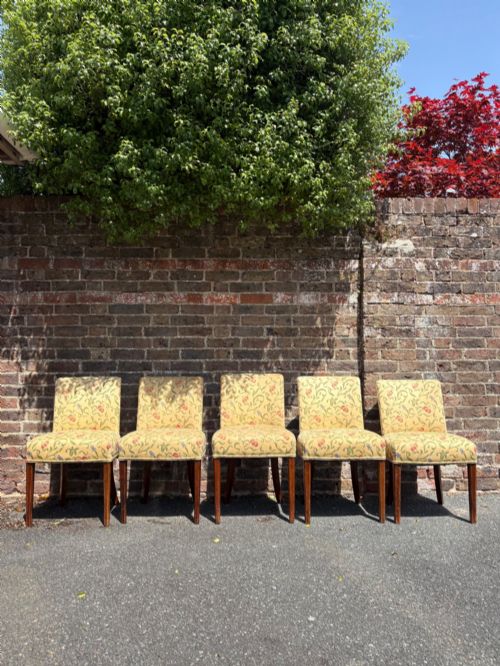
Upholstery forms an integral part of the construction, employing traditional leather, fabric, and velvet over sprung or padded seats. Wood frames are joined using robust cabinet-making methods suitable for daily domestic use.
Some dining suites include up to eleven distinct pieces, ensuring an entire household plus a lingering guest can dine in matched harmony.
Quality variations in period seating
The distinction between standard production and top-tier workshop output lies in the selection of timber and the sophistication of the veneer work. Master craftsmen applied highly figured burr walnut, bird's eye maple, and macassar ebony with precise grain matching across entire suites.
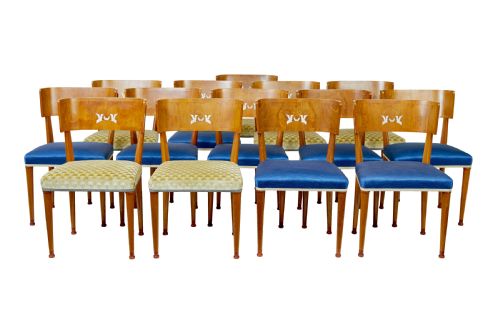
Design ambition also divides the range, separating utilitarian oak kitchen seating from avant-garde Swedish Grace or London-made Art Deco dining suites. Maker attribution, such as documented pieces from prominent workshops, elevates the standing of a set significantly.
Maurice Adams·Harry and Lou Epstein·Hille
The 1930s Dining Chairs Set Glossary
- Art Deco
- A design movement prevalent in the 1920s and 1930s characterised by sleek geometric shapes, stylised motifs, and modern industrial materials. It replaced heavy Victorian ornamentation with streamlined elegance.
- Burr Walnut
- A prized wood harvested from the wart-like growths on walnut trees, yielding swirling, highly decorative grain patterns. Cabinet makers utilised these veneers on prominent surfaces of dining suites.
- Klismos
- An ancient Greek chair shape revived by modern designers, featuring curved saber legs and a flared concave backrest. This classic silhouette appeared in influential 1930s modernist interiors.
- Carver Chair
- An armchair designed to sit at the head of a dining table, traditionally accompanying a set of smaller side chairs. These often mirror the decorative motifs of the main seating group.
- Bentwood
- A technique of steaming timber until pliable and bending it into curved forms without joints. It enabled lightweight yet durable chair frames during the early twentieth century.
1930s Dining Chairs Set: Frequently Asked Questions
How many chairs come in a set?
Sets commonly comprise four, six, or eight chairs, occasionally expanding to ten or eleven pieces within larger dining suites.
Buyers often find configurations that include six side chairs alongside a matching dining table.
Are these chairs comfortable for daily use?
Most period examples were built for practical domestic dining, utilising sturdy timber frames and padded or sprung upholstered seats.
Upholstered variants provide substantial support, though cushion firmness depends on past restoration work.
How do I identify Art Deco chairs?
Art Deco seating is defined by clean geometric lines, contrasting wood veneers, and often cloud-shaped or curved backrests.
These pieces frequently avoid traditional carving in favour of smooth, polished wood surfaces.
What woods were used in the 1930s?
Common domestic woods include solid oak and walnut, alongside mahogany for revival styles.
High-end suites utilised exotic veneers like burr maple, satinwood, calamander, and macassar ebony.