
Edwardian Revival Dining Chairs
Edwardian revival dining chairs bring the refined grace of earlier centuries into the modern dining room, offering sturdy seating with historic flair.
Edwardian Revival Dining Chairs
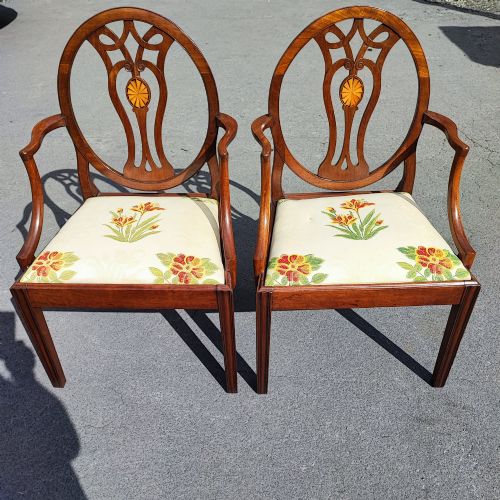
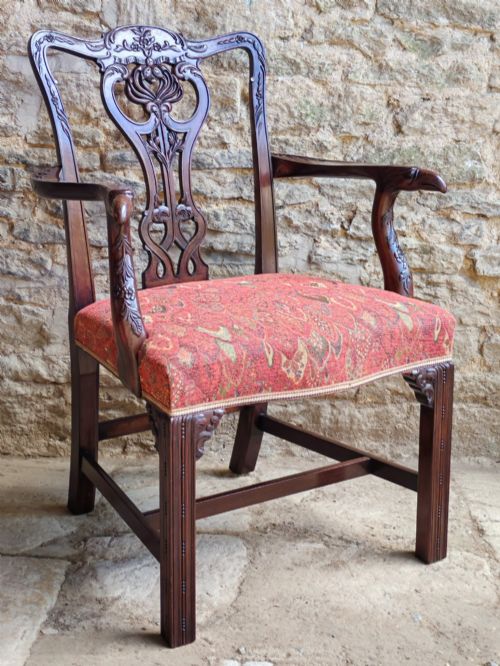
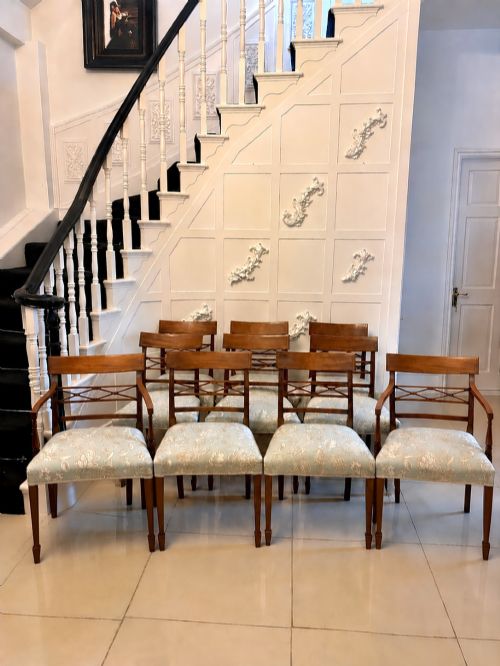
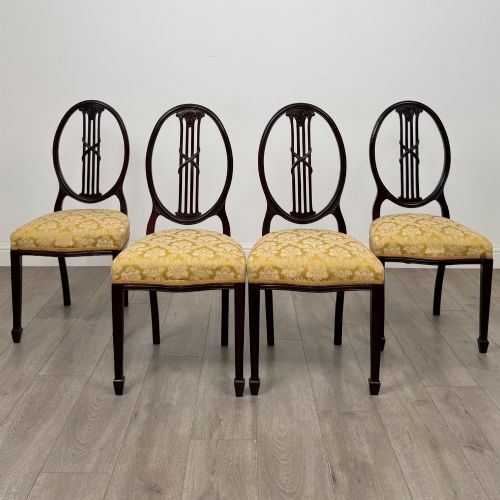
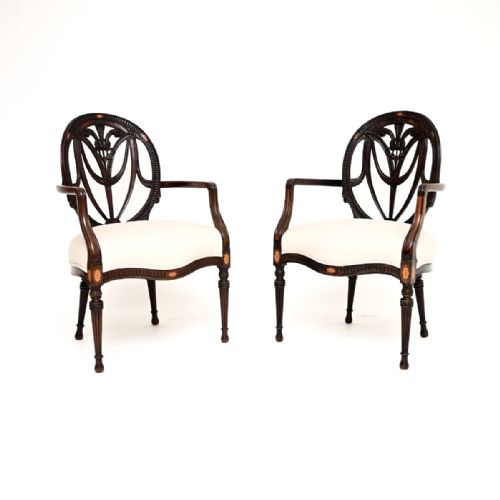
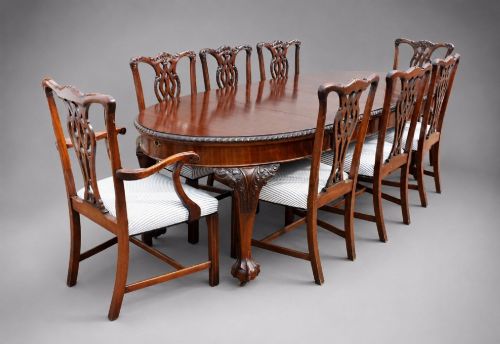
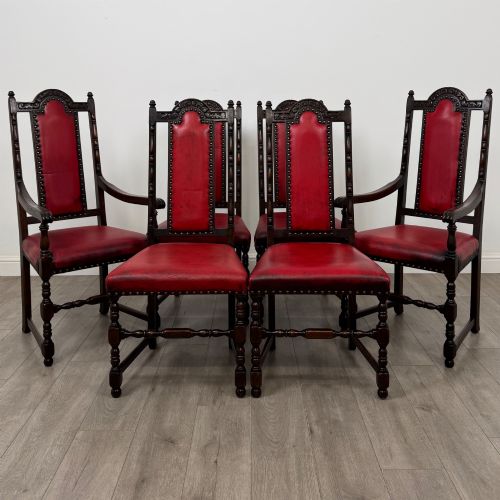
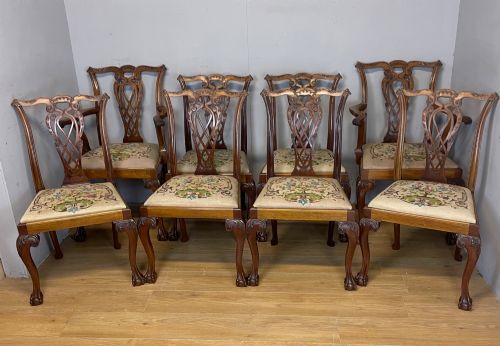
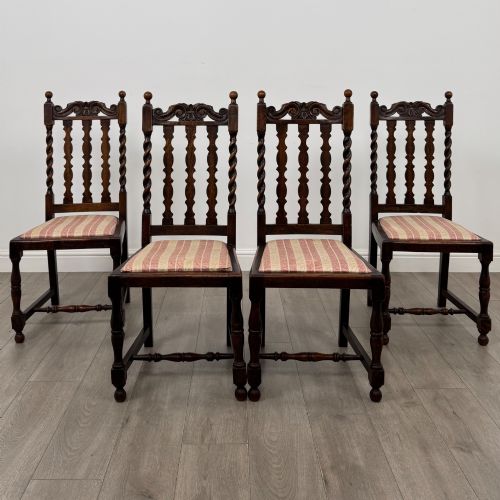
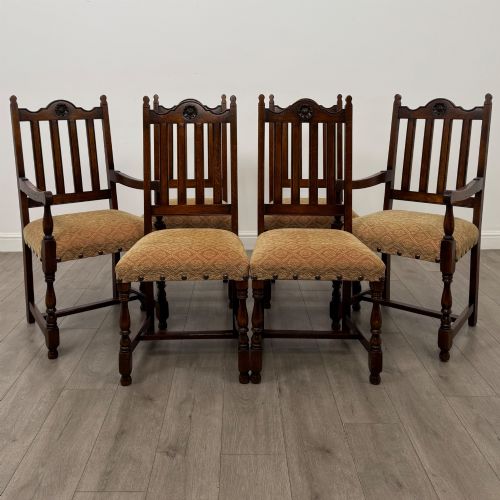
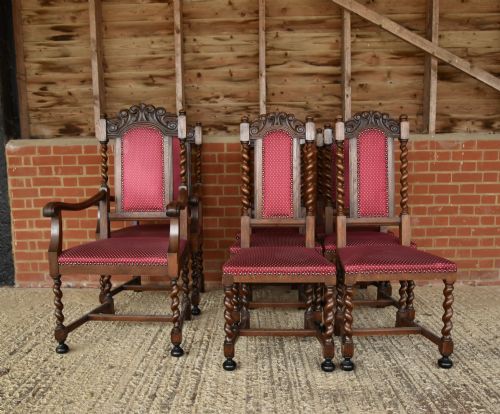
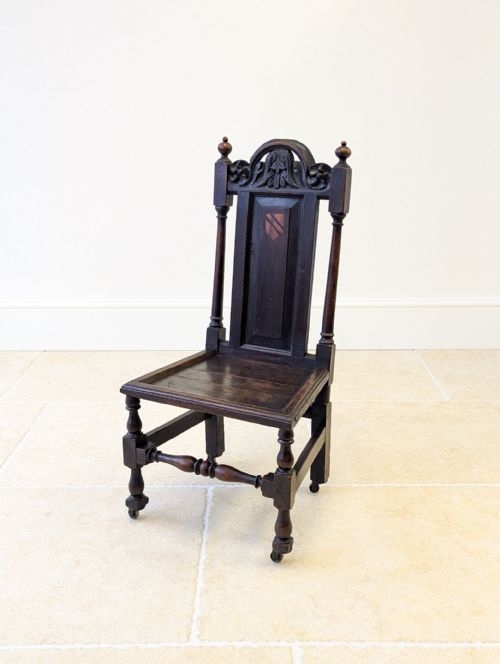
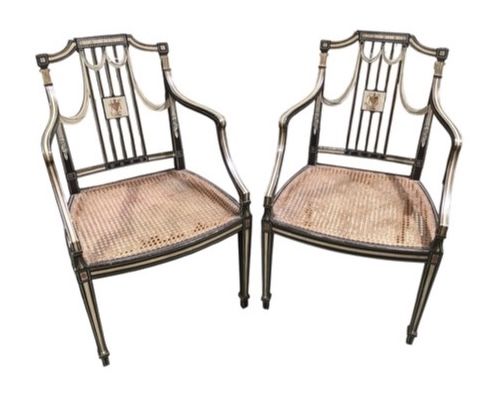
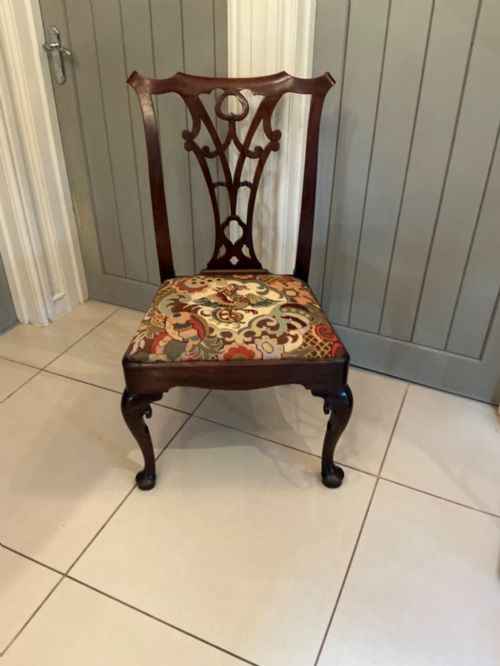
Edwardian revival dining chairs draw heavily on eighteenth-century and seventeenth-century forms, reimagining Georgian, Chippendale, Sheraton, Hepplewhite, and Jacobean aesthetics for early twentieth-century homes. Buyers seeking edwardian revival dining chairs will encounter single side chairs, carver armchairs, and matching sets that often range from four to twelve pieces.
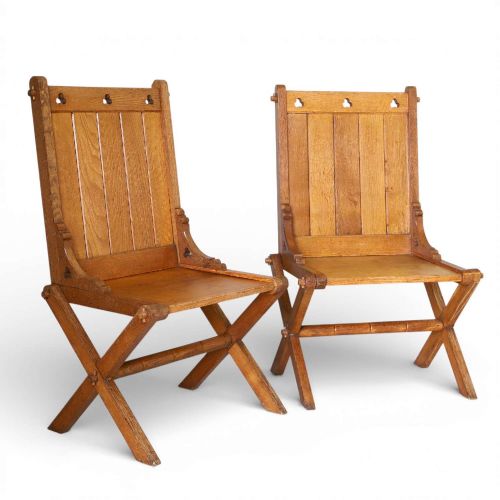
The selections on this page span the Edwardian period itself alongside late Victorian and early twentieth-century interpretations. Oak and mahogany dominate the timber choices, while styles incorporate everything from barley twist legs and trefoil details to delicate satinwood inlay.
Forms include dedicated dining suites complete with extending tables, alongside smaller groupings intended for parlour or salon use. The prevailing formats provide robust seating solutions that combine historical motifs with the practical requirements of Edwardian dining spaces.
How They Were Made
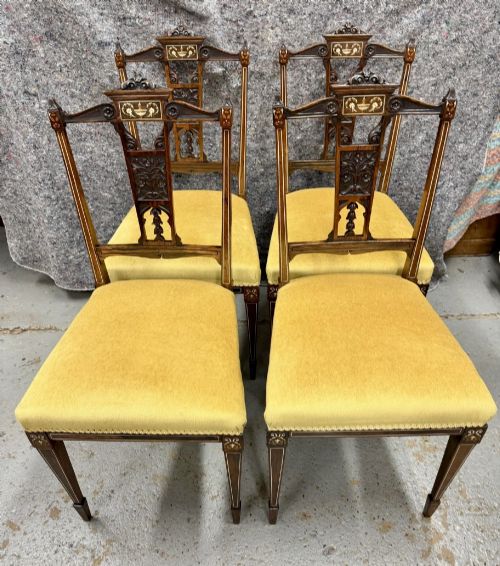
Cabinetmakers utilised dense timbers such as mahogany and oak to construct resilient frames capable of withstanding daily dining use. Finer formal sets incorporate satinwood inlay and delicate stringing, reflecting the revival of Sheraton and Hepplewhite decorative vocabulary.
Upholstery methods relied on traditional stuffing finished with fabric, leather, or velvet, while specific variants feature cane seats supported by barley twist legs. Structural integrity often stems from pegged or dowelled joinery hidden within carved rails and splats.
Among the seating forms, gossip chairs offer a peculiar low-slung perch designed originally for brief telephone conversations.
What Varies in Quality
The grade of an Edwardian revival dining chair rests on the depth of hand-carving in elements like splats and crest rails, distinguishing crisp execution from softer, mass-produced moulding. Timber selection plays an equal role, where straight-grained mahogany or figured oak elevates a suite far above plain utilitarian alternatives.
Completeness dictates utility, as matched sets of six, eight, or twelve pieces retain far greater coherence than assembled groupings. The precision of the inlay work and the tightness of the frame joinery further separate standard domestic seating from superior salon examples.
Howard and Sons·Warings·Liberty and Co
The Edwardian Revival Dining Chairs Glossary
- Carver
- An armchair designed to match a set of single dining chairs, typically placed at the head of the table. These often feature sweeping arms and wider seats.
- Barley Twist
- A turned wood detail resembling a rope wound in a spiral, commonly found on the legs and stretchers of oak revival seating. This decorative turning adds texture and visual movement to heavy frames.
- Shield Back
- A chair back shaped like a heraldic shield, popularised by Hepplewhite and frequently copied in revival dining suites. The design offers an elegant silhouette while accommodating carved vertical splats.
- Splat
- The vertical wooden strip down the centre of a chair back that supports the sitter's spine. In revival pieces, these take the form of pierced ribbons, urns, or solid vasiform shapes.
- Inlay
- A decorative technique where contrasting woods or materials are set flush into the primary timber surface. Sheraton and Hepplewhite revival models frequently utilise this method for geometric borders and fan motifs.
Edwardian Revival Dining Chairs: Frequently Asked Questions
How do I spot a revival chair?
Revival chairs are identified by the timber finish, construction methods, and stylistic cues that point to early twentieth-century interpretations of older eras. Makers at the turn of the twentieth century often combined Georgian or Jacobean outlines with the cleaner timber finishing typical of their own time.
Examining the underside and joints often reveals machine-cut components alongside hand-finished details. This blend helps distinguish pieces made around nineteen hundred from authentic eighteenth-century antiques.
Can I mix carvers with side chairs?
Mixing carvers with single side chairs follows traditional dining arrangements where armchairs sat at the head and foot of the table. Many surviving sets are put together with matching numbers of both.
When combining separate chairs, matching the timber tone and revival style ensures visual harmony around the dining table. Oak Jacobean pieces and mahogany Chippendale suites each require careful pairing to maintain a unified look.
Are these chairs suitable for daily use?
These dining chairs were built for regular domestic service using durable hardwoods like oak and mahogany. Their robust frames handle everyday sitting comfortably when joints remain secure.
Upholstered seats and cane panels benefit from periodic inspection to ensure they stay supportive. Simple care keeps these historic revival pieces functional for modern dining rooms.
What defines Sheraton revival style?
Sheraton revival style draws on the lighter, more elegant furniture designs of the late eighteenth century. These pieces favour straight tapered legs, satinwood inlay, and balanced geometric proportions.
Mahogany frames in this style often display fine stringing and decorative patera motifs. The overall aesthetic prioritises refinement and delicacy over heavy carving.