


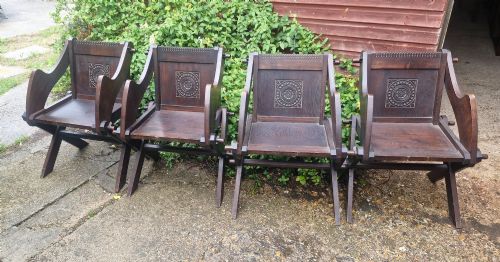
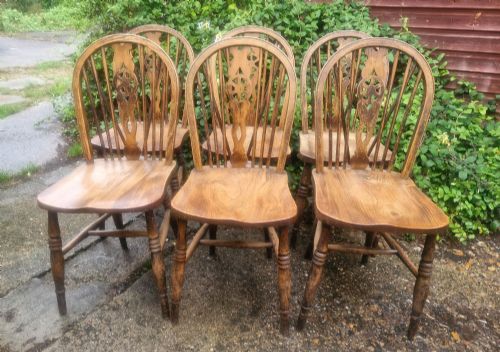
Vintage Carved Back Chairs
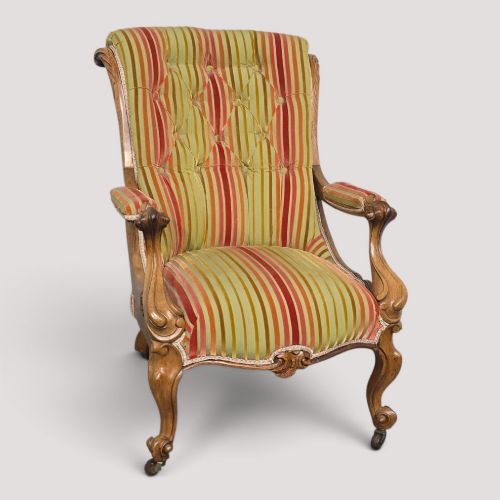
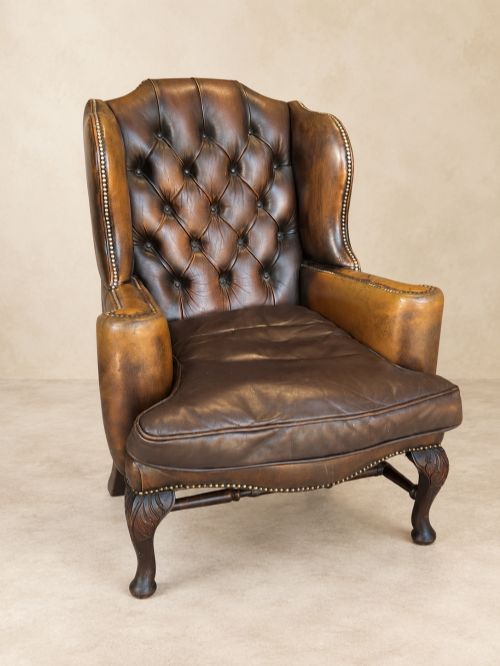
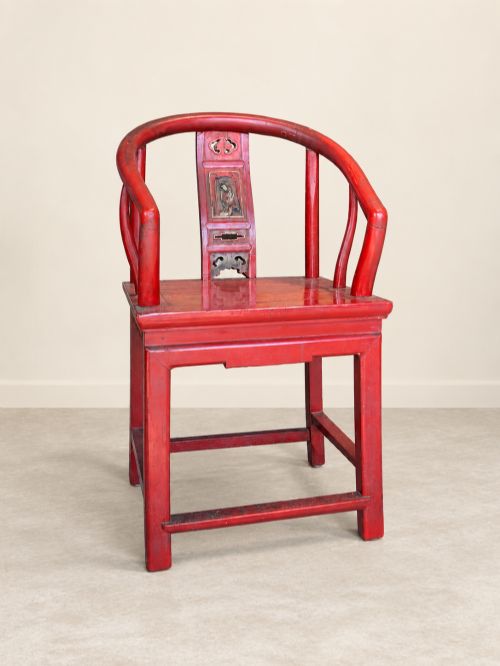
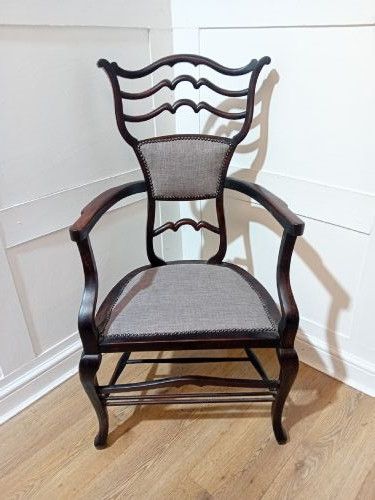
These vintage carved back chairs bring distinct timber character and refined joinery to dining rooms and studies alike.
Vintage Carved Back Chairs
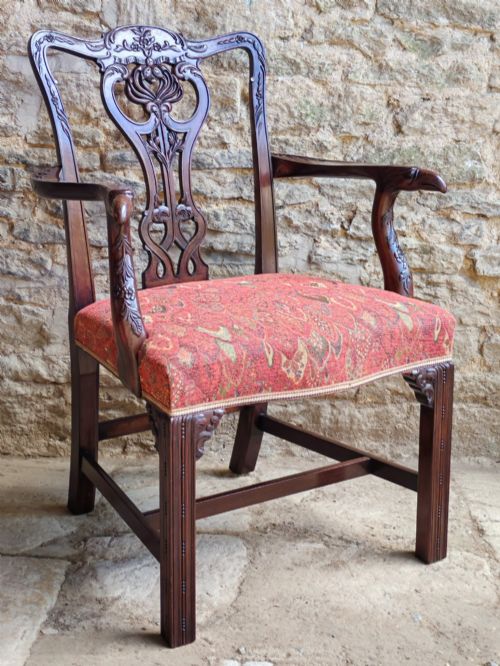
Vintage carved back chairs encompass seating from the eighteenth century through the twentieth century, with strong representation from Victorian, Edwardian, and Regency periods. The forms range from sets of dining chairs and hall chairs to individual armchairs, desk chairs, and library armchairs.
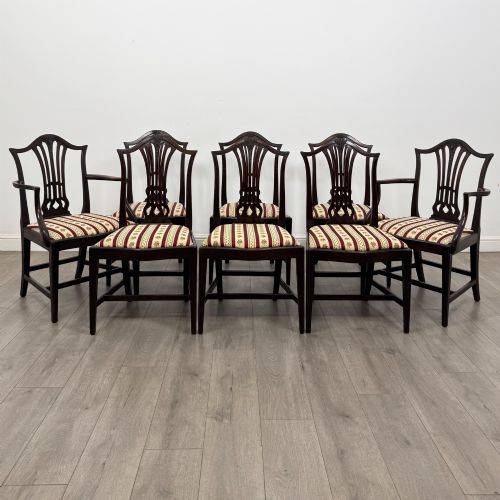
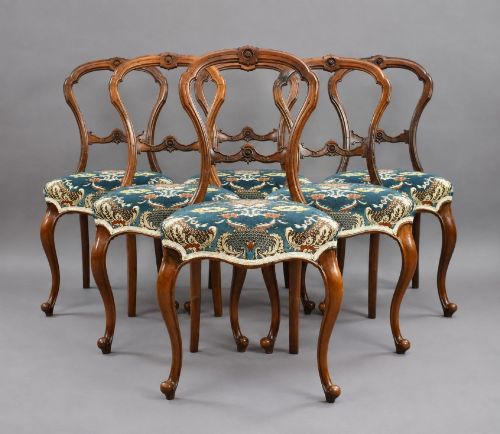
Buyers will most frequently find mahogany and oak frames equipped with carved splats, shield backs, balloon backs, or lyre backs. These seats serve practical daily use around dining tables or working desks while displaying traditional woodworking styles such as Chippendale Revival, Jacobean Revival, and Georgian.
How they were made
Frames are constructed from dense hardwoods like mahogany, oak, walnut, rosewood, and maple, shaped with hand-carved details along the splats and crest rails. Joinery relies on traditional mortise and tenon techniques, sometimes complemented by turned elements like barley twists and bobbin turnings.
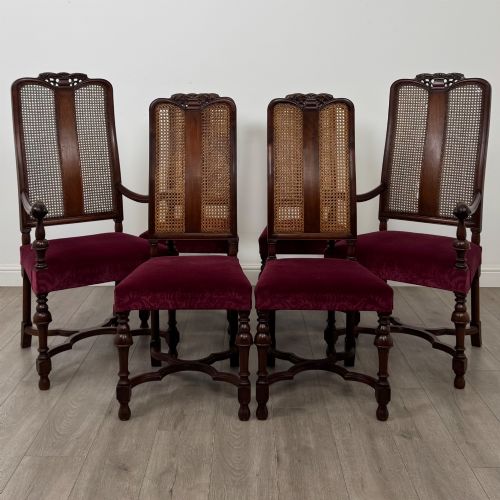
Upholstered versions incorporate secondary materials including leather, velvet, fabric, cane, and brass tacks. Finished pieces often receive painted or polished treatments to protect the timber and highlight the grain.
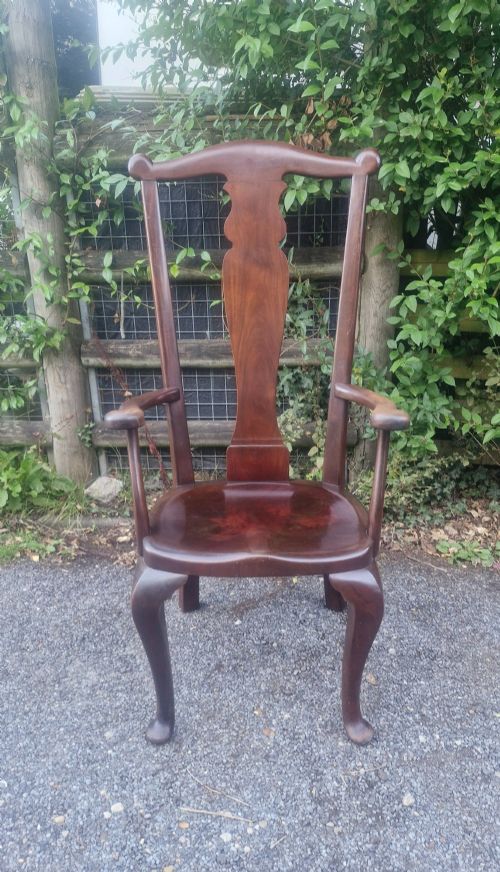
One extraordinary nineteenth-century offering is a Cuban mahogany hand chair shaped to cradle the sitter.
What varies in quality
Quality rests in the crispness of the timber carving and the integrity of the frame construction, where thicker mahogany or quarter-sawn oak withstands centuries of sitting. Sets maintain higher value when all individual chairs match precisely in timber colour, grain direction, and carving depth rather than showing mismatched replacements.
The sophistication of the stylistic revival matters greatly, distinguishing workshop-produced copies from mass-market Edwardian or later interpretations. Original upholstery foundations and intact cane work also elevate a piece above those requiring complete reconstruction.
Howard and Sons·Alfred Allen of Birmingham·Maple and Co
The Vintage Carved Back Chairs Glossary
- Balloon back
- A rounded, oval-shaped chair back resembling a balloon, commonly seen on Victorian mahogany dining chairs. The continuous wooden loop provides ergonomic support to the spine.
- Barley twist
- A type of turning shaped like a twisting column, found on the legs and stretchers of seventeenth-century and revival oak furniture. It is produced by cutting and smoothing a helical groove into a wooden cylinder.
- Bergere
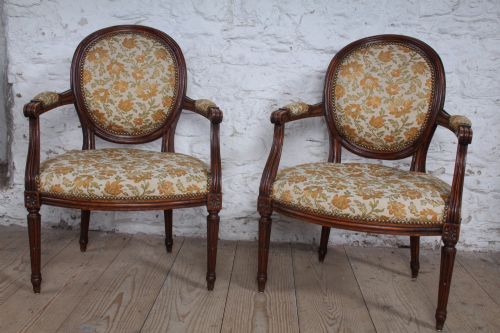
- An enclosed upholstered armchair with exposed wooden framing and woven cane panels along the back and sides. This French-inspired seating style gained popularity during the late nineteenth and early twentieth centuries.
- Splat
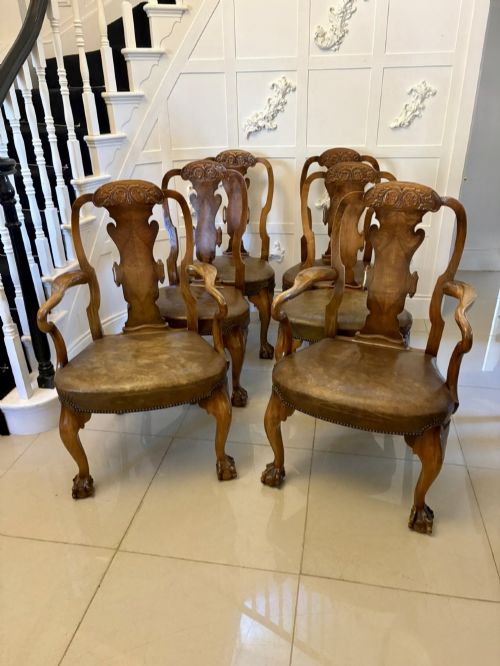
- The vertical wooden slat placed in the middle of a chair back connecting the seat to the top rail. Carved splats often define the stylistic period of the seating.
Vintage Carved Back Chairs: Frequently Asked Questions
How do I spot a reproduction?
Examine the timber shrinkage, tool marks, and construction joints to determine the age of a chair. Older frames display hand-cut joinery and natural patination that modern replicas struggle to replicate accurately.
Compare the carving depth and wood species against known period examples. Revival pieces from the Edwardian era often utilise softer machine-cut details compared to eighteenth-century originals.
Are these chairs suitable for daily dining?
Most solid mahogany and oak dining chairs are built for robust daily use. Their sturdy mortise and tenon frames support frequent sitting around the dining table.
Delicate painted finishes or antique cane panels require more careful handling. Ensure the structural glue and joints remain tight before putting older seating into heavy daily rotation.
What is a hall chair?
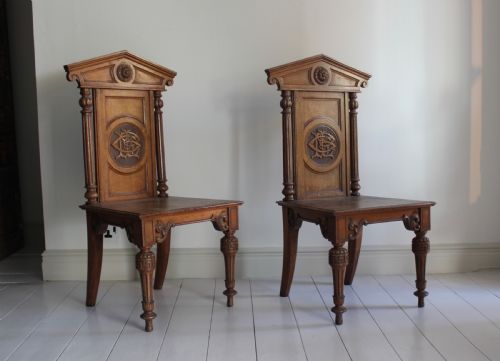
Hall chairs are rigid wooden seats traditionally placed in entrance halls or corridors. They usually feature solid timber seats and elaborately carved solid backs displaying family crests or painted motifs rather than plush upholstery.
These pieces were intended for brief seating rather than long lounging. Their striking wooden backs served primarily as decorative statements for arriving guests.
How do I care for antique leather upholstery?
Clean antique leather gently with a dry or slightly damp cloth to remove dust. Avoid harsh chemical cleaners that strip the original finish and dry out the hide.
Apply a suitable micro-crystalline wax or leather dressing sparingly to maintain suppleness. Keep leather seating away from direct sunlight and heat sources to prevent cracking.