
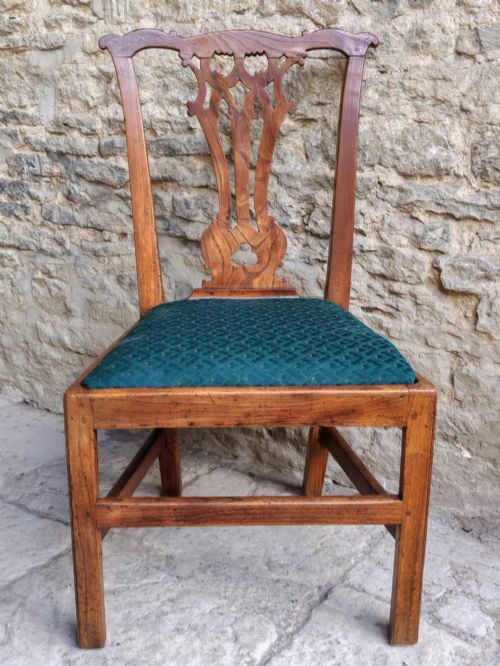
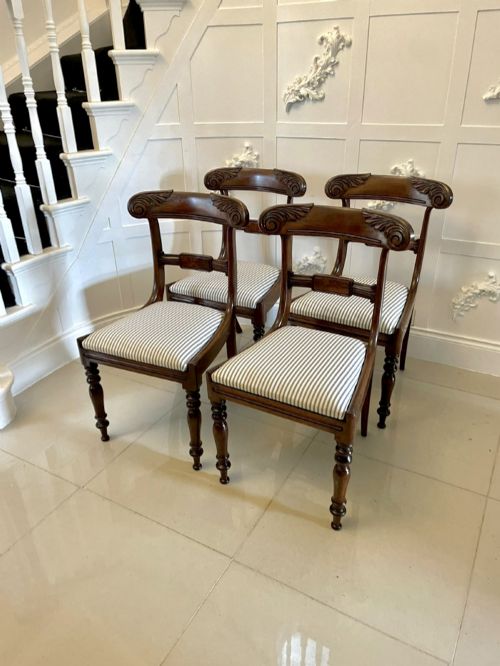
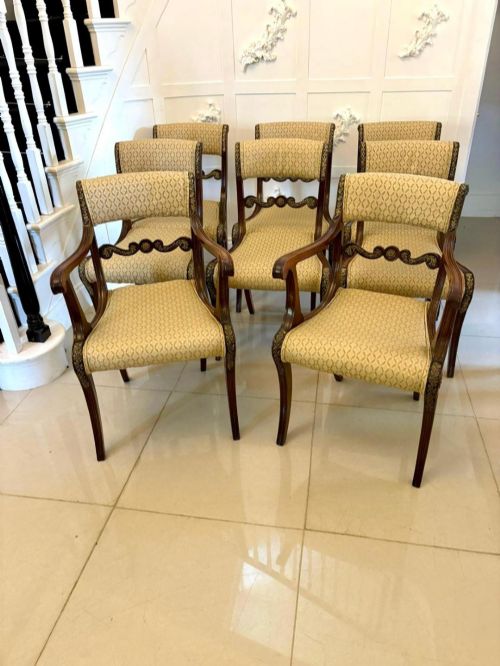
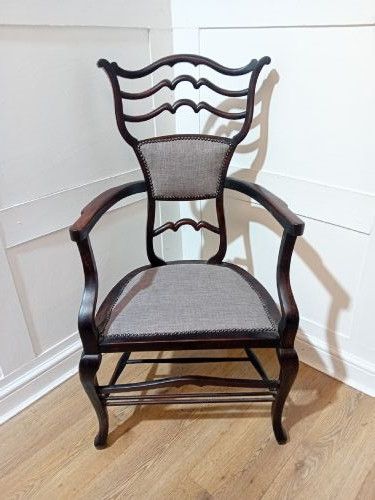


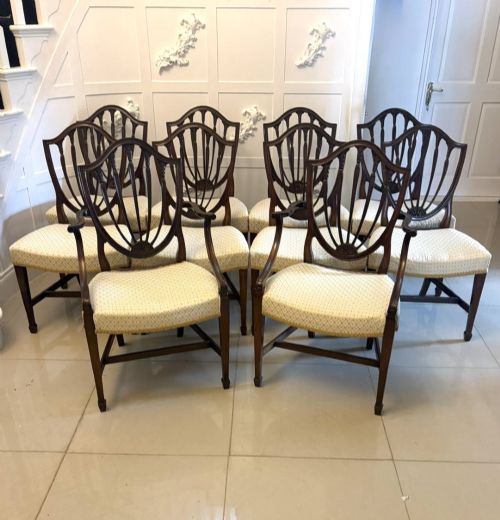
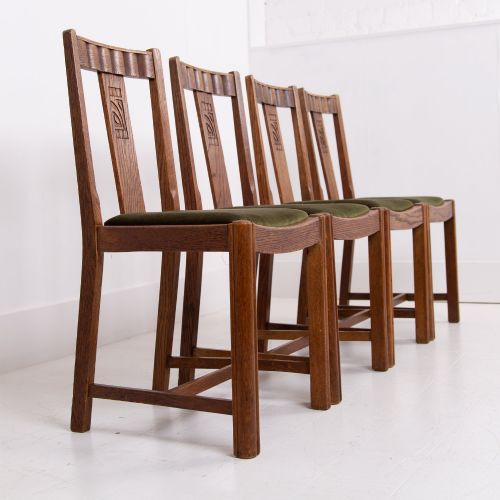
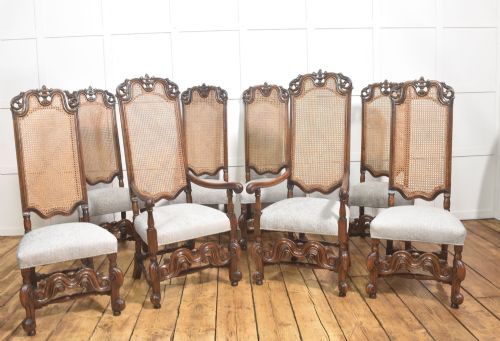
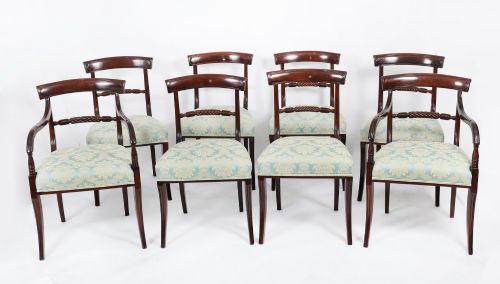
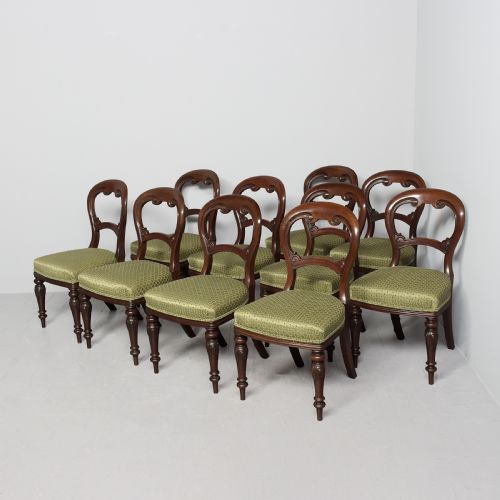
Period Upholstered Side Chairs
Period upholstered side chairs anchor a dining table or sit quietly in a hall, offering compact seating grounded in centuries of timber and textile work.
Period Upholstered Side Chairs
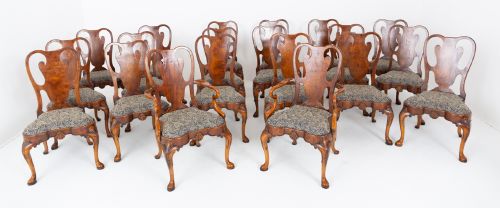
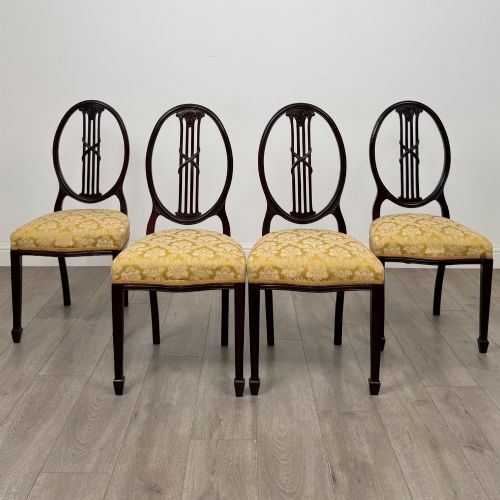
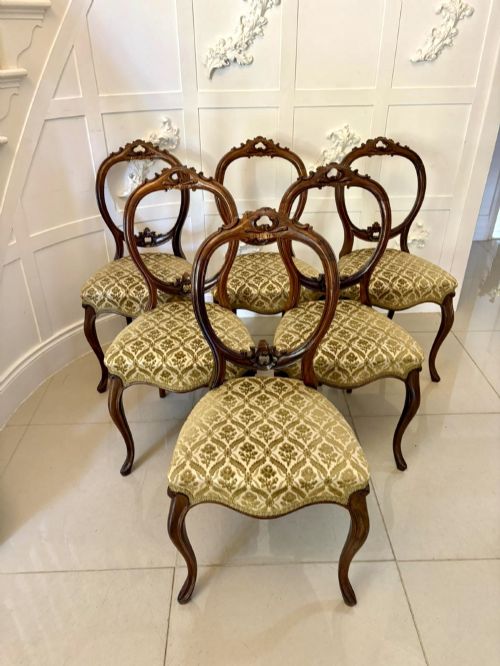
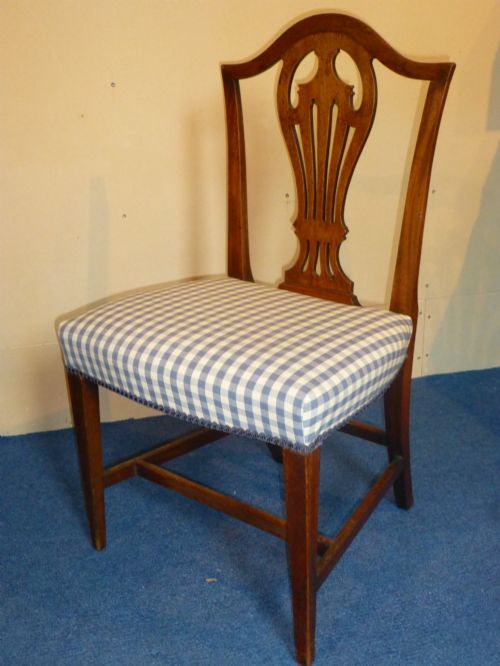
Period upholstered side chairs cover forms built across the eighteenth and nineteenth centuries, spanning Georgian, Regency, and Victorian eras. These items appear most frequently as single pieces, pairs, or larger matched sets intended for dining and salon use.
The materials recorded in these listings rely heavily on mahogany, walnut, and oak frames paired with velvet, fabric, and textile upholstery. Styles range from plain Queen Anne lines to ornate Regency and Arts and Crafts interpretations.
Distinguishing quality across examples
Superior execution shows in the crispness of carved details on the woodwork and the structural integrity of the frame joints. Greater visual success stems from balanced proportions and timber chosen for rich grain patterns rather than plain utility.
Consistency across larger sets distinguishes better workshops from everyday production. Cohesion in wood selection and the tidy execution of upholstery work mark the upper tier of surviving inventory.
Mahogany and walnut dominate the timber selections across these listings, accompanied by oak and fruitwood frames.
Charles Tozer·Maple and Co
The Period Upholstered Side Chairs Glossary
- Side chair
- A chair without arms, designed primarily for dining or occasional placement against a wall. These pieces maintain a smaller footprint than armchairs.
- Shield back
- A chair back shaped in the outline of a heraldic shield, popular in late eighteenth-century designs. This contour often incorporates pierced vertical splats.
- Bar back
- A horizontal wooden slat crossing the uprights of a chair back, frequently seen in nineteenth-century seating. This element provides lumbar support while keeping the frame visually light.
- Marquetry
- Decorative veneer work arranged in pictorial or geometric patterns using various woods. Craftsmen applied these patterns to flat surfaces for visual contrast.
- Splat
- The vertical strip of wood down the centre of a chair back. It offers structural support and carries the primary decorative carving of the period.
Period Upholstered Side Chairs: Frequently Asked Questions
How do I date a side chair?
Dating relies on observing timber choices, leg profiles, and structural joinery techniques characteristic of specific decades. Stylistic markers such as shield backs or bar backs align each piece with documented manufacturing periods.
Changes in upholstery materials and secondary woods provide further clues to the original date of manufacture. Comparing the decorative carving to dated examples confirms the era.
Can these chairs be used daily?
Solid hardwood frames tolerate regular domestic use provided the joints remain tight and secure. Periodic checks of the internal webbing and padding ensure the upholstery supports daily sitting.
Placing chairs away from direct heat sources prevents the timber from drying out and cracking. Gentle cleaning maintains the finish of both wood and fabric.
What is the difference between walnut and mahogany?
Walnut dominated finer English furniture production during the late seventeenth and early eighteenth centuries, displaying deep brown tones with intricate grain movement. Mahogany replaced it as the preferred timber due to its strength and rich reddish-brown colour.
Mahogany permits sharper carved details without splintering, making it common in later Georgian and Regency designs. Walnut remains associated with earlier Queen Anne and Victorian revival pieces.
How do I identify a matched set?
Matched sets share identical timber species, carved motifs, and exact physical dimensions across every chair. Minor variations in grain pattern reveal the natural origin of the wood rather than mismatched construction.
Examining the underside of the seats often uncovers numbering or maker marks applied during original workshop assembly. Consistency in wear patterns across all pieces indicates they stayed together through history.