



1930s Art Deco Credenza
A 1930s art deco credenza brings geometric form and rich timber into a room, offering serious storage with unmistakable period style.
1930s Art Deco Credenza
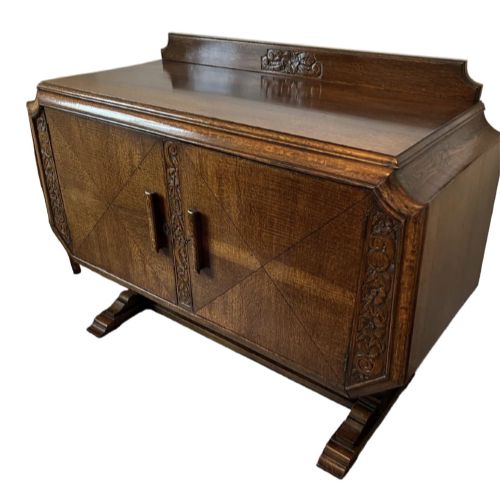
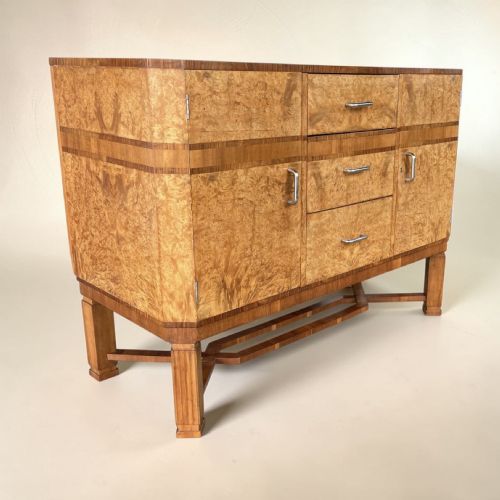
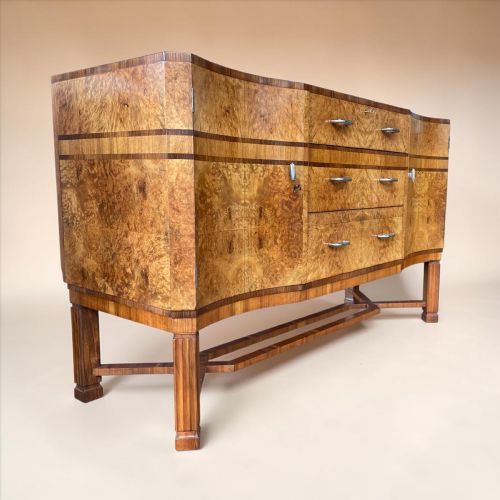
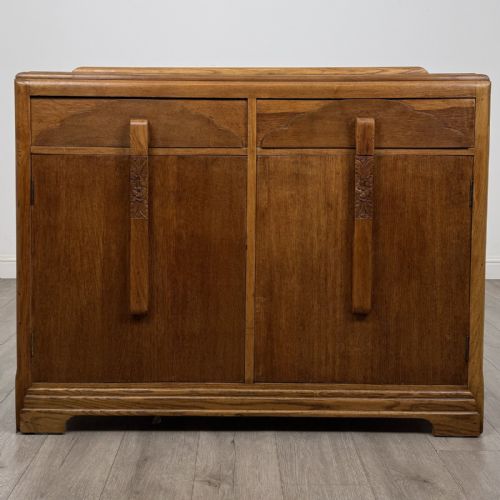
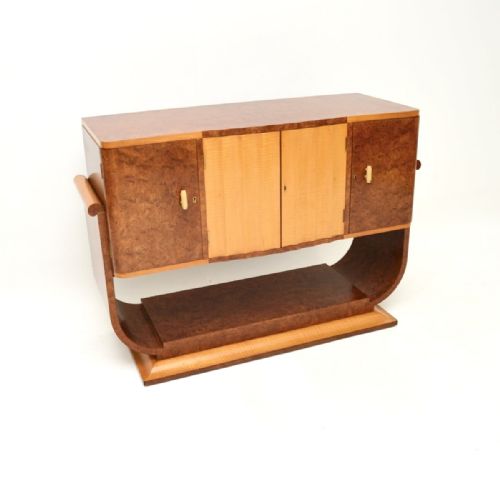
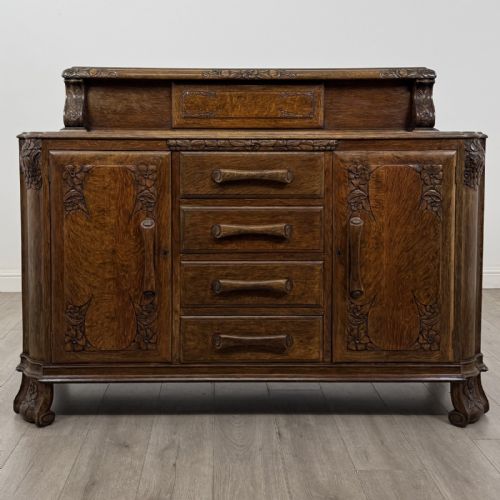
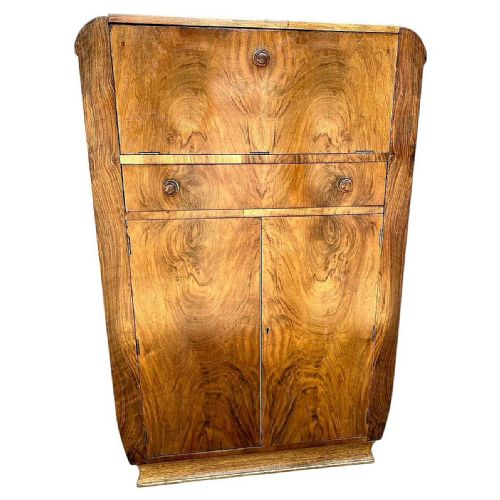
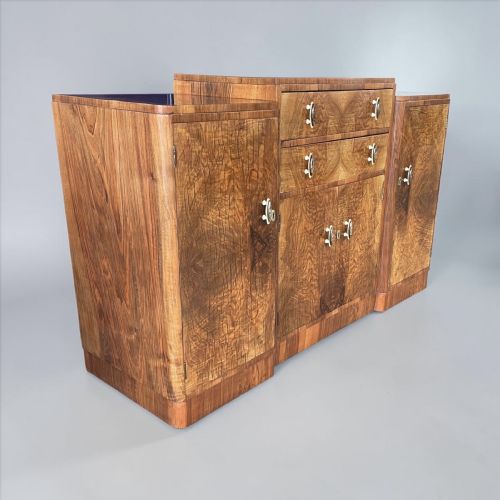
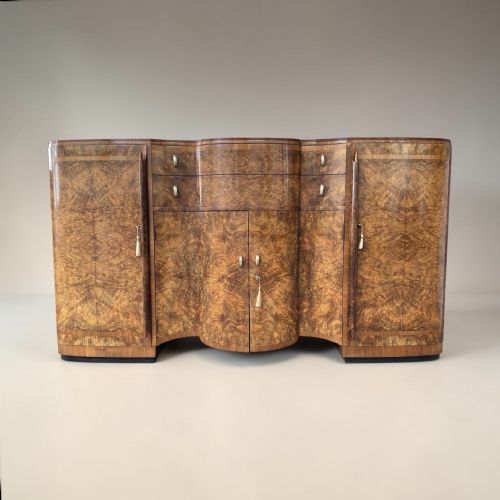
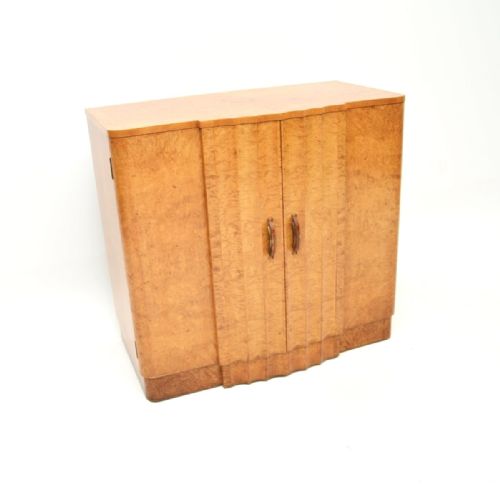
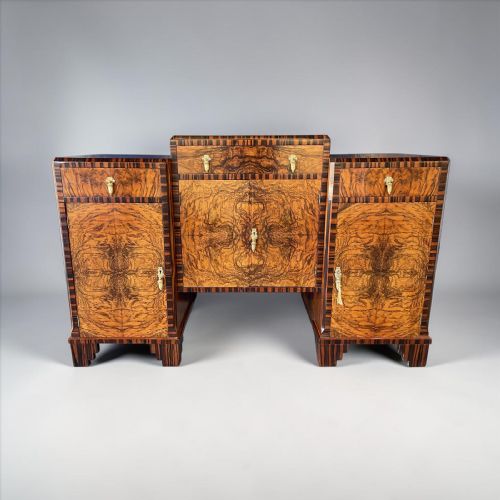
A 1930s art deco credenza encompasses low storage forms such as sideboards, cocktail cabinets, and console tables from the interwar period. These pieces are designed with strong horizontal lines, curved corners, and striking proportions suited to sophisticated interiors.
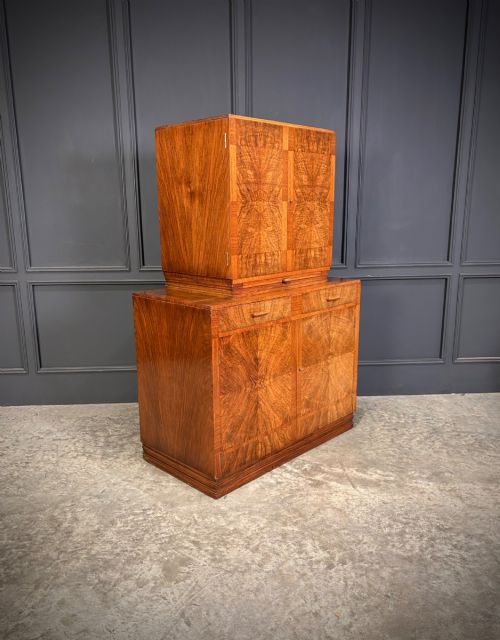
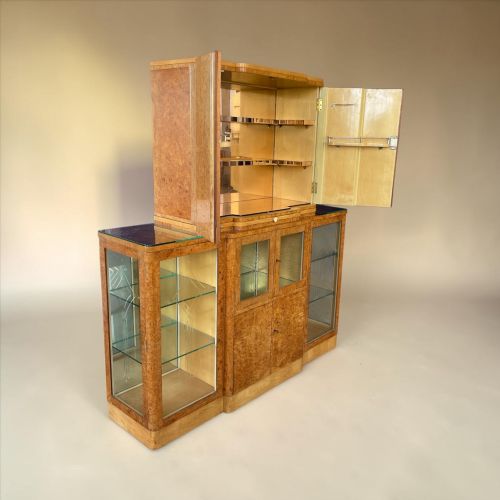
The version most commonly met on this page is the sideboard or cocktail cabinet, typically executed in figured walnut or burr walnut. These pieces often feature fitted interior compartments for drinks or dining ware behind heavily figured doors.
How they were made
Makers constructed these cabinets using sturdy timber frames overlaid with decorative veneers like walnut, burr walnut, sycamore, and satin birch. The grain patterns were carefully matched across drawer fronts and cupboard doors to create symmetrical, visually striking patterns.
Brass, metal, glass, and occasional parchment details were integrated into handles, trim, and internal fittings. This combination of traditional cabinetmaking and modern industrial materials defined the construction of the era.
1930s Art Deco Credenza Retail Price Guide 2026
Typical asking prices for 1930s art deco credenza among the pieces listed under this phrase on Sellingantiques today, from the lower quarter to the upper quarter. They describe what is for sale here now, not the wider market.
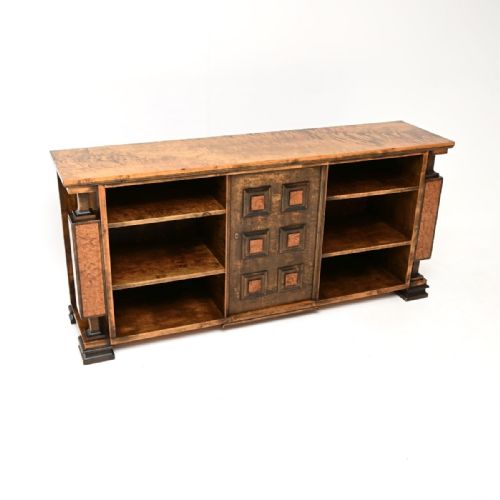
Object types span sideboards, cocktail cabinets, low bookcases, commodes, and console tables.
What varies in quality
Quality in these pieces is dictated by the selection and application of veneer, where expertly matched burr patterns elevate a standard carcass into a high-end studio piece. The precision of the joinery on curved doors and specialised hardware also separates workshop production from standard output.
Attribution to known makers adds distinct pedigree, as pieces bearing workshop signatures demonstrate superior hand-finishing and more ambitious architectural forms than unmarked items.
Maurice Adams·Harry and Lou Epstein·Hille·Hamptons of Pall Mall London·Bowman Brothers
The 1930s Art Deco Credenza Glossary
- Credenza
- A low cabinet or sideboard used for storage and display. Originally Italian in origin, the form evolved by the twentieth century to encompass sleek dining and living room storage.
- Veneer
- A thin layer of highly figured wood applied over a stable secondary timber carcass. This technique allowed cabinetmakers to display expensive grain patterns economically.
- Burr Walnut
- A specialised wood growth yielding intricate, swirling grain patterns. It was highly prized by period makers for creating decorative focal points on doors and drawer fronts.
- Cocktail Cabinet
- A specialised drinks storage unit featuring mirrored interiors, glass shelves, and pull-out mixing trays. These compartments reflect the social entertaining habits of the period.
- Sycamore
- A pale hardwood often used for contrasting stringing and internal drawer construction within walnut cabinets. Its light tone provides a sharp visual balance to darker exterior veneers.
1930s Art Deco Credenza: Frequently Asked Questions
How do I use a cocktail cabinet?
These cabinets are designed for entertaining, housing glassware, bottles, and a pull-down preparation shelf behind secure locking doors.
Their fitted internal compartments keep beverage service items organised and ready for guests.
Are these pieces French or English?
The selection includes both British workshops and continental makers, particularly from France and Italy.
Continental pieces often lean toward exotic timbers like macassar and adventurous curved forms.
How do I care for walnut veneer?
Keep the wood away from direct sunlight and excessive heat to prevent the delicate veneer from drying out or fading.
Apply a gentle beeswax periodically to nourish the timber and maintain the surface sheen.