




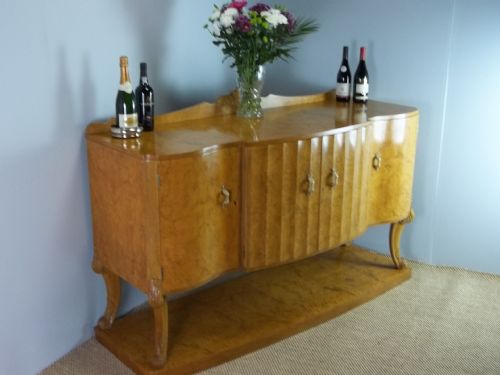
Golden Walnut Buffet
These golden walnut buffet pieces are striking storage items bringing warmth and rich grain patterns into a dining room or living space.
Golden Walnut Buffet
When searching for a golden walnut buffet, a buyer seeks a substantial serving table, credenza, or sideboard designed to anchor a dining space. The selection spans the nineteenth century through the Art Deco period of the nineteen-thirties, offering grand Victorian presence alongside streamlined modernist curves.
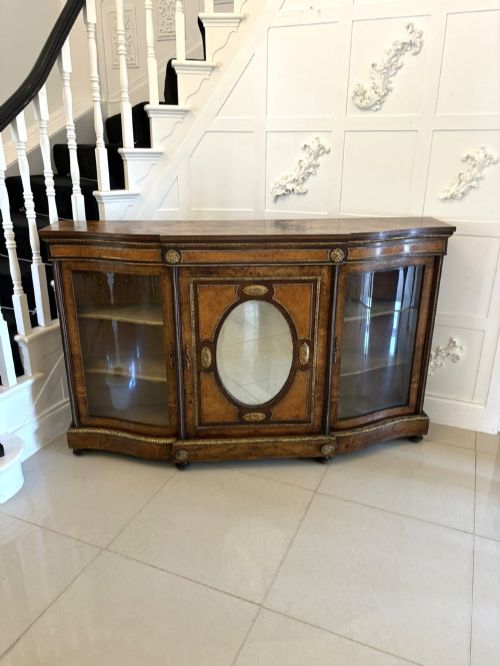
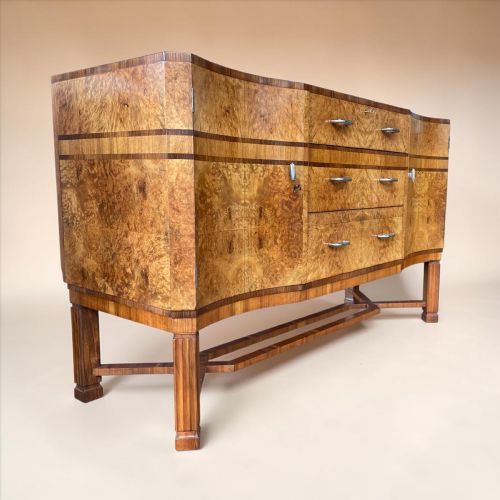
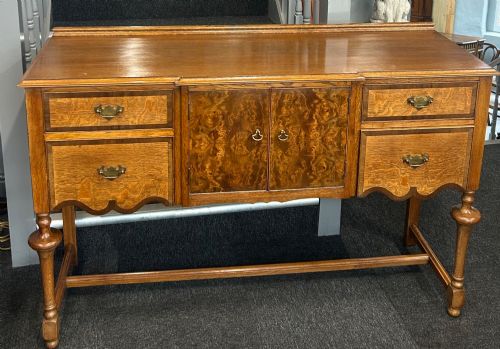
The versions most commonly met on this page are Art Deco sideboards and cabinets from the nineteen-thirties, frequently attributed to makers like Harry and Lou Epstein. Alongside these, nineteenth-century Victorian credenzas and Edwardian dresser bases appear, showing a continuity of rich timber use across different eras.
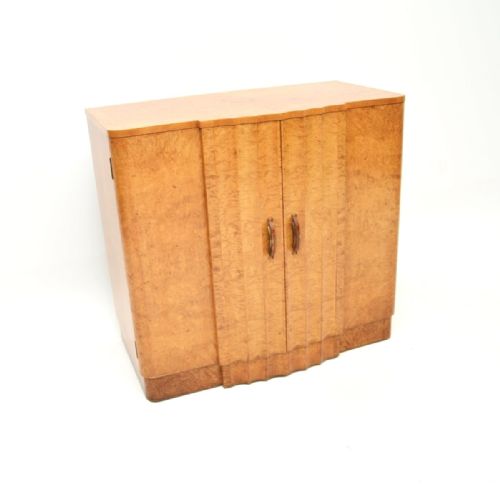
Forms range from large Italian sideboards and serving tables to smaller cabinets and credenzas. Each piece serves the dual purpose of display and concealed storage, uniting practical utility with decorative grain work.
How They Were Made
Cabinetmakers utilised burr walnut and standard walnut veneers over solid carcases to achieve sweeping, figured grain patterns across the front of each buffet. The natural swirls and knots of the burr timber were carefully matched and balanced to create symmetrical visual impact.
Metal mounts in brass and ormolu add structural and decorative contrast to the warm timber surfaces, particularly on Victorian credenzas. Details such as glass panels and occasionally Bakelite accents further distinguish the diverse periods represented on the page.
Golden Walnut Buffet Retail Price Guide 2026
Typical asking prices for golden walnut buffet among the pieces listed under this phrase on Sellingantiques today, from the lower quarter to the upper quarter. They describe what is for sale here now, not the wider market.
Listings span from the nineteenth-century Victorian period through Edwardian designs up to Art Deco pieces from nineteen-thirty.
What Varies in Quality
Quality rests upon the selection and matching of the burr walnut veneer, where superior examples display continuous, unbroken grain patterns across multiple doors and drawers. The skill of the cabinetmaker in laying this veneer determines the depth and luminosity of the finished surface.
Construction heft and secondary timber selection distinguish finer items from simpler utilitarian furniture. Finer items exhibit robust proportions, well-fitted internal drawers, and high-status decorative additions such as ormolu mounts or specialist brass hardware.
Harry and Lou Epstein
The Golden Walnut Buffet Glossary
- Burr walnut
- A prized timber harvested from the growth excrescences on walnut trees, yielding highly figured, swirling grain patterns. It is sliced into thin veneers for decorative furniture surfaces.
- Credenza
- A low cabinet or sideboard, originating in Italy, often featuring glass doors or decorative mounts. In nineteenth-century British pieces, they frequently served for displaying fine china and silver.
- Ormolu
- Gilt bronze ornamentation applied to furniture mounts and decorative hardware. It provides a bright golden contrast against dark or figured walnut timbers.
- Sideboard
- A dining room storage piece designed for serving food and storing tableware. They range from nineteenth-century dresser bases to streamlined Art Deco cabinets.
Golden Walnut Buffet: Frequently Asked Questions
What is a golden walnut buffet?
A golden walnut buffet is a large storage furniture piece finished in figured walnut timber, typically used in dining rooms for serving and storage.
The term encompasses sideboards, credenzas, and serving tables dating from the Victorian era up through the Art Deco period.
How do I date a walnut sideboard?
Dating relies on observing the stylistic characteristics, such as the curved geometric lines of Art Deco pieces compared to the heavy ornamentation of Victorian items.
Materials like ormolu mounts or Bakelite accents also offer strong clues to the specific decade of manufacture.
Where should I place a credenza?
A credenza suits dining rooms, living rooms, or wide hallways where its decorative front and storage capacity can be fully appreciated.
Consider the clearance needed for opening cabinet doors and drawers when positioning the piece against a wall.
How do I care for walnut veneer?
Walnut veneer requires protection from direct sunlight and excessive moisture to prevent fading and lifting of the delicate wood layers.
Regular dusting with a soft, dry cloth and occasional application of appropriate furniture wax keeps the timber nourished.