


1920s Silver Watch
A 1920s silver watch combines interwar mechanics with solid precious metal, offering the practical elegance of the Art Deco period.
1920s Silver Watch
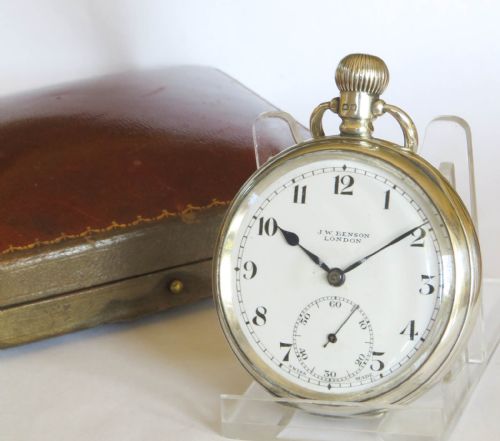
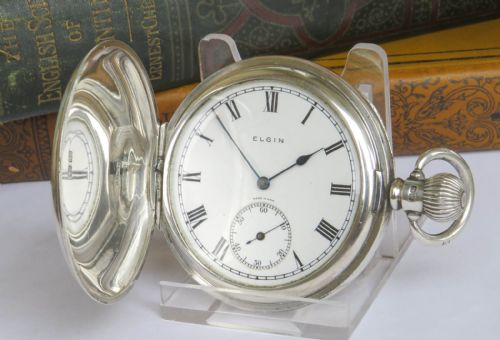
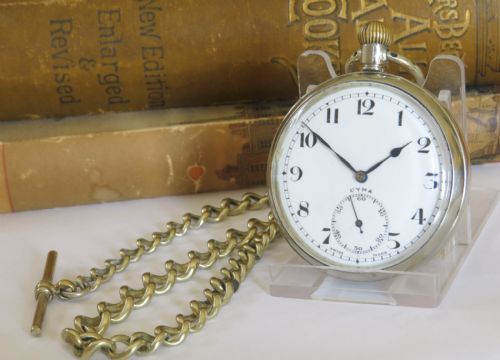
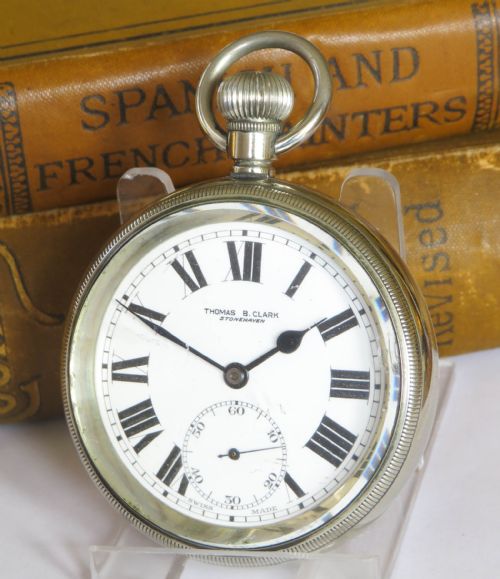
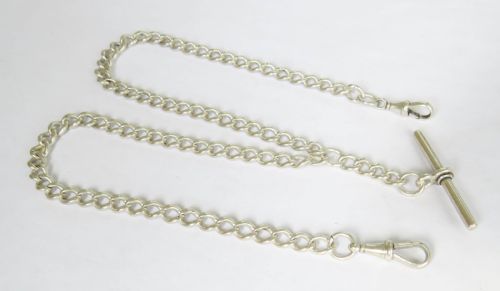
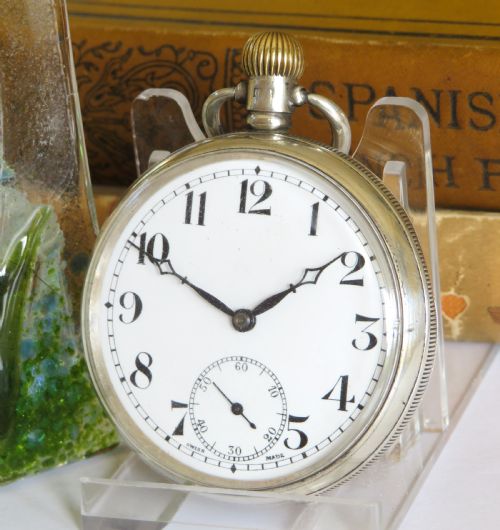
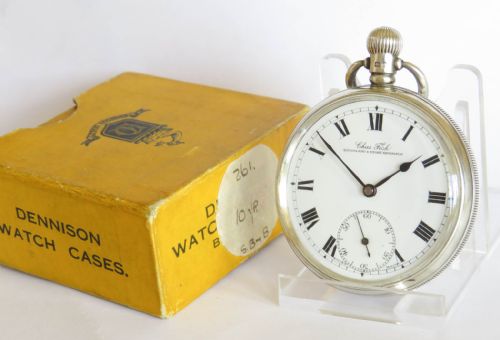
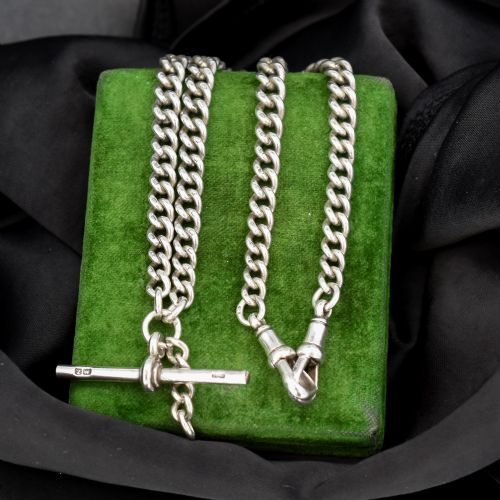
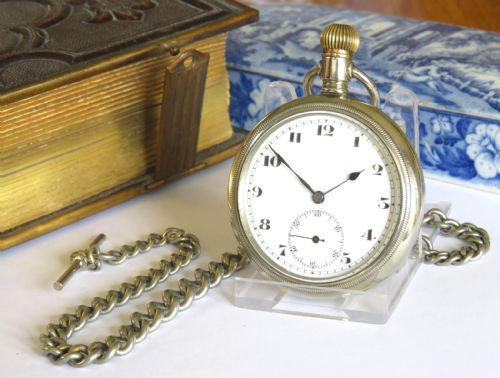
A 1920s silver watch most commonly appears as an open-faced or half hunter pocket watch, frequently accompanied by a matching sterling silver albert chain or fob. These pieces reflect the industrial and interwar aesthetic, bearing hallmarks from the early decades of the twentieth century alongside railway or municipal associations.
The material palette centres on solid silver and sterling silver cases, sometimes accented with enamel dials or glass crystals. Alongside traditional pocket watches, the selection encompasses wristwatches, travel clocks in hallmarked silver folding cases, and railway memorabilia.
The stylistic influence of Art Deco appears through geometric dial markings and clean case lines. Items range from standard timepieces to presentation pieces bearing dates and inscriptions from the mid-1920s.
Construction and materials
Cases utilise solid silver and sterling silver, often hallmarked to indicate the year of assay during the 1920s. Nickel, steel, brass, and chrome also appear in internal movements and associated hardware.
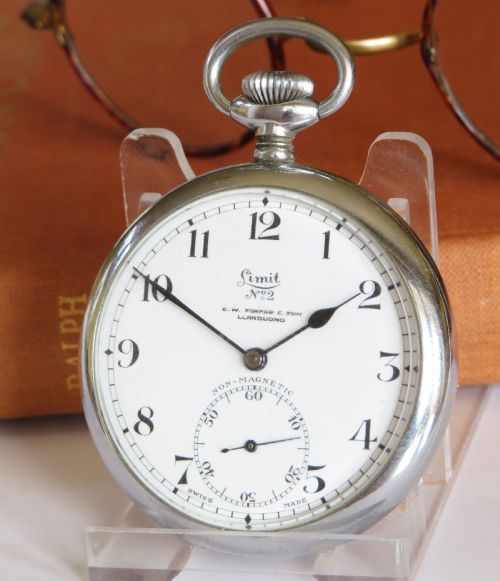
Movements rely on mechanical gear trains housed within metal cases, protected by glass crystals and frequently featuring enamel dials with Arabic or Roman numerals. Chains and fobs are constructed from linked silver segments designed to secure the timepiece to a waistcoat or lapel.
Listings feature silver and sterling silver alongside brass, chrome, and nickel cases spanning the 1920 and 1930 assay years.
Judging quality and execution
Distinction across the range rests upon the maker of the movement and the crispness of the case hallmarks. Established watchmakers and retailers impart greater technical refinement and durability to the piece.
The presence of original matched components, such as a hallmarked albert chain or a dedicated presentation inscription, elevates the historical completeness of the object. Dial legibility and the integrity of the enamel face further differentiate standard utility models from presentation grades.
J W Benson·Elgin·Cyma·Omega·Junghans·Waltham·H Samuel·Revue
The 1920s Silver Watch Glossary
- Half hunter
- A pocket watch featuring a case with a small glass-covered aperture in the front lid, allowing the time to be read without opening the cover.
- Albert chain
- A silver chain attached to a pocket watch, designed to be secured through a buttonhole to a waistcoat.
- Hallmark
- An official stamp applied to silver items indicating purity, the assay office, and the date of manufacture.
- Stem winding
- A mechanical winding system where the mainspring is tensioned by turning the crown attached to the stem, rather than using a separate key.
- Fob
- A small medallion or ornament attached to a watch chain, frequently inscribed for presentation or sporting achievements.
1920s Silver Watch: Frequently Asked Questions
How do I wind a 1920s silver pocket watch?
Most pieces from this era utilise a stem winding mechanism. Turn the crown gently between your thumb and forefinger until you feel resistance.
Avoid overwinding the spring, as this can damage the internal gear train of the mechanical movement.
Can I wear a pocket watch chain as a necklace?
Many silver albert chains and curb link pieces from the 1920s are adapted for contemporary wear around the neck. Their substantial link construction and secure fastenings lend them well to this purpose.
Examine the length and weight of the specific chain to ensure comfortable daily wear.
How do I clean a silver watch case?
Use a soft, dry microfibre cloth to remove surface dust and fingerprints from the silver exterior. Avoid harsh chemical dips, which can strip away original patination and damage delicate enamel dials or glass crystals.