
18th Century Wooden Bench
An 18th century wooden bench brings enduring joinery and honest domestic history into a modern room.
What 18th Century Wooden Bench Examples Look Like
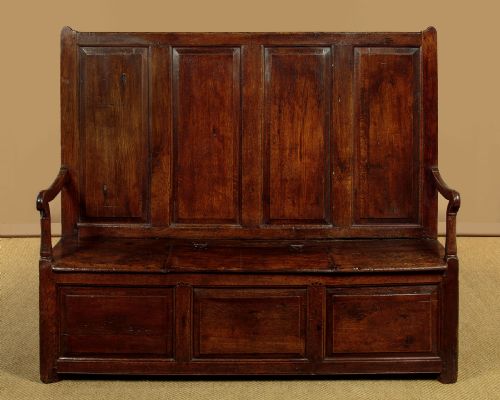
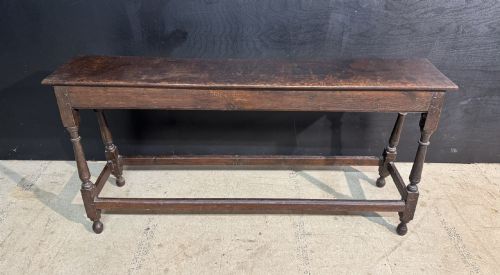
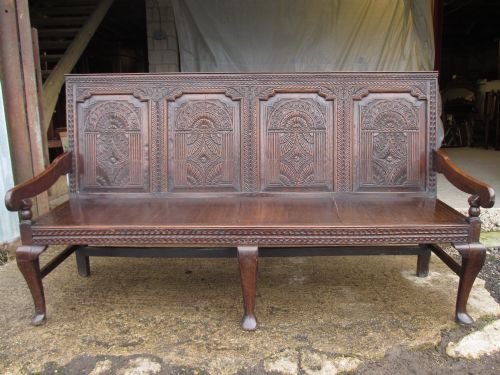
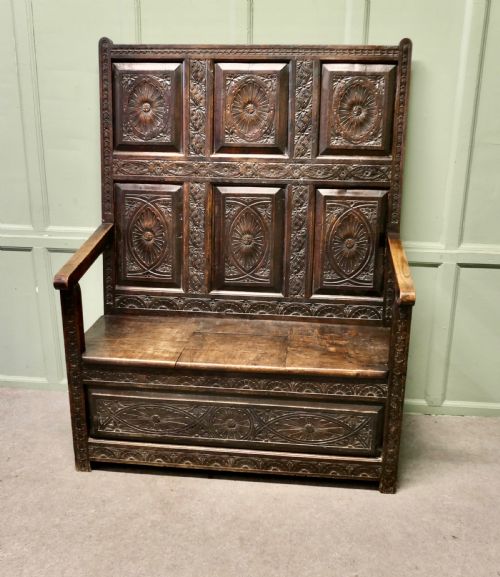
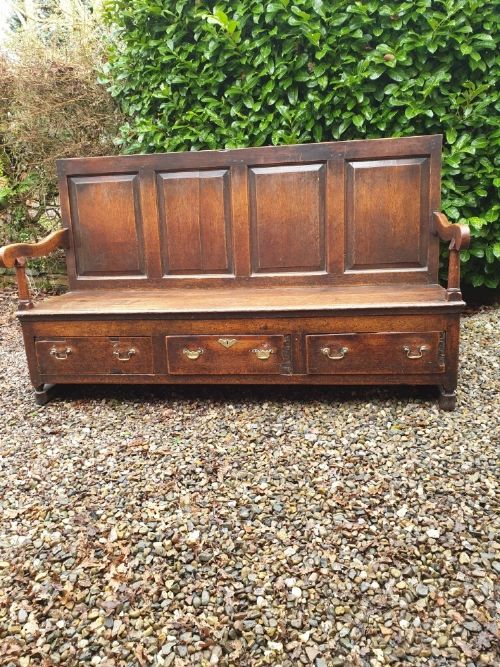
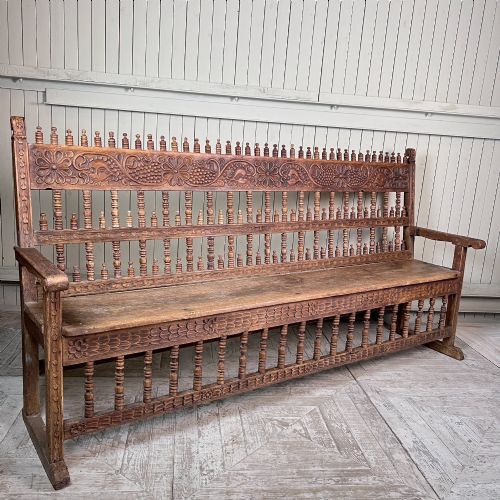
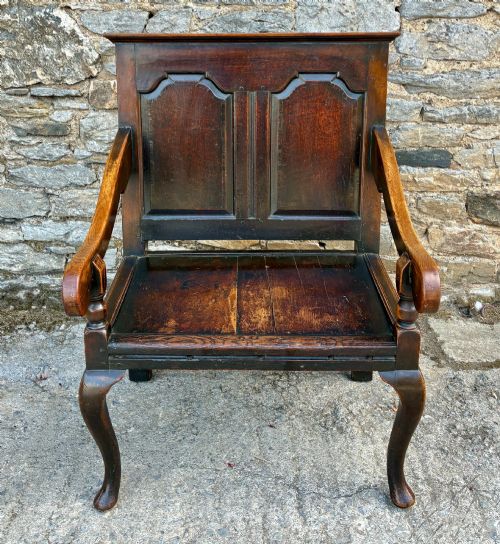
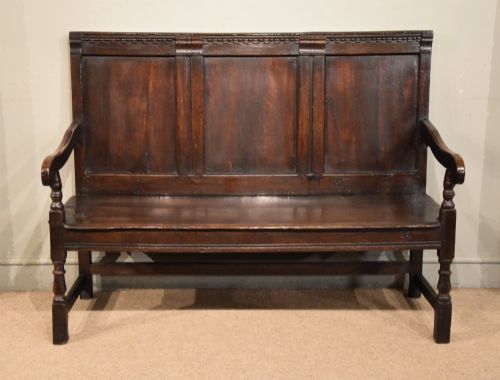
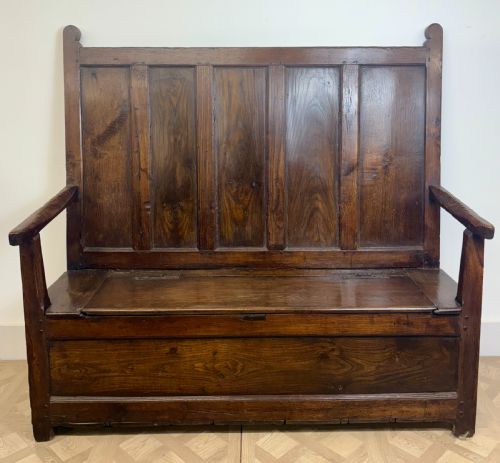
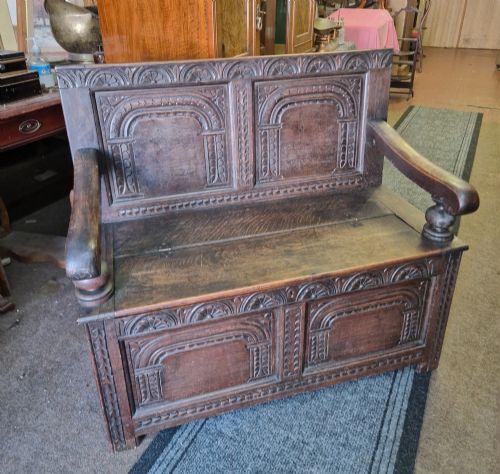
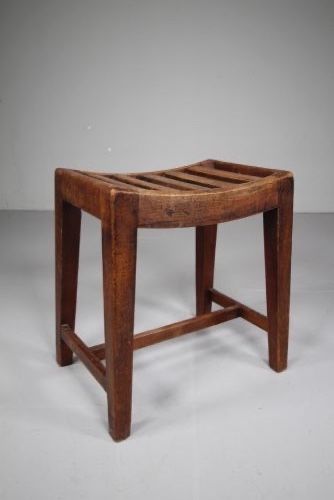
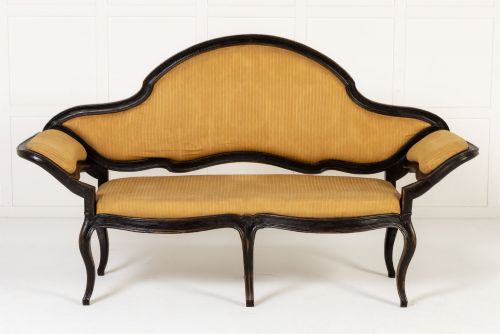
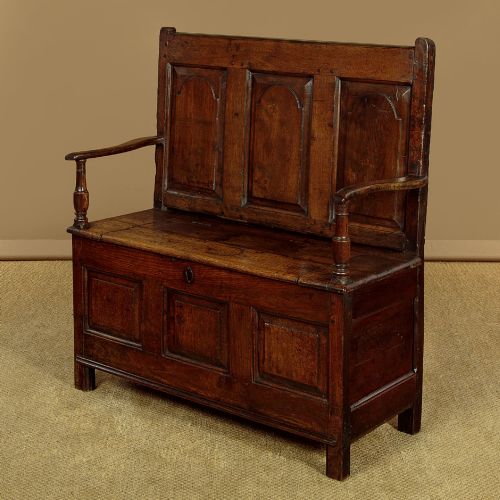
An 18th century wooden bench encompasses robust settles, panelled seats and provincial forms designed for daily utility. Pieces span British country workshops, Spanish colonial outposts and continental Europe, showing regional adaptations in timber and joinery.
The oak settle dominates the selection, frequently featuring high backs and enclosed lower storage or panelled construction to keep out drafts. Lighter painted finishes and hardwood variants appear alongside traditional oak and elm, reflecting diverse domestic and tavern settings.
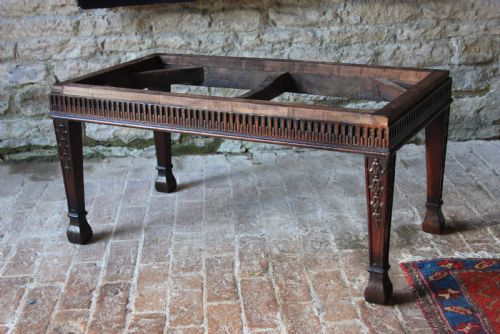
Makers utilised local woods to build seating that survived centuries of hard use. Buyers encounter both primitive country forms and more formal Georgian silhouettes within the available inventory.
Materials and Construction Methods
Joiners relied primarily on oak, pine, elm and assorted hardwoods, selecting timbers native to each region. Boards were hand-sawn and jointed using traditional pegged mortise and tenon construction.
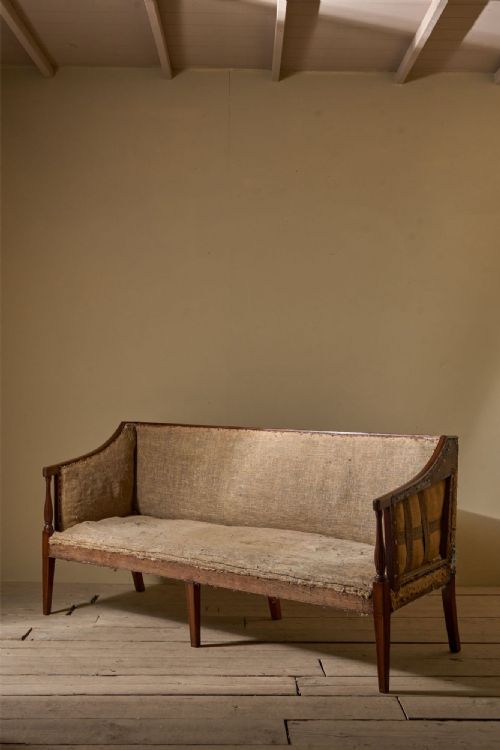
Surfaces often show traces of original paint, gilded accents, or the rich patina developed from decades of wax polishing. Secondary materials like linen and hessian appear in upholstered variants where appropriate to the period.
Retail Price Guide 2026
Typical UK retail prices for 18th century wooden bench, calculated from the Sellingantiques database of over a million retail prices indexed since 2003. This retail price guide relies exclusively on Sellingantiques data; no external sources or auction records are used, so the figures do not describe the wider market.
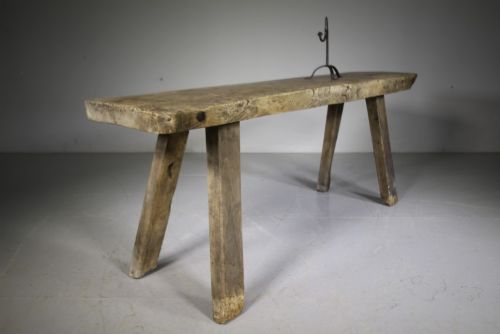
A cobbler's bench once held leather awls and wax threads before finding retirement in a quiet hallway.
Assessing Quality in Period Seating
Quality rests upon the integrity of the original timber and the survival of early surface treatments such as original paint. Pieces retaining their primary structural joints command greater attention from purists.
Proportion and the restraint of regional carving distinguish workshop standards. A well-balanced settle with honest wear demonstrates superior vernacular design compared to heavily altered examples.
The 18th Century Wooden Bench Glossary
- Settle
- A wooden bench with a high back, solid arms, and often a storage box beneath the seat. This form was designed to keep out cold draughts in unheated rooms.
- Panelling
- woodwork construction utilising framed styles and rails to hold thin central boards. Box panelling adds structural rigidity to the base of tavern settles.
- Patina
- The surface sheen and colour developed over centuries through use, waxing, and ageing of the wood. It serves as an indicator of genuine period age.
- Hardwood
- Timber derived from broad-leaved trees such as oak and elm. These dense materials provided the necessary strength for heavy furniture frames.
Frequently Asked Questions
How do I tell an 18th century bench from a later copy?
Examine the construction marks, timber shrinkage, and tool signatures left by hand-sawn preparation. Genuine examples display cumulative wear and pegged joints appropriate to the period.
Examine the underside and hidden framing areas for consistency in wood ageing and fastener types. Later reproductions often betray their origin through mismatched timber species and machine-cut uniformity.
Where were settles placed in a home?
Settles were traditionally positioned near the hearth to shield occupants from cold draughts. Their high solid backs trapped radiant heat from the fire.
They also served as room dividers in large open-plan kitchens and tavern common rooms. The enclosed base kept belongings safe from damp floors and pests.
Can I use an antique wooden bench daily?
Period benches were engineered for heavy domestic or tavern use and remain structurally robust. Standard cleaning involves gentle dusting and occasional wax application to nourish the dry timber.
Avoid placing wooden seating near modern direct heat sources to prevent timber splitting. Proper placement ensures the antique joins remain stable under normal seating loads.
What is a primitive cobbler bench?
A cobbler bench is a specialised low workbench used by shoemakers to hold tools and leather. These utilitarian forms feature small compartments and compartments tailored for specific trades.
Their functional design gives them a sculptural quality appreciated in modern interiors. They represent the specialised working life of the period rather than domestic parlor seating.