


18th Century Vanity Glass
An 18th century vanity glass brings portable reflection and refined storage to a dressing space, prized for period timbers and pivoting frames.
18th Century Vanity Glass
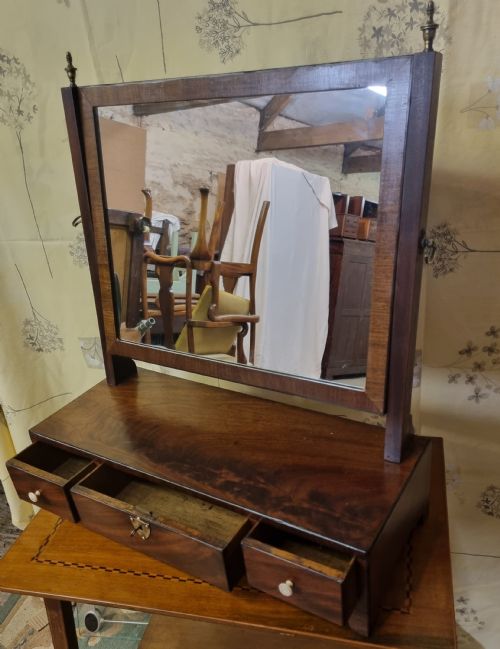
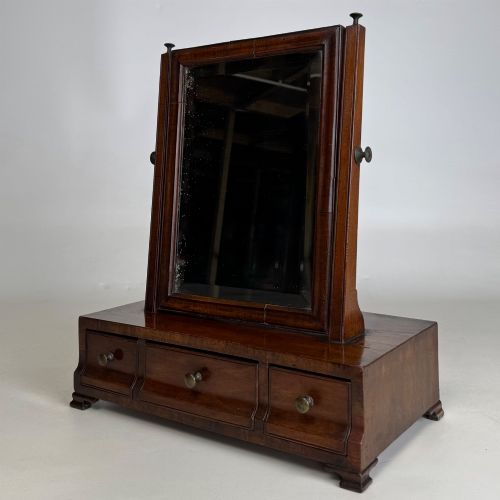
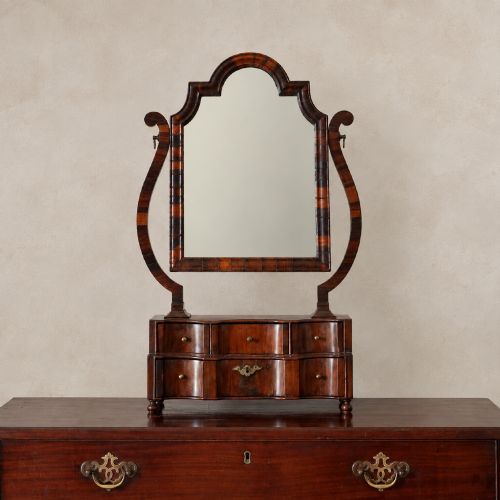
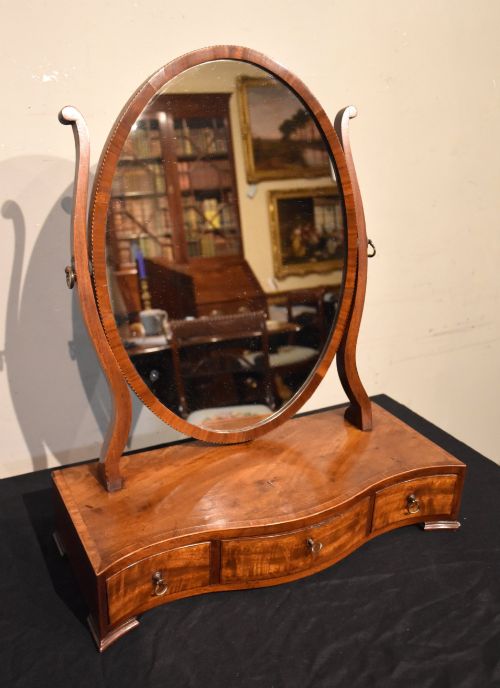
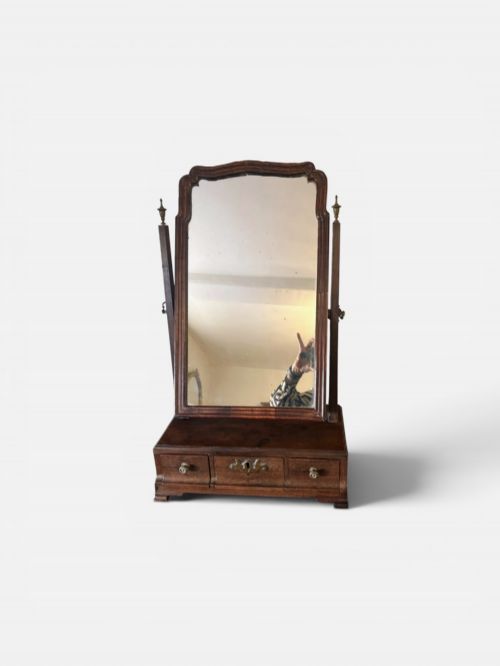
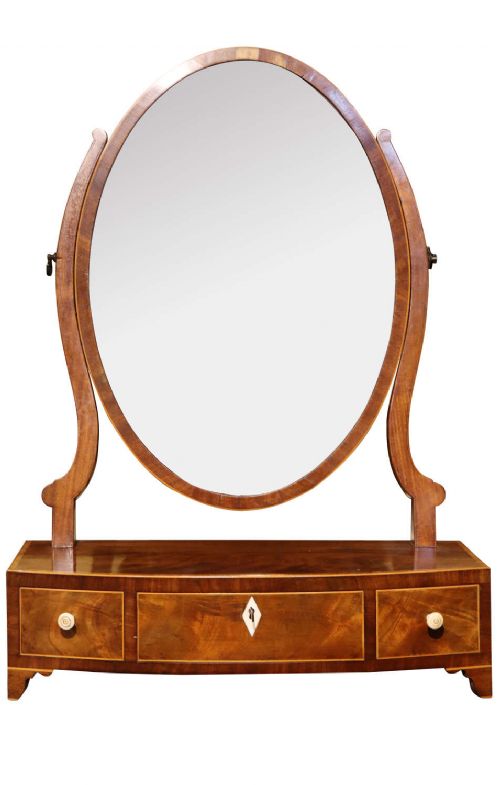
An 18th century vanity glass comprises a swivelling mirror plate mounted within a wooden frame, which in turn sits upon a small box base fitted with drawers. These pieces are commonly encountered as dressing mirrors, toilet mirrors, and dressing table mirrors dating from the Georgian, Queen Anne, and George III periods.
The form developed to sit atop a chest of drawers or a dedicated dressing table, providing a convenient surface for personal grooming. Many surviving examples utilise serpentine fronts, box bases, or miniature bureau compartments to store small accessories.
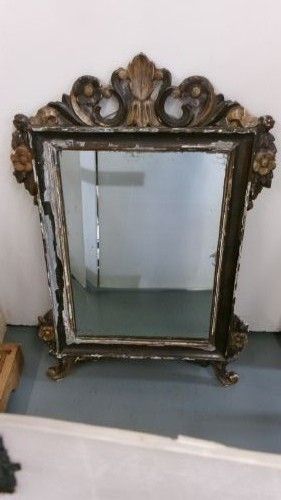
While most examples are table mirrors designed to stand independently, the selection also includes wall mirrors, hand mirrors, and related small personal items like perfume bottles and patch boxes. Mahogany and walnut dominate the offerings, often shaped with crossbanding or parcel-gilt details.
How They Were Made
Cabinetmakers constructed these frames using dense hardwoods such as mahogany and walnut, frequently applying burr veneers, laburnum, or harewood to the primary surfaces. Crossbanding and stringing added linear contrast to the drawer fronts and plate surrounds.
The mirror plates themselves rest on pivoting brass screw pins or side arms, allowing the glass to tilt to the desired angle. Support uprights often feature carved scrolling details, gesso, or giltwood highlights, particularly on Italian Rococo and parcel-gilt variants.
Some miniature bureau bases include tiny internal compartments just right for hiding clandestine love letters.
What Varies in Quality
Quality in an 18th century vanity glass rests upon the selection of timber veneers and the crispness of the cabinetwork. Pieces featuring figured burr walnut, intricate crossbanding, or serpentine base fronts demonstrate superior craftsmanship compared to plain, flat-fronted alternatives.
The retention of original mirror glass, brass hardware, and secondary softwood framing significantly elevates a piece. Subtle details such as finely carved parcel-gilt decoration or specialised forms like bureau bases separate standard utilitarian items from finer examples.
The 18th Century Vanity Glass Glossary
- Toilet mirror
- A portable table mirror designed for use on a dressing table or chest of drawers. These typically incorporate small drawers in the base for cosmetics.
- Serpentine
- A curved shape characterised by a convex centre flanked by concave sides. This line appears frequently on the drawer fronts of finer Georgian table mirrors.
- Crossbanding
- A border technique where thin strips of veneer are laid perpendicular to the grain of the central panel. It provides a neat decorative edge to mahogany and walnut surfaces.
- Parcel-gilt
- Partially gilded with gold leaf to highlight carved wooden details and mouldings. This finish is often seen against walnut or mahogany grounds.
- Gesso
- A plaster-based material applied to wood and carved or moulded before gilding. It provides a smooth base for the gold leaf on decorative frames.
18th Century Vanity Glass: Frequently Asked Questions
Where were these placed?
These mirrors were designed to sit on top of dressing tables, chests of drawers, or dedicated stands within a bedroom or dressing room.
Because they were portable, owners could move them around the house to follow the best natural light for grooming.
How do I date a mirror?
Dating relies on identifying the prevailing timber styles, such as walnut for early examples and mahogany for later Georgian pieces. Construction methods, drawer dovetails, and hardware also offer clues to the period.
Stylistic markers like Queen Anne curves or Sheraton oval shapes help narrow down the decade of manufacture.
What is a toilet mirror?
In eighteenth-century terminology, a toilet mirror refers to a table-standing dressing glass rather than a modern bathroom fixture.
The term derives from the French word toilette, meaning the process of dressing and grooming.
Are the mirror plates original?
Many surviving pieces retain their original mercury or silvered glass, which often displays characteristic light foxing and ageing. Some mirrors have received replacement glass over the centuries to maintain a clear reflection.
Examining the backing boards and silvering helps determine the age of the glass plate.