
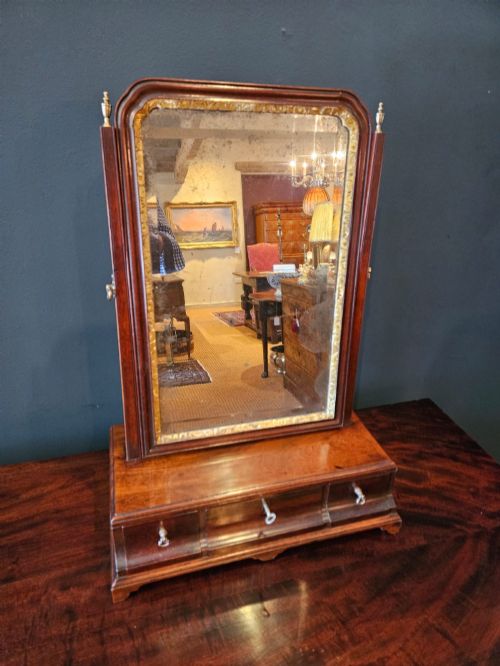


George II Table Mirror
A george ii table mirror is a compact dressing glass designed for the chest or table, offering adjustable reflection through a pivoting frame.
George II Table Mirror
When searching for a george ii table mirror, buyers encounter compact dressing glasses designed to sit atop a chest, console, or table for personal grooming. These pieces comprise an upright mirror plate held within a pivoting wooden frame, mounted between two upright supports atop a small base.
The most common versions seen here date from the Georgian period and feature rich timbers such as walnut or mahogany. Some examples incorporate small drawers within the base structure to hold trinkets or cosmetics, whilst others display parcel-gilt details or inlaid figured veneers.
Quality differences in these mirrors
The choice of timber grain dictates much of the visual distinction, with highly figured walnut or richly toned mahogany marking out finer examples. The crispness of carved details, such as parcel-gilt mouldings and shaped crestings, also separates standard production from superior cabinet work.
Proportion and structural integrity define the overall success of the piece, particularly the balance between the swing frame and the supporting base. Original mirror glass and well-preserved brass hardware contribute further to the distinction between ordinary and exceptional specimens.
These miniature looking-glasses let eighteenth-century gentlemen check their wigs while keeping the mantelpiece completely free for candlesticks.
John Franklin London
The George II Table Mirror Glossary
- Dressing mirror
- A small mirror mounted on a stand or base, designed to sit upon a table for personal grooming. These items typically feature a pivoting frame to adjust the angle of reflection.
- Parcel-gilt
- Partially gilded with gold leaf, usually to highlight carved wooden details or mouldings against a dark timber ground. This technique adds subtle contrast and brightness to the frame.
- Toilet mirror
- An alternative historical term for a dressing table mirror used during the morning routine of dressing and hair styling. Such pieces often incorporate small compartments or drawers in the base.
- Figured walnut
- Walnut timber possessing a decorative, swirling grain pattern resulting from particular growth characteristics in the tree. Cabinetmakers prized this material for its rich visual texture on prominent surfaces.
George II Table Mirror: Frequently Asked Questions
Where should a george ii table mirror be placed?
These mirrors sit comfortably on top of chests of drawers, side tables, or dedicated dressing tables in bedrooms and hallways. Their compact footprint allows them to occupy modest surfaces whilst providing functional reflection.
Ensure the supporting furniture matches the scale of the mirror frame so the piece remains stable and visually balanced within the room.
Did these mirrors always have drawers?
Not all examples feature storage compartments in the base, though many incorporate a stepped plinth fitted with one or more small drawers. These compartments were originally intended for holding pins, cosmetics, and small trinkets.
Simpler designs omit drawers entirely, relying solely on a clean wooden base to support the upright pillars and pivoting mirror frame.
How do I adjust the mirror angle?
The pivoting frame is held between the two upright posts by threaded brass screws or pins on either side. Tightening or loosening these side fixtures allows the glass to tilt forward or backward to the desired angle.
Care should be taken when adjusting older hardware to avoid stressing the original wooden framing around the pivot points.
What woods were used for these frames?
Cabinetmakers primarily utilised walnut and mahogany for these dressing glasses, often selecting figured veneers to create decorative patterns on the surfaces. Parcel-gilt highlights and gold leaf were frequently applied to accent carved mouldings.
Secondary woods such as oak or pine often appear in the hidden structural parts and drawer linings of the base.