



18th Century Portrait Pair
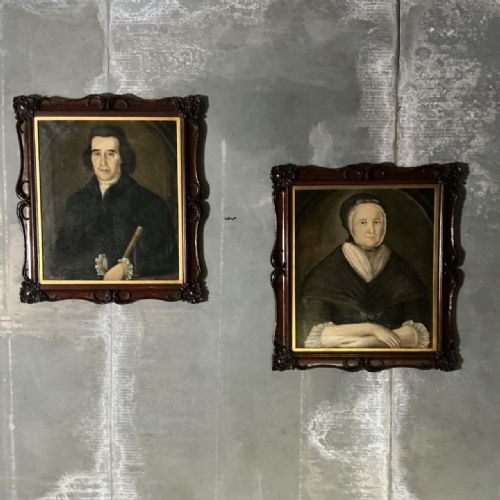
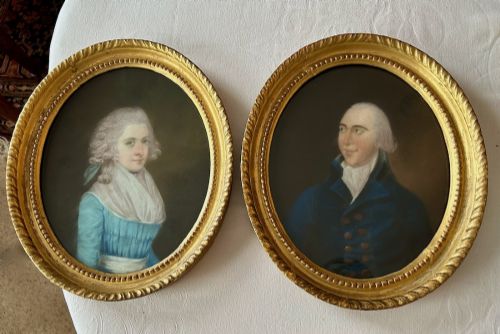
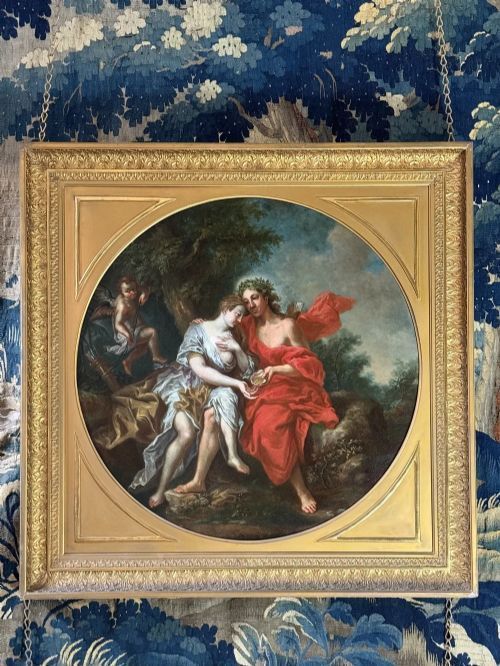
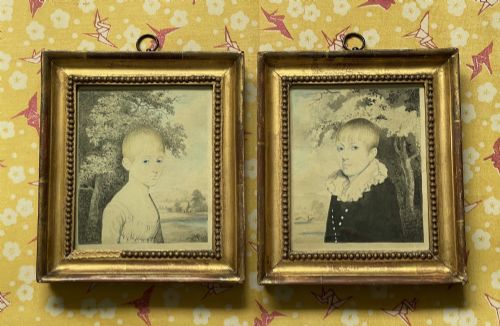
When you search for an 18th century portrait pair, you encounter matched likenesses of couples, family members or mythological figures captured across canvas, paper and enamel.
18th Century Portrait Pair
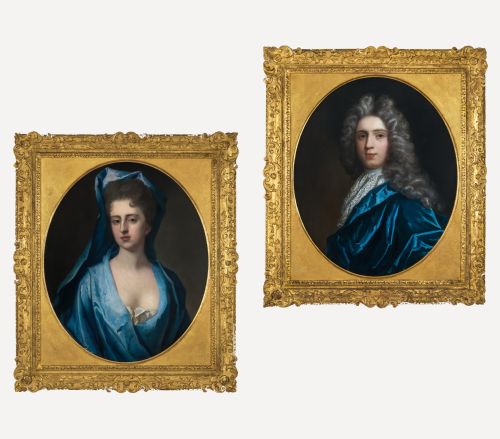
An 18th century portrait pair brings together two companion pieces, most frequently depicting a husband and wife, family members, or paired subjects such as siblings and mythological figures. These matching works were designed to hang together, balancing composition and subject matter to present a unified narrative of lineage or taste.
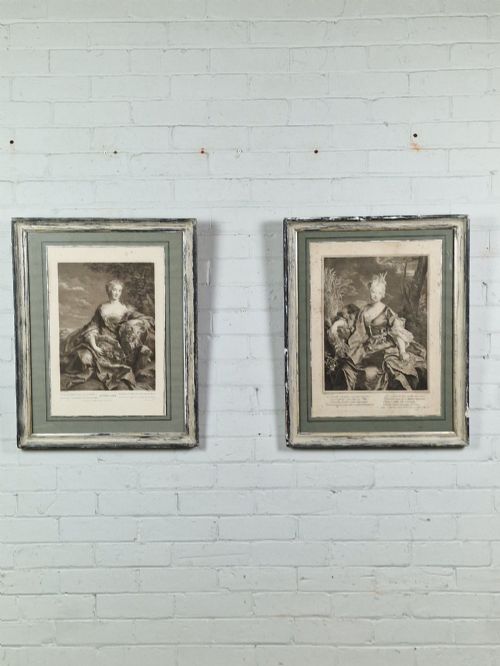
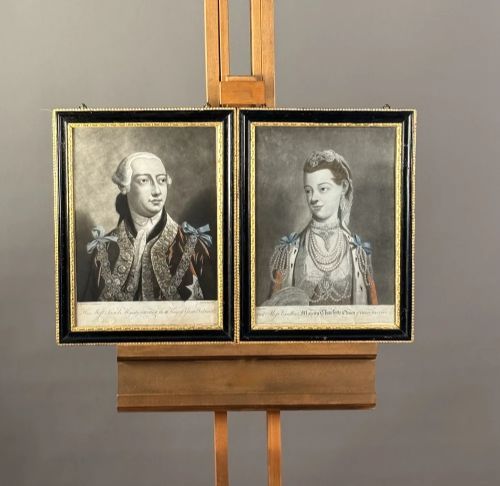
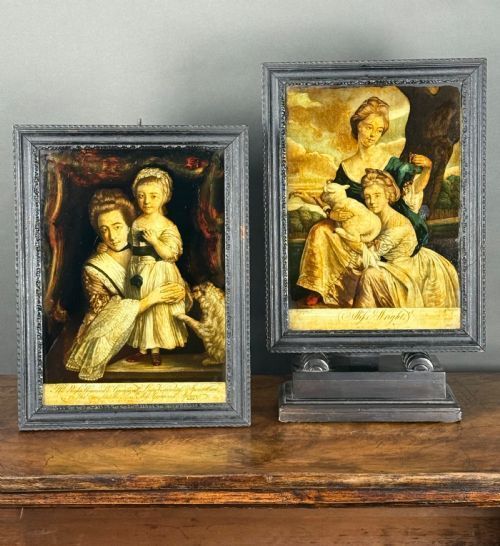
The format spans diverse physical mediums beyond standard oils on canvas, extending into pastel portraits, miniature paintings, enamel plaques, watercolours, and graphic print formats like mezzotints and engravings. While many emerge from the English and French schools, others reflect Dutch engraving traditions, Italian Grand Tour souvenirs, and Indian album pages from the wider eighteenth-century sphere.
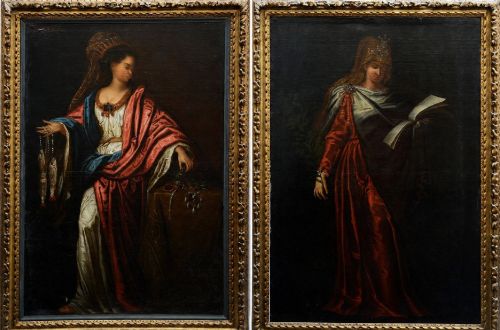
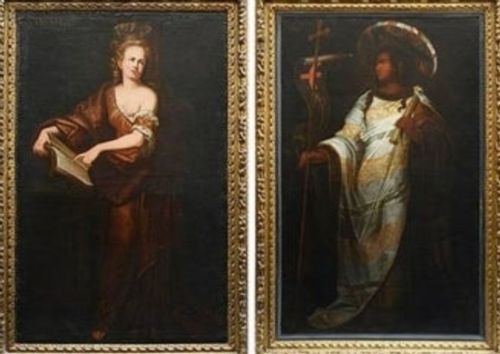
Buyers will encounter these dual likenesses framed in period settings, ranging from water gilded oval frames to original carved giltwood surrounds. Whether recording specific named individuals such as Henry Brooker and Esther Vallance, or classical subjects like the Cumaean and Delphic Sibyls, the pairings preserve historical identities and allegorical pairings.
Materials and construction methods
Artists of the period painted primarily with oil on canvas or worked on paper through pastel, watercolour, and line engraving. Mezzotint printmaking and reverse glass techniques also captured detailed portraiture, while specialised craftsmen applied enamel onto metal oval plaques or shaped gilt curtain tie backs.
Surviving pieces rely heavily on natural timber and metal components for their display, utilising wood for stretchers and frames enhanced by gold leaf and water gilding. Structural integrity relies on traditional mounting methods, preserving delicate paper, canvas, and carved marble cameo bas-relief profiles within period surrounds.
Listings feature mediums spanning oil on canvas, pastel, enamel, marble, pewter, and reverse glass prints.
Distinctions in execution and preservation
Quality rests upon the skill of the draughtsmanship and the fidelity of the likeness, distinguishing master hand-painted oils and detailed miniatures from mass-produced prints. The subtlety of the modelling in pastel or the crispness of line in an engraving dictates the visual strength of the pairing.
The original relationship between the two works heavily influences their standing, requiring matching conservation states and uniform fading across both canvases or papers. Surviving in original carved giltwood or water gilded frames adds significantly to the integrity of the ensemble.
James Sharples·Michael Dahl·Thomas Murray·Charles Antoine Coypel·Thomas Frye·Richard Purcell·Robert Sayer·Ozias Humphry·Francois Boucher·Henry Edridge
The 18th Century Portrait Pair Glossary
- Mezzotint
- A printmaking process of the scraped tonal style that allows smooth gradations of light and shade. It was frequently used in the eighteenth century for reproducing royal and society portraits.
- Pastel
- A dry medium consisting of powdered pigment and a binder, used extensively on paper for soft-textured portraits. Pieces executed in this medium require glass protection to prevent pigment loss.
- Reverse glass painting
- An artistic technique where the image is painted directly onto the back of a glass panel and viewed from the front. This method creates a luminous surface finish popular in Georgian decorative arts.
- Enamel plaque
- A decorative metal plate fused with vitreous glass coatings through firing, used for small-scale portable portraits. South Staffordshire workshops produced notable oval variants during this period.
- Bas-relief
- A sculptural technique where figures project only slightly from a flat background surface. Grand Tour souvenirs utilised carved marble in this profile format.
18th Century Portrait Pair: Frequently Asked Questions
How were portrait pairs displayed?
Companion portraits were hung symmetrically on opposite sides of a fireplace, mirror or doorway to maintain architectural balance in period rooms.
Their matching frames and complementary gazes created a cohesive visual dialogue across the interior wall space.
Were all portrait pairs painted from life?
While many commissions recorded living sitters directly in the artist's studio, others drew from existing family collections or classical mythology.
Printmakers also published popular royal likenesses and allegorical subjects widely for domestic display without direct sittings.
How do you care for works on paper?
Pastels and watercolours require strict protection from direct sunlight to prevent the fading of delicate pigments on paper.
Maintaining stable humidity levels behind sealed framing prevents the growth of mould and protects the paper fibres.
What subjects besides couples appear?
Makers recorded children, family friends, and named historical or mythological figures alongside traditional marital pairs.
Siblings, classical sibyls, and classical Roman emperors also appear frequently within the surviving eighteenth-century records.