


18th Century Oak Trunk
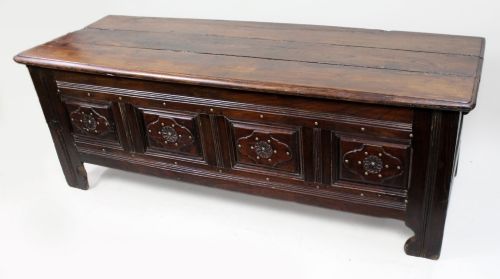
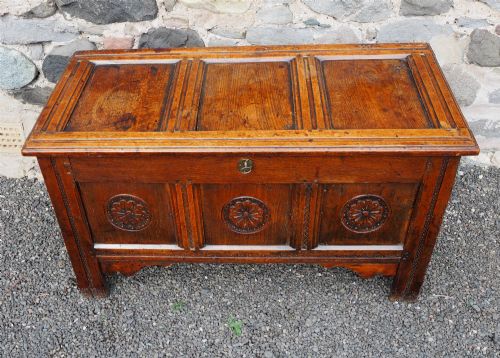
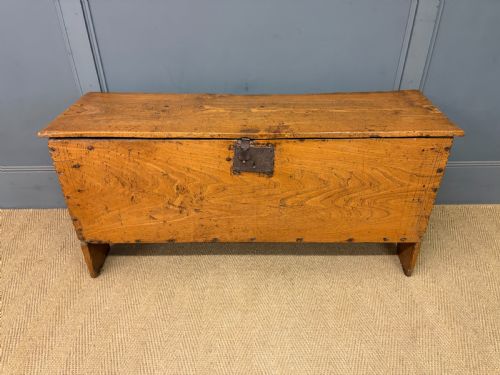
When you search for an 18th century oak trunk, you uncover solid timber storage pieces built to hold linens and valuables.
18th Century Oak Trunk
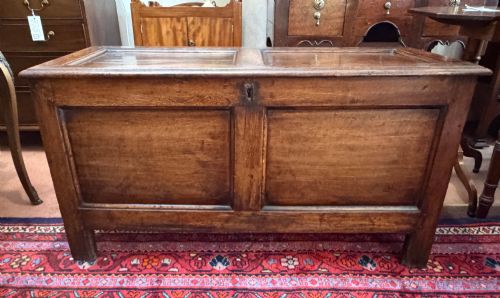
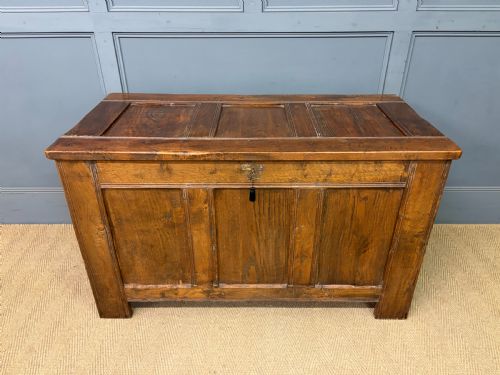
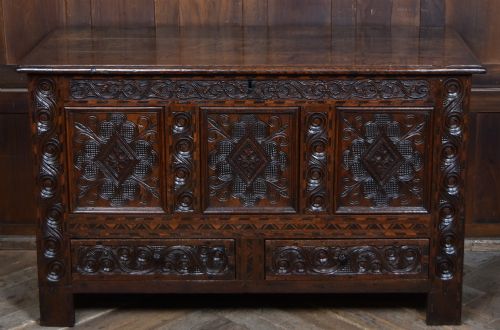
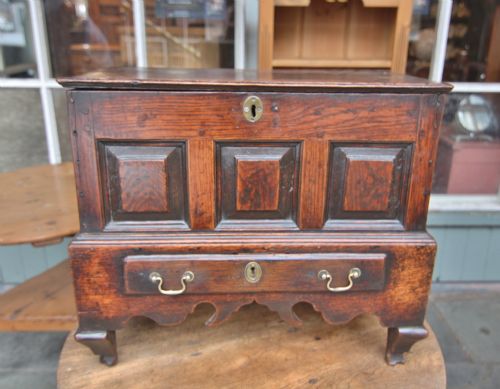
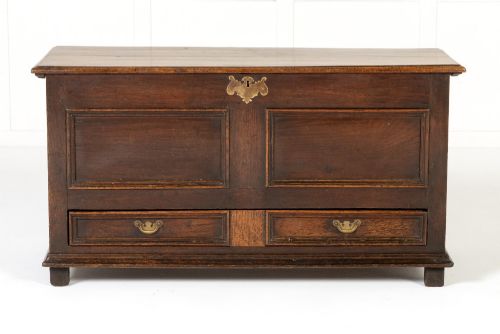
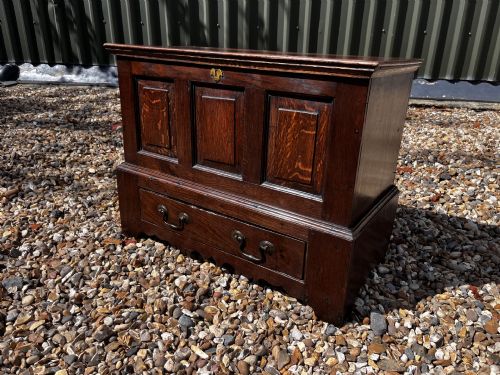
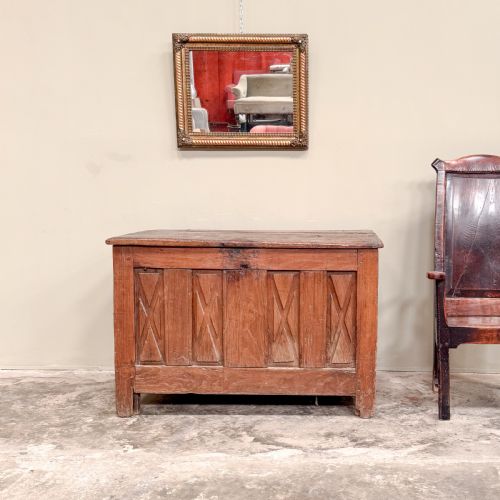
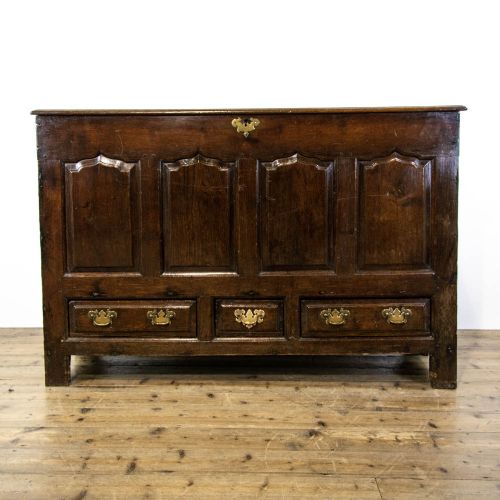
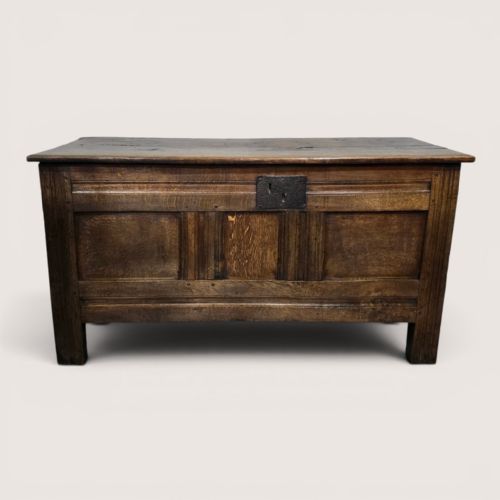
The pieces grouped under an 18th century oak trunk encompass robust vernacular storage items, most frequently encountered as plain or carved coffers, blanket boxes, and mule chests fitted with lower drawers.
Makers from this era also produced regional variations such as the miniature coffer bach from Wales, alongside smaller sword chests and joined panelled boxes designed for domestic utility.
Originating predominantly from English, Welsh, and French workshops, these items reflect Georgian and provincial tastes that prioritized durability and deep storage capacity.
How they were made
Cabinet makers built these pieces primarily using joined and panelled oak framework, sometimes incorporating secondary timbers like elm, walnut, pine, or burr elm for contrast and internal construction.
Iron and brass hardware such as hinges, lock plates, and metal binding reinforced the heavy timber lids and corners, securing the contents against wear and movement.
What varies in quality
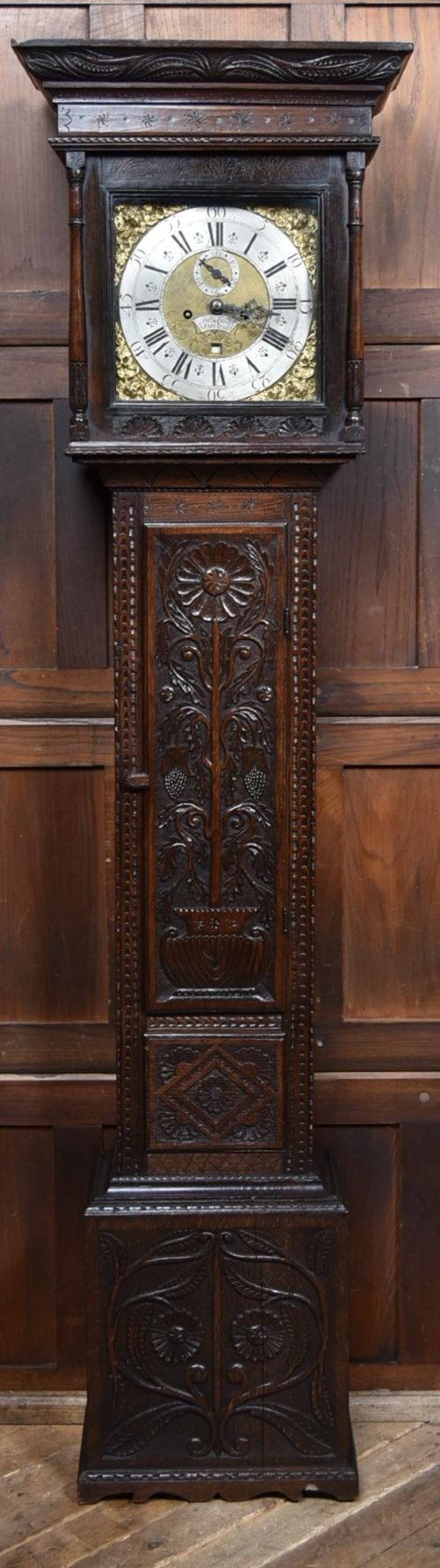
The hierarchy of quality rests upon the crispness of hand-carving, the selection of figured timber panels, and the structural integrity of the joined frame rather than surface polish alone.
Examples that retain their original brass work, untouched patination, and functional internal till boxes stand well apart from pieces altered by later repairs or heavy restoration.
Jn° Smith·Richard Corless
The 18th Century Oak Trunk Glossary
- Coffer
- A heavy wooden chest traditionally used for storing valuables, linens, or dry goods. They form the backbone of early domestic storage.
- Mule chest
- A storage chest featuring one or more drawers built into the base beneath the main compartment. This form bridges the gap between a traditional coffer and a modern chest of drawers.
- Coffer bach
- A small Welsh box or coffer, translating literally to little chest. These miniature versions served specific domestic roles in Welsh households.
- Joined and panelled
- A method of construction where frame members are joined using mortise and tenon joints to hold floating wooden panels securely. This technique allows the timber to expand and contract naturally without splitting.
18th Century Oak Trunk: Frequently Asked Questions
What is a coffer bach?
A coffer bach is a small, distinctively Welsh miniature chest created in the eighteenth century for domestic settings.
These compact pieces often share the construction methods of their larger counterparts while serving as specialised tabletop or bedside storage.
How do mule chests differ from coffers?
Mule chests incorporate one or more drawers at the base beneath the main lifting lid compartment.
This addition allowed owners to access everyday items in the drawers without lifting heavy items stored on top.
Where were these trunks made?
Workshops across England, Wales, and France produced these pieces using regional timbers and distinct local styles.
English and Welsh examples lean heavily on vernacular oak traditions, while French pieces often display provincial carving details.
How do I care for antique oak?
Keep these wooden pieces away from direct heat sources and sudden humidity shifts to prevent the oak panels from splitting.
Apply a gentle beeswax occasionally to nourish the dry timber and maintain the natural surface finish.