
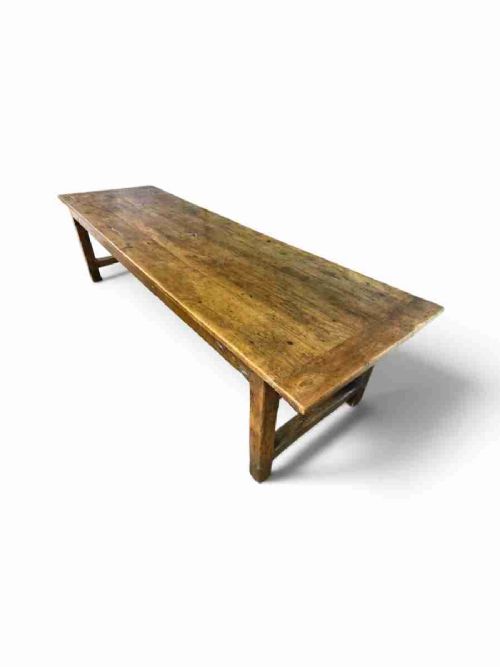
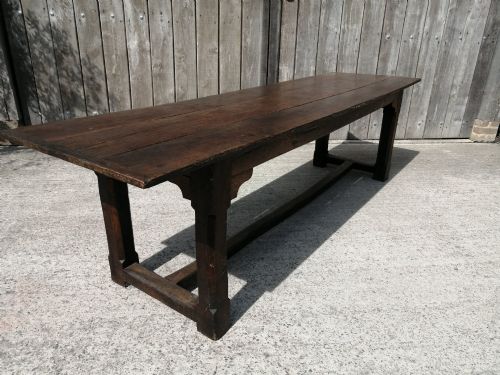
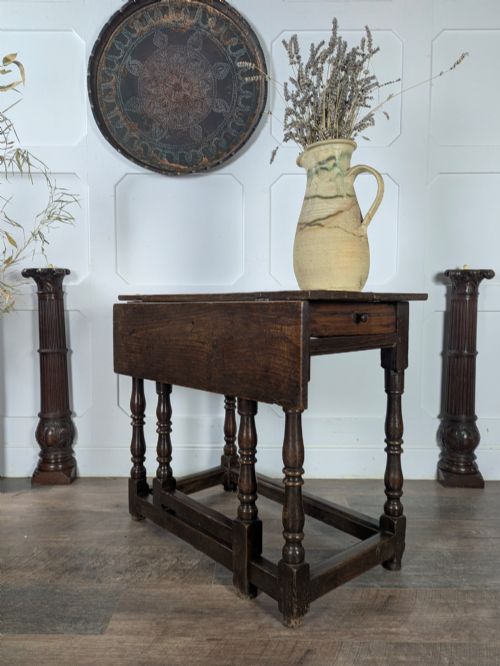
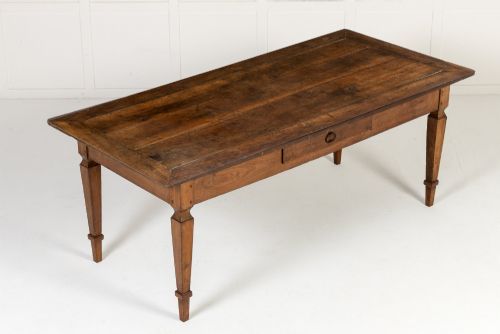
18th Century Oak Dining Table
When choosing an 18th century oak dining table, you are selecting a piece of domestic history built for daily communal dining.
18th Century Oak Dining Table
An 18th century oak dining table encompasses practical domestic furniture produced across the Georgian era and earlier periods. These surfaces served central roles in country houses, farmhouses, and provincial dwellings.
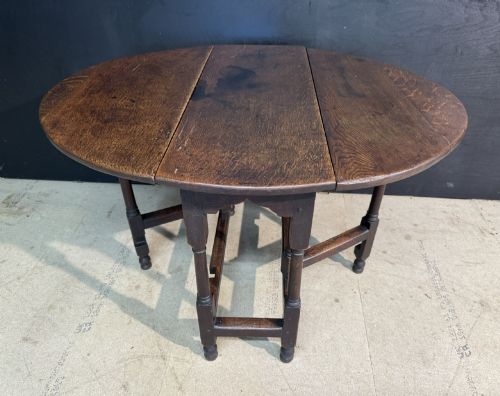
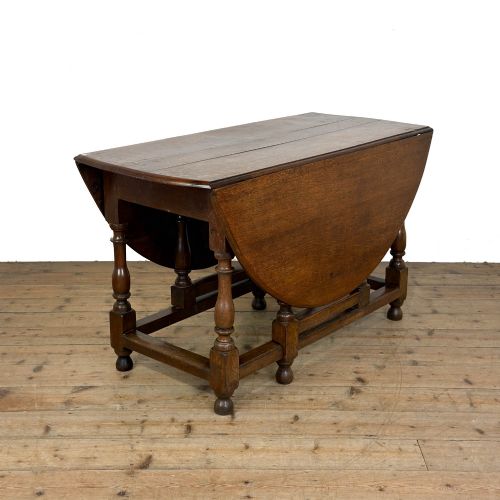
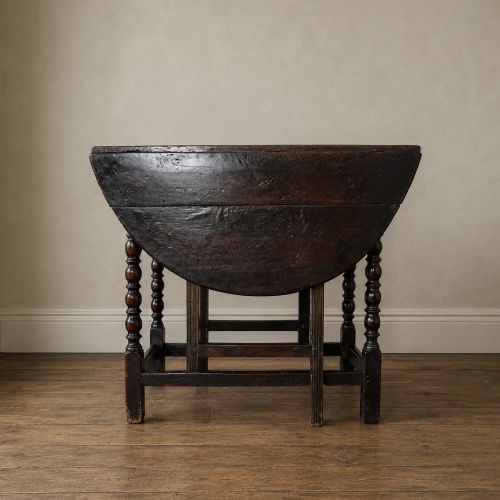
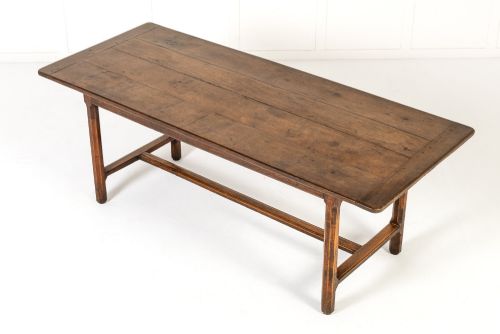
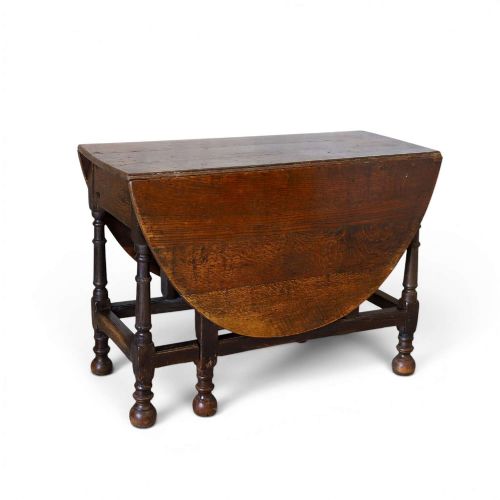
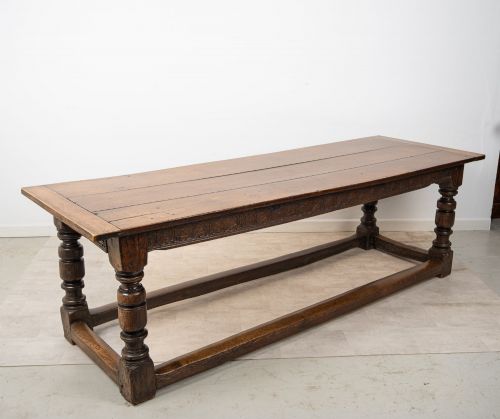
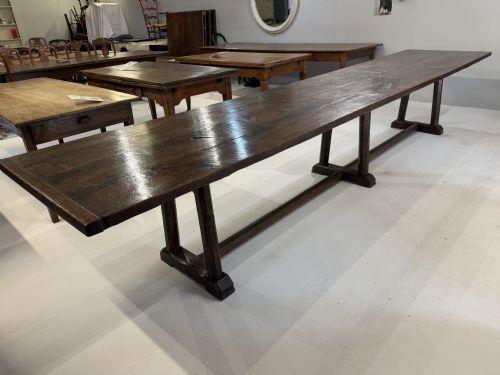
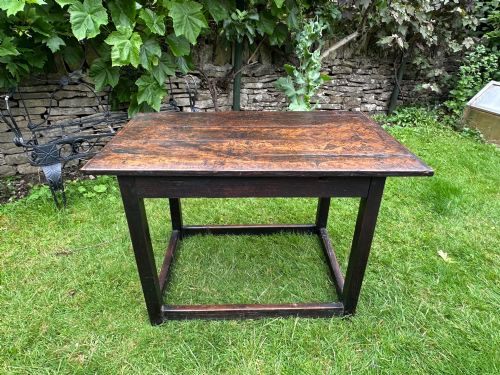
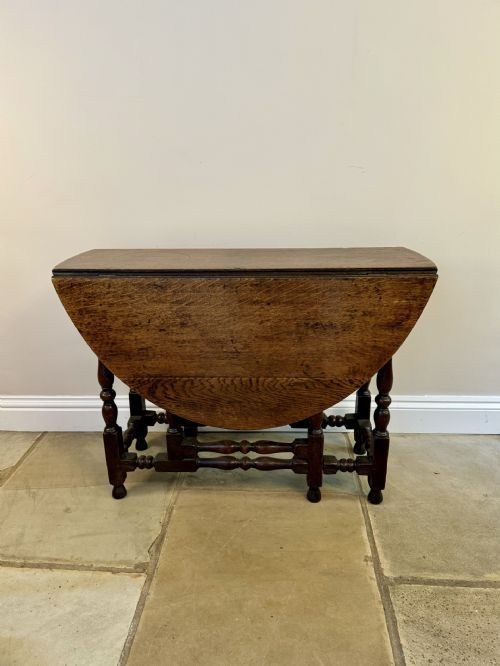
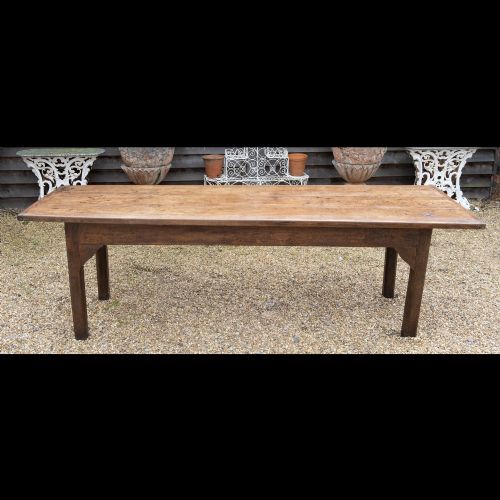
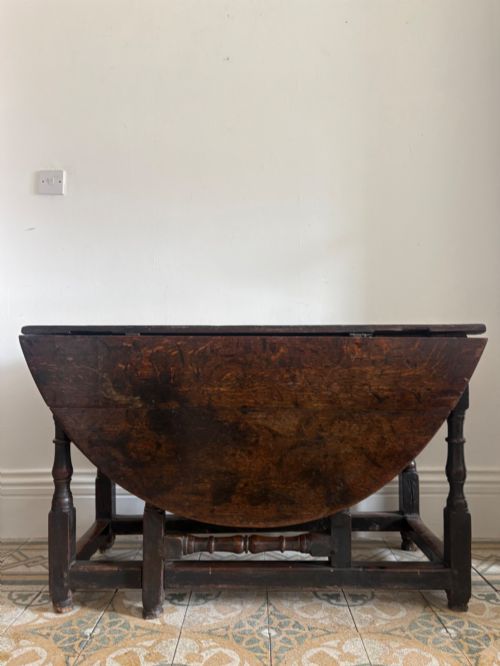
The most common forms found in this selection are sturdy gateleg drop-leaf tables and long refectory tables. Examples frequently feature structural elements adapted from the 17th century alongside Georgian refinements.
Makers constructed these pieces to accommodate daily household life, resulting in robust proportions and utilitarian designs. Many survive with configurations designed to seat multiple diners for communal meals.
How They Were Made
Craftsmen built these tables primarily using solid native timbers, with oak forming the structural framework and plank tops. Secondary woods such as elm, beech, and cherrywood frequently appear in base frames and internal components.
Joinery relied on pegged mortise and tenon joints to secure the heavy frames without modern adhesives. Turning lathes shaped the substantial baluster and gateleg supports, while hand saws cut the thick boards utilised for table tops.
Many gateleg tables retain centuries of kitchen grease and polish packed tightly into their hinge barrels.
What Varies in Quality
The grade of timber selection and the retention of original surface patination distinguish superior examples from standard utility pieces. Tables retaining original hinges, unreplaced timber planks, and minimal structural restoration hold greater historical integrity.
The architectural ambition of the base construction also dictates quality, ranging from simple four-leg farm tables to elaborate six-leg gateleg and carved refectory formats. Proportion, balanced turning on the legs, and overall structural rigidity define the execution.
The 18th Century Oak Dining Table Glossary
- Gateleg table
- A table featuring hinged flaps supported by swing-out legs that pivot from the main frame.
- Refectory table
- A long, narrow dining table traditionally utilised for communal meals in large halls.
- Patina
- The deep surface sheen and colour developed on wood through decades of use, cleaning, and exposure to light.
- Baluster leg
- A vertical architectural support turned on a lathe with a swelling contour, commonly found on 17th and 18th century tables.
- Plank top
- A table surface constructed from solid boards joined edge to edge rather than veneered panels.
18th Century Oak Dining Table: Frequently Asked Questions
How do I seat six people comfortably?
Gateleg tables with drop leaves provide flexible seating by folding down when not in use and extending outward for meals.
Refectory tables offer fixed rectangular dimensions with sufficient length along the sides to accommodate multiple chairs.
Can I use daily in a modern kitchen?
These tables were constructed for heavy domestic service and withstand regular daily use with appropriate care.
Using placemats and maintaining consistent indoor humidity protects the historic oak surfaces from moisture and heat damage.
How do I tell an 18th century table from a later copy?
Examine the underside and joints for hand-cut tool marks, pegged joinery, and timber shrinkage consistent with age.
Original iron or brass hardware and authentic surface patination provide further indicators of period manufacture.
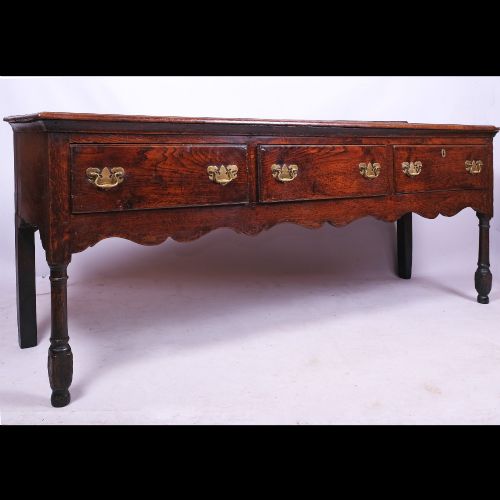
What is a dresser base?
A dresser base is a heavy low sideboard featuring drawers and cupboards used historically for storing dining utensils and serving food.
These pieces share the robust oak construction and proportions typical of dining tables from the same period.