
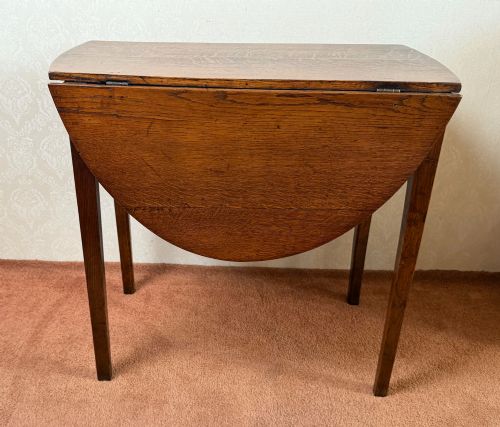
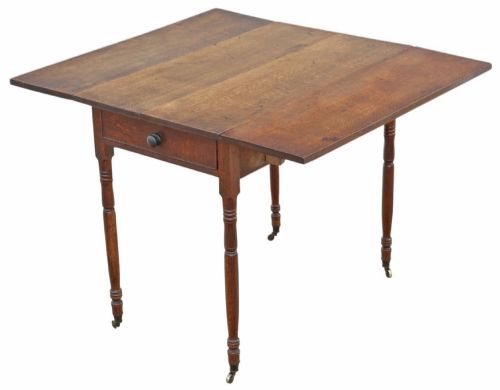
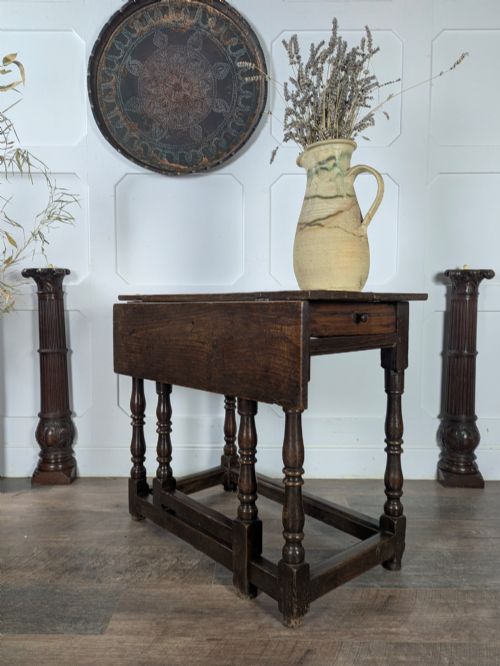
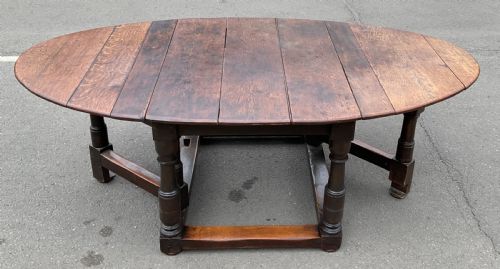
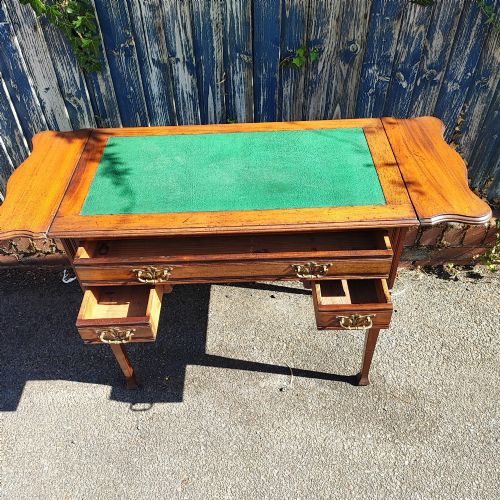
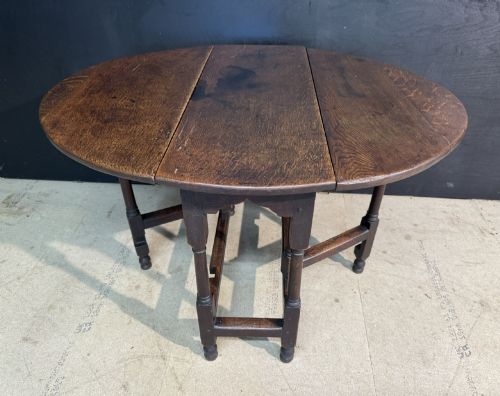
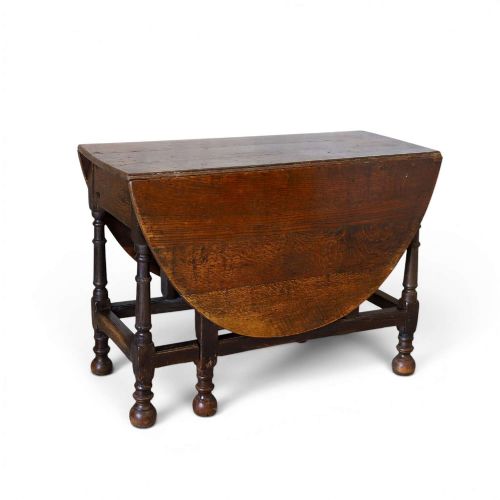


Georgian Oak Drop Flap Table
A georgian oak drop flap table gives you sturdy everyday charm with the clever ability to fold away when space is tight.
Georgian Oak Drop Flap Table
A georgian oak drop flap table is a practical dining or occasional piece designed with hinged leaves that lift to expand the surface area. Most examples you encounter take the form of substantial gateleg tables or smaller kitchen and pembroke models.
The pieces on this page span the eighteenth and nineteenth centuries, with occasional examples reflecting later revivals or Regency variants. Oak remains the defining timber, frequently complemented by secondary woods and period hardware.
You will find these tables utilised as primary dining surfaces, writing desks, and side tables in both country and formal settings. Their adaptable footprint makes them as useful in a modern room as they were centuries ago.
How they were made
Construction relies heavily on solid oak, chosen for its durability and worked with traditional joinery methods to support the moving leaves. Many items incorporate brass and iron in their hinges, castors, and structural brackets.
Makers utilised clever pivoting leg mechanisms and gateleg supports to bear the weight of the drop flaps when extended. Surfaces often display the deep warmth of aged timber developed over generations of use.
Several tables arrive with stories written in their surfaces, from ancient ink stains to the gentle wobble of a well-loved gateleg.
What varies in quality
The distinction between ordinary and superior pieces rests on the selection of timber and the integrity of the original framing. Tables featuring pollard or burr oak variations show a more decorative grain that elevates the piece.
The survival of original hinges and unaltered structural elements dictates the historical integrity of each item. Finer examples retain their movement smoothly without excessive sag in the dropped leaves.
The Georgian Oak Drop Flap Table Glossary
- Drop flap
- A hinged leaf attached to a fixed table top that can be raised to provide extra surface space or lowered to save room.
- Gateleg table
- A table with hinged legs that swing out like a gate to support the extended drop leaves.
- Pembroke table
- A small occasional or breakfast table featuring two hinged drop leaves on opposite sides and often a single drawer.
- Patina
- The deep surface sheen and rich colour developed by timber over long periods of handling and exposure.
Georgian Oak Drop Flap Table: Frequently Asked Questions
How do I use a drop flap table daily?
Keep the leaves dropped against the sides for a compact console or desk setup when floor space is at a premium.
Raise the flaps and swing out the supporting legs whenever you need a full surface for dining or working.
Are these tables suitable for everyday dining?
Many of these pieces were built precisely for kitchen and dining use, offering robust construction that handles daily meals with ease.
Ensure the gateleg mechanisms are properly positioned and stable before placing heavy items on the extended leaves.
How do I care for antique oak surfaces?
Dust the timber regularly with a soft dry cloth and avoid placing the table near direct heat sources that can dry out the wood.
Apply a natural wax polish occasionally to nourish the grain and maintain the protective sheen.
How do I distinguish eighteenth-century tables from later ones?
Look closely at the construction methods, tool marks, and hardware types, which often reveal the age and period of manufacture.
Eighteenth-century examples typically display heavier timber framing and hand-forged iron or early brass fittings.