
18th Century Landscape
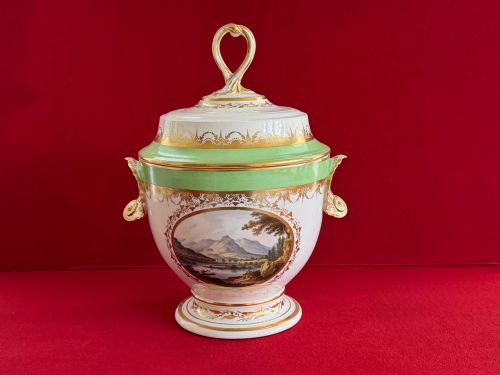
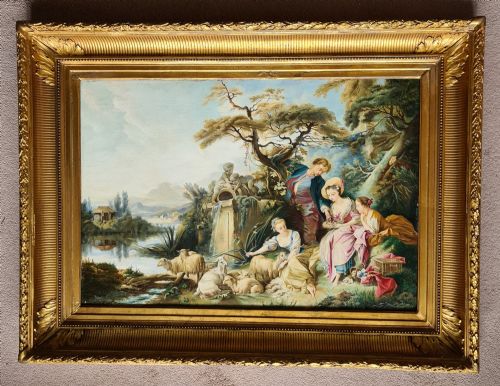
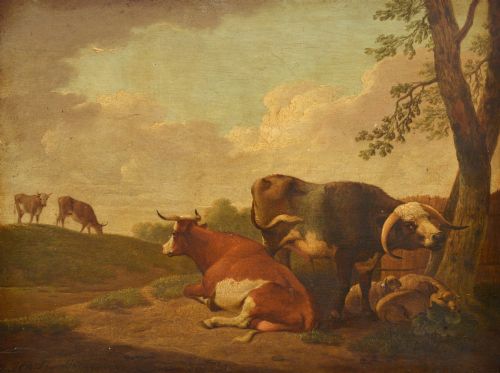
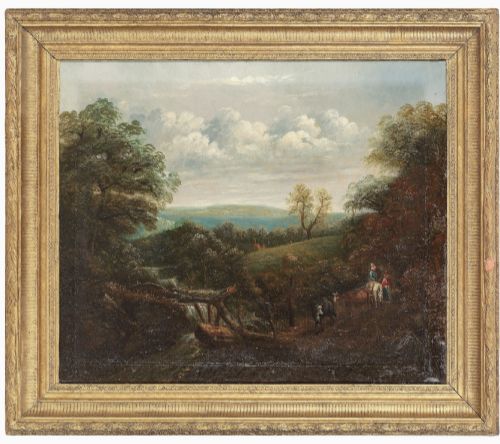
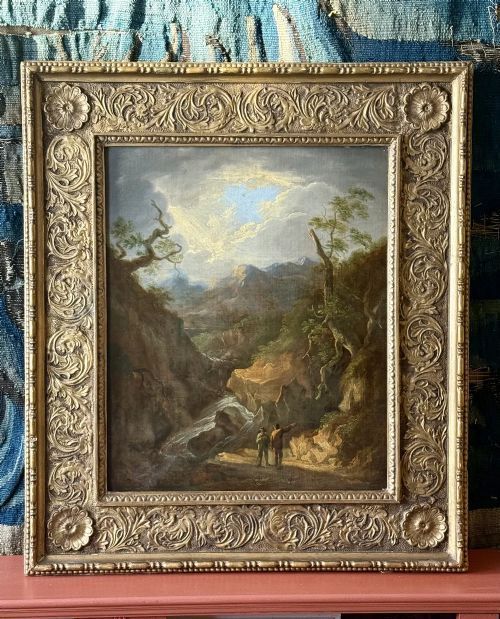
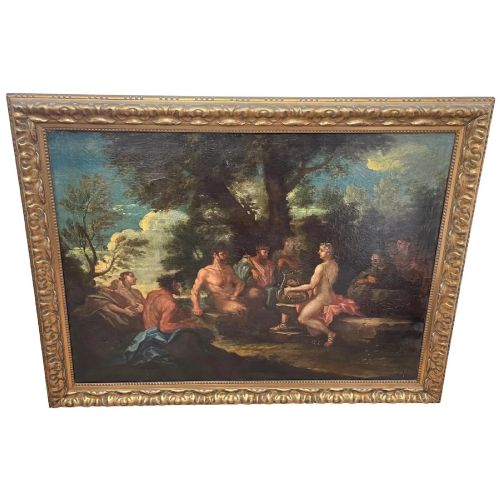
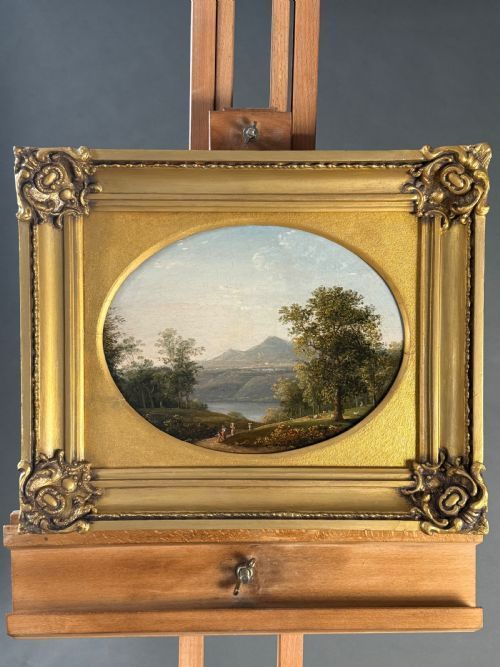
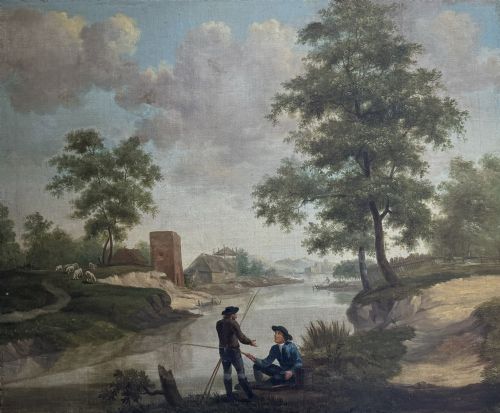
An 18th century landscape brings classical pastoral scenes, river valleys and wooded ruins into an interior with the rich pigment and hand-carved frames of the period.
18th Century Landscape
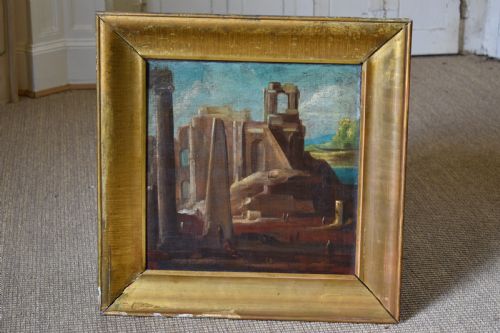
An 18th century landscape captures the natural world through oil on canvas, oak panels, and delicate works on paper that reflect Georgian tastes and continental European traditions. These pieces range from intimate British country paths and Yorkshire abbeys to expansive Italianate Grand Tour vistas populated by figures, cattle, and classical ruins.
Buyers will encounter oil paintings alongside framed engravings, pen and ink drawings, and large textile wall hangings such as Flemish verdure tapestries. Many works emerge from distinct regional traditions, including the Dutch school, the Norwich school, and French classical compositions.
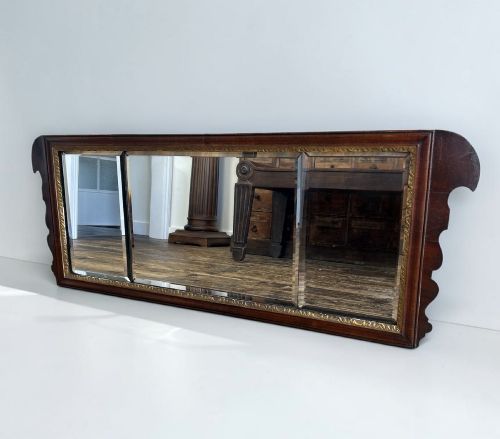
The physical formats vary from small wood panel studies to grand overmantel mirrors and expansive canvas panels designed to anchor a formal room. Each piece preserves the atmosphere of the Enlightenment era through different painterly interpretations of the countryside.
How They Were Made
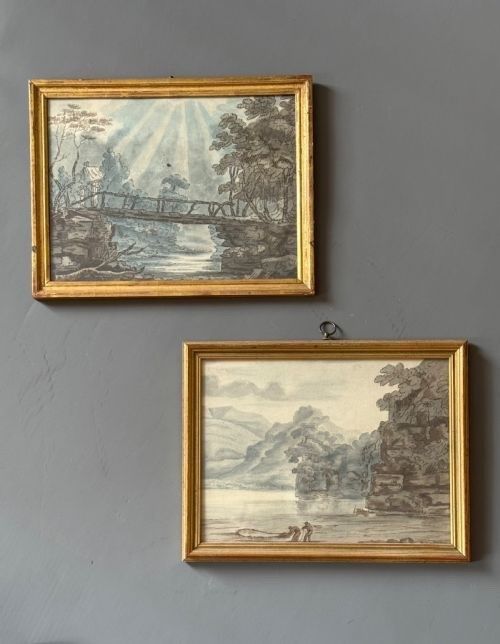
Painters applied oil pigments onto stretched canvas, prepared oak panels, or board, often building up rich layers of glaze to create depth in skies and foliage. Drawings and engravings utilised pen, ink, and watercolour on paper, sometimes finished with delicate grisaille washes.
Textiles were produced using wool and silk threads woven on looms in European centres like Aubusson and Audenaarde to create dense botanical verdure scenes. Frames were constructed from timber, carved into giltwood or parcel gilt motifs, and occasionally retained original period mouldings.
18th Century Landscape Retail Price Guide 2026
Typical asking prices for 18th century landscape among the pieces listed under this phrase on Sellingantiques today, from the lower quarter to the upper quarter. They describe what is for sale here now, not the wider market.
Listings feature oil on canvas, wood panels, giltwood frames, porcelain, wool, and silk across British, Dutch, French, and Italian schools.
What Varies in Quality
The distinction between standard works and exceptional examples rests upon the dexterity of brushwork, the treatment of light, and the anatomical precision of figures and animals within the composition. Master artists and established followers achieved a greater sense of atmospheric perspective and natural movement than anonymous or provincial workshops.
Condition and originality dictate the standing of a piece, particularly the survival of the original canvas, panel integrity, and undisturbed surface pigment. The presence of a period frame matching the style and date of the artwork elevates the integrity of the ensemble.
George Robertson·Francois Boucher·Hendrik Willem Schweickhardt·Benjamin Barker of Bath·Jacob Philipp Hackert·Étienne Baudet·Jan Miel·George Morland·Philipp Peter Roos·Zachariah Boreman·Meissen·J.M.W. Turner·James Basire·Jan Ludewick De Wouters·Jacob More·Francis Wheatley·Nicholas Pocock·Hendrik Frans Van Lint·Edward Dayes·Samuel Scott·Henry Edridge·William Bielby·John Daniel Bond·Thomas Gainsborough·Christian Georg Schutz
The 18th Century Landscape Glossary
- Grand Tour
- A cultural journey undertaken by wealthy young Europeans through France and Italy to study classical antiquities and art. These travels inspired paintings featuring ruined temples and sunlit Mediterranean valleys.
- Verdure Tapestry
- A wall hanging dominated by lush botanical designs featuring trees, foliage, and sometimes animals or birds. They were woven with wool and silk to bring warmth and texture into large rooms.
- Pentimento
- A visible trace of earlier painting beneath the completed surface layers, showing where the artist changed their mind. This phenomenon often confirms the authenticity and age of an oil painting.
- Grisaille
- A painting executed entirely in shades of grey or neutral monochrome monochrome tones to imitate sculpture or provide a preparatory study. Artists frequently used this technique for detailed architectural and landscape compositions.
- Capriccio
- An architectural fantasy placing together buildings, ruins, and other architectural elements in a fictional landscape. This Italian style allowed artists to compose idealised pastoral scenes.
18th Century Landscape: Frequently Asked Questions
How do I care for an 18th century oil painting?
Keep the canvas away from direct sunlight, damp walls, and rapid temperature fluctuations to protect the aged pigments and wooden stretcher frames.
Dust the surface gently with a soft, dry brush and avoid using chemical cleaners or water on either the paint or the antique frame.
What is a Grand Tour landscape?
A Grand Tour landscape is a painting or drawing created for travellers returning from educational journeys through Italy and France.
These works typically depict classical ruins, rolling hills, and pastoral scenes intended to record the aesthetic sights of southern Europe.
Where were verdure tapestries hung?
Large verdure tapestries were suspended on stone walls inside country houses and formal reception rooms to insulate spaces against drafts.
The heavy wool and silk weaves trapped heat while introducing rich botanical foliage and woodland motifs into the interior.
How can I tell an engraving from an oil painting?
An engraving is a print on paper produced by transferring ink from a metal plate carved with lines, often showing plate marks at the edges.
An oil painting consists of visible layers of pigment applied with a brush directly onto woven canvas or a solid wooden panel.