

18th Century Goblet
These 18th century goblet selections bring authentic Georgian drinking vessels into your home, prized for their historical significance and craftsmanship.
What an 18th century goblet is
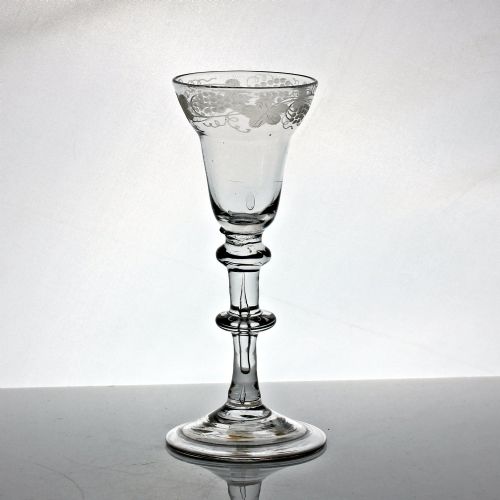
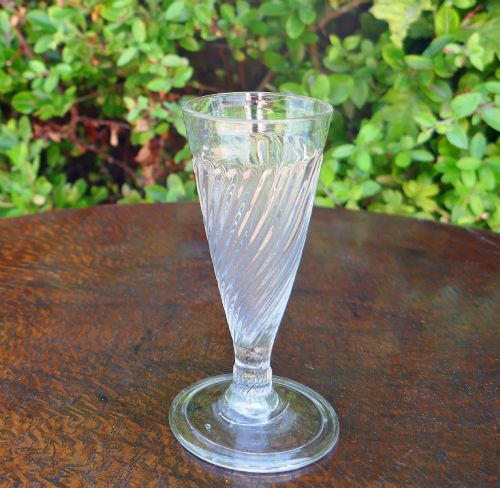
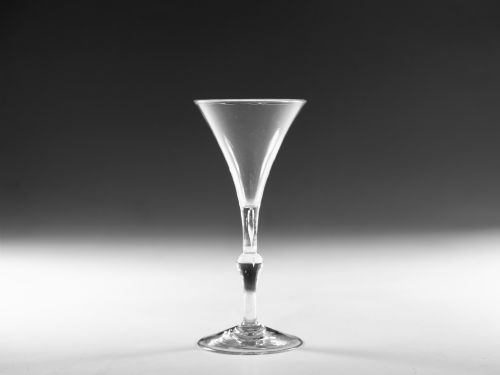
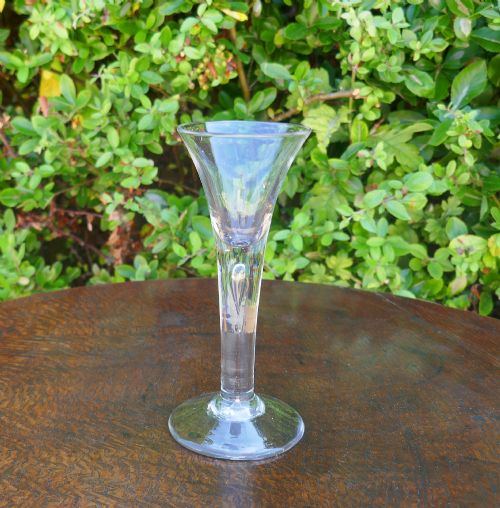
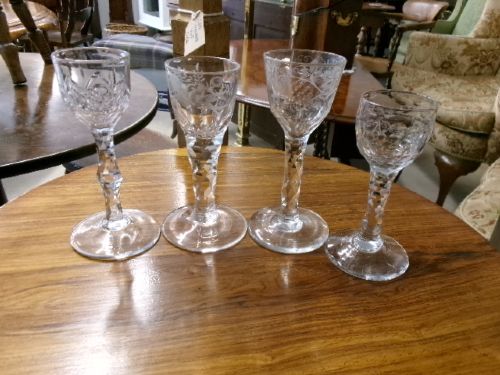
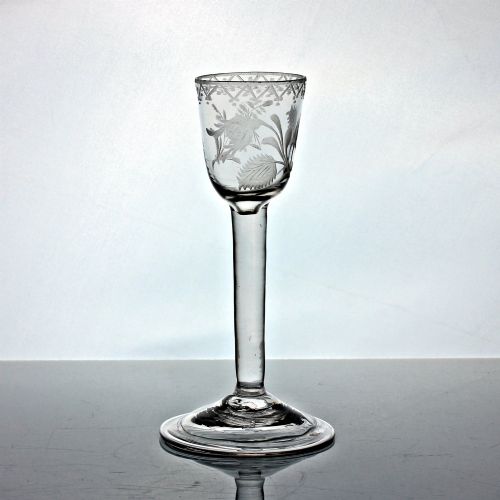
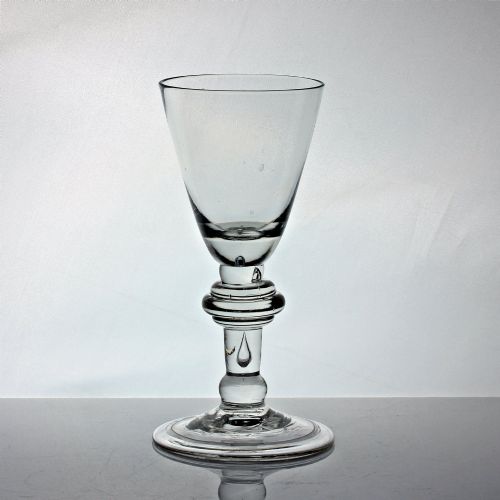
When searching for an 18th century goblet, you encounter drinking vessels spanning the Georgian period, created for wine, champagne, and sweetmeats. These pieces include large heavy baluster forms from the early decades alongside later facet cut and twist stem examples.
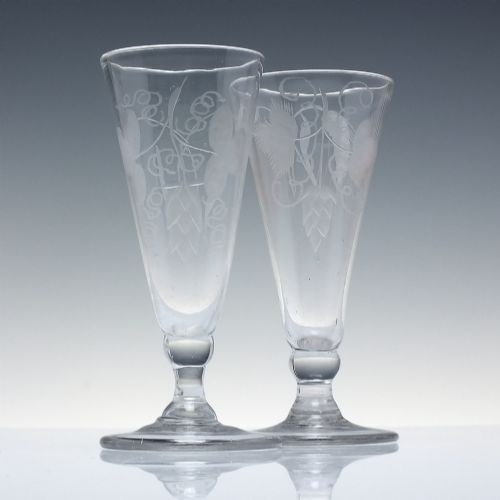
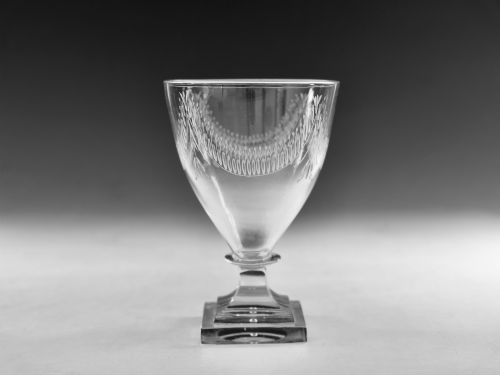
You are most likely to meet clear lead glass and lead crystal glasses on this page, often featuring engraved bowls with floral or armorial motifs. Metal versions in sterling silver and Old Sheffield plate also appear among the selections.
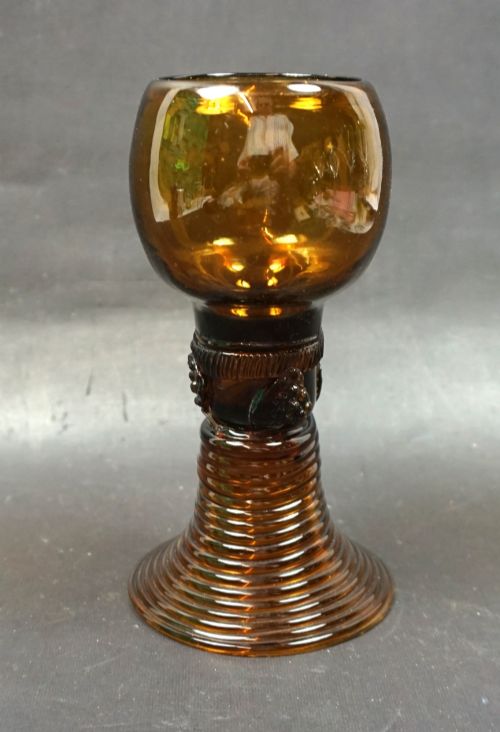
The assortment extends from English balustroid and Jacobite sympathy glasses to continental Bohemian and Dutch rococo pieces. Each form reflects the drinking customs and glassmaking technology of the seventeen and hundreds.
How they were made
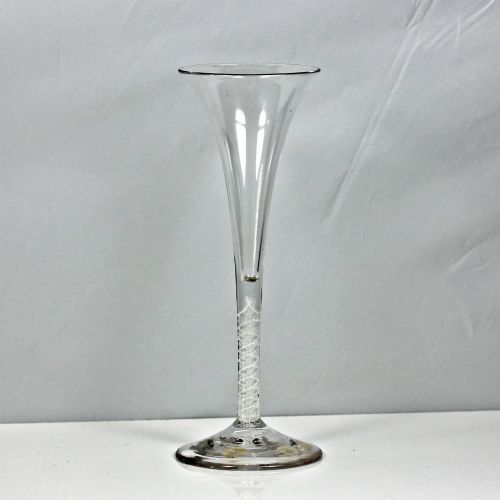
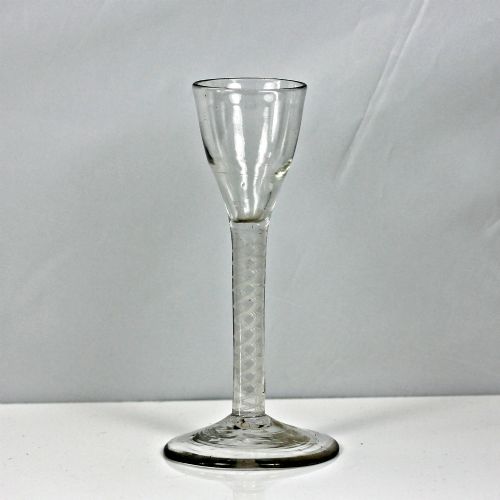
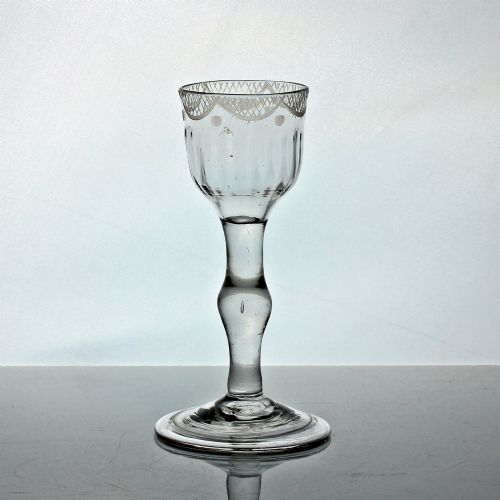
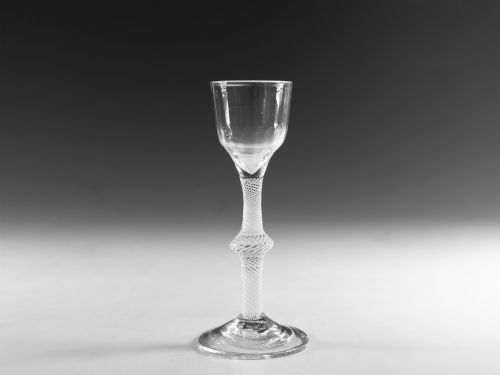
Glass vessels rely on lead glass and lead crystal manipulated into plain, baluster, air twist, opaque twist, and facet cut stems. Craftsmen embellished bowls using wheel engraving for roses, grapes, and heraldic arms, sometimes applying enamel or gold leaf.
Metal alternatives combine copper with Old Sheffield plate or utilise sterling silver with reeded decoration. Coconut shells mounted in Old Sheffield plate demonstrate the resourceful material combinations utilised during the period.
Techniques range from hot glass forming with trapped air bubbles to cold cutting and engraving on finished bowls. Silver and plated examples involve smithing, soldering, and hand polishing.
Retail Price Guide 2026
Typical UK retail prices for 18th century goblet, calculated from the Sellingantiques database of over a million retail prices indexed since 2003. This retail price guide relies exclusively on Sellingantiques data; no external sources or auction records are used, so the figures do not describe the wider market.
Coconut shells fitted with metal mounts offered eighteenth-century drinkers an exotic conversation piece at the dining table.
What varies in quality
The distinction between standard vessels and exceptional pieces rests upon the crispness of the wheel engraving and the complexity of the stem formation. Multi-spiral air twists and detailed heraldic or Jacobite armorial work indicate higher workshop skill.
Proportion and weight differentiate the metal and glass forms, where heavy baluster metal distribution or precise facet cutting dictates visual balance. The preservation of original gilding, enamelling, and surface polish elevates individual items within the range.
James Giles·Richard Morton
The 18th Century Goblet Glossary
- Baluster stem
- A heavy, swelling stem shape reminiscent of architectural balusters, common in early Georgian glassware. This form adds substantial weight to the lower portion of the drinking vessel.
- Air twist
- A manufacturing technique where elongated air bubbles inside the stem are twisted into spiral threads during pulling. It creates a silvery optical effect within the clear glass.
- Opaque twist
- A stem containing white or coloured enamel glass rods twisted into spiral patterns inside the clear metal. This technique became popular during the mid-Georgian period.
- Old Sheffield plate
- A composite material made by fusing a sheet of silver to a copper base block, developed in the eighteenth century. It allows the appearance of solid silver through a durable layered construction.
- Lemon squeezer base
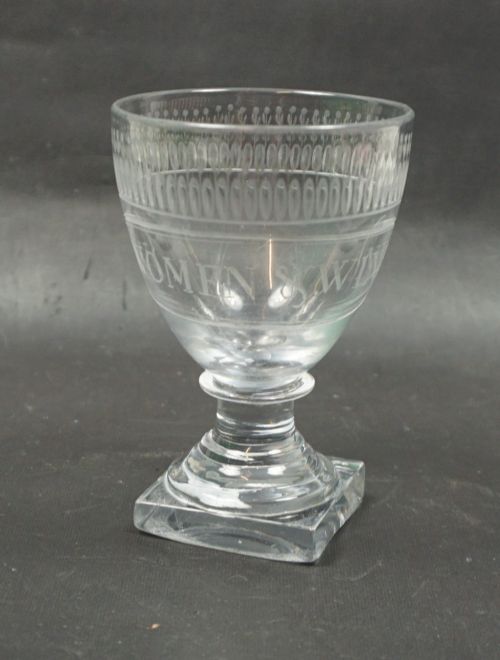
- A square, moulded glass foot with indented corners resembling a kitchen juicer. These heavy bases provide stability for late period vessels.
Frequently Asked Questions
How do I spot a Jacobite glass?
Jacobite glasses feature specific covert iconography such as engraved roses, buds, and Latin mottoes supporting the exiled Stuart cause. These symbols were used for clandestine toasts.
Examine the engraving closely for portraits, oak leaves, or the word Fiat. Their presence indicates political sympathy rather than standard decorative glass.
What is an air twist stem?
An air twist stem contains elongated bubbles trapped within the molten glass and drawn into spiral threads. This optical feature catches the light as the vessel moves.
Master glassmakers manipulated the hot metal to achieve symmetrical internal spirals. This technique requires precise temperature control during formation.
How should I clean silver goblets?
Silver and Old Sheffield plate pieces require gentle washing with mild soap and warm water using a soft cloth. Avoid harsh abrasive dips that strip underlying copper.
Dry thoroughly after washing to prevent moisture spotting. Regular soft polishing maintains the historical patina without damaging the metal surface.