


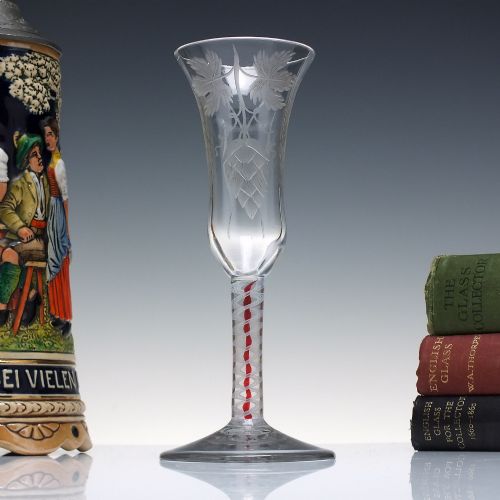
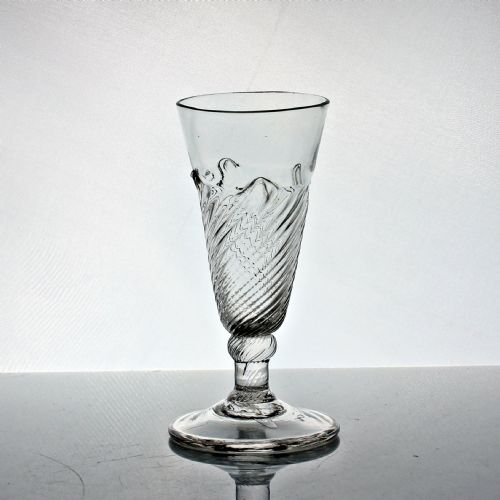


18th Century Glass Flute
An 18th century glass flute brings the refined tavern and dining table of the Georgian period straight into your hand.
18th Century Glass Flute
When you search for an 18th century glass flute, you encounter tall, slender drinking vessels designed primarily for ale, champagne, wine, and ratafia during the Georgian era. These forms include specialised ale glasses, champagne flutes, and flute-moulded ogee bowls that showcase the elongated silhouette characteristic of the period.
The pieces appearing here span from the mid to late 18th century, with dates clustering around the 1740s to the end of the century, alongside pieces around 1800. Alongside dedicated flutes, you will find related form variations such as ale glasses with air, opaque, and mixed twists, dwarf ale glasses, and facet-cut stem vessels.
Makers of these items produced them in English workshops using traditional lead glass and flint glass. The selection emphasises drinking glasses and glassware, reflecting the domestic and social drinking customs of Georgian Britain.
Materials and construction
These vessels rely on lead glass, lead crystal, clear glass, and flint glass, shaped through hand-blowing techniques. Glassmakers manipulated the molten metal to form folded feet, dwarf stems, and slender bowls.
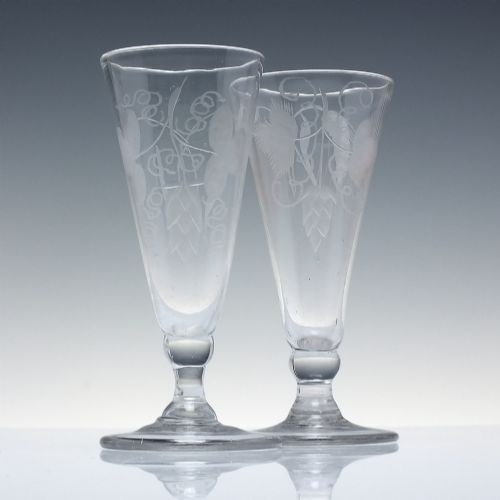
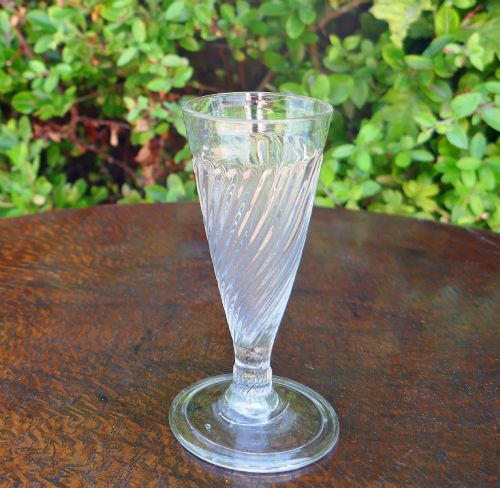
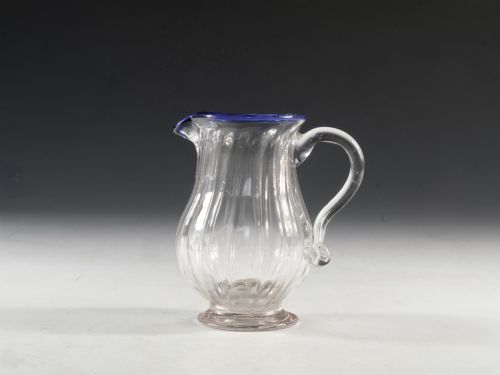
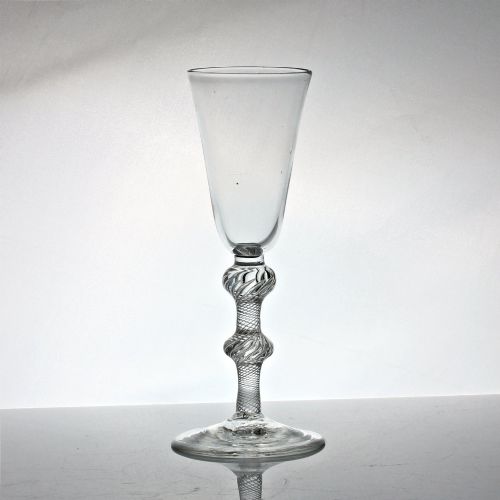
Decoration often involved white enamel, blue rims, and intricate engraving depicting motifs such as hops and barley. Internal stem structures were manipulated while hot to create air twists, opaque twists, mixed twists, and wrythen patterns.
Georgian drinkers favoured narrow flutes so their small beer and ale portions maintained a lively head for longer social evenings.
Assessing quality in Georgian glassware
Quality rests in the precision of the optical effects within the stem, where air twists and opaque twists display absolute symmetry and clarity without distortion. The crispness of facet cutting and the delicacy of hop and barley engraving separate standard vessels from exceptional works.
Proportion and balance define the superior examples, whether in the stretch of a champagne flute or the heft of a folded foot. The handling of the metal itself - its brilliance, weight, and freedom from excessive bubbles - signals the skill of the original glasshouse.
The 18th Century Glass Flute Glossary
- Air twist
- A decorative stem containing an elongated series of tiny air bubbles drawn out into spirals. This technique originated in the mid-18th century and lightened the visual weight of the drinking glass.
- Opaque twist
- A stem featuring internal threads of white or coloured enamel glass twisted into cable patterns. Double series twists combine two distinct enamel formations within the same stem.
- Folded foot
- A base whose outer edge is turned underneath to create a thickened, rounded rim for extra strength. This detail frequently appears on pieces from the mid-18th century.
- Ratafia glass
- A narrow, slender flute intended for sweet alcoholic fruit cordials. These vessels usually feature small bowls suited to potent after-dinner liqueurs.
- Wrythen
- A surface pattern of subtle spiral ribs moulded into the body of the glass. The effect is achieved by twisting the vessel while the glass remains hot.
- Facet cut
- Geometric polished planes cut into the stem or bowl to catch the light. This decorative method gained popularity in the later Georgian period.
18th Century Glass Flute: Frequently Asked Questions
How do I use an 18th century glass flute?
These delicate vessels serve best for display or gentle celebratory toasts rather than daily dining. Their thin lead glass demands careful hand washing away from modern dishwashers.
Keep them secure in a dedicated cabinet where temperature fluctuations remain minimal. Handling them by the stem protects the fragile bowl and historical surface wear.
What is the difference between an ale glass and a champagne flute?
Ale glasses generally feature taller, narrower bowls or straight-sided profiles often engraved with hops and barley. Champagne flutes are similarly slender but tend towards ogee or trumpet shapes designed for sparkling wines.
Both forms share the elevated height that defines this group of drinking vessels. Twist stems and facet cuts appear across both categories interchangeably depending on the decade of manufacture.
How do I date a Georgian glass flute?
Dating relies on stylistic markers such as the transition from balustroid forms to air twists and opaque twists. Folded feet and heavy lead metal generally point towards the earlier decades of the century.
Later periods introduced facet cutting and lighter, more brilliant flint glass compositions. Comparing the stem structure against documented examples clarifies the production window.
Were these glasses made in England?
English glasshouses produced the vast majority of these drinking vessels using high-lead flint glass formulas developed in the late 17th century. Regional workshops supplied domestic markets with standard ale glasses and specialised flutes.
Export trade also distributed these English forms across Britain and beyond during the Georgian era. The predominant materials and cutting styles match documented English production techniques.