




18th Century Glass Dish
An 18th century glass dish brings period light and table craft into a room, spanning sweetmeat stands, tazzas, and turnover bowls.
18th Century Glass Dish
When you search for an 18th century glass dish, you encounter serving pieces and display vessels created during the Georgian era, including specific forms like tazzas, patch stands, sweetmeat glasses, and turnover bowls.
The objects on this page largely originate from English and European workshops across the seventeen-thirties up to eighteen hundred, showing styles from early Georgian through to George III and Adam.
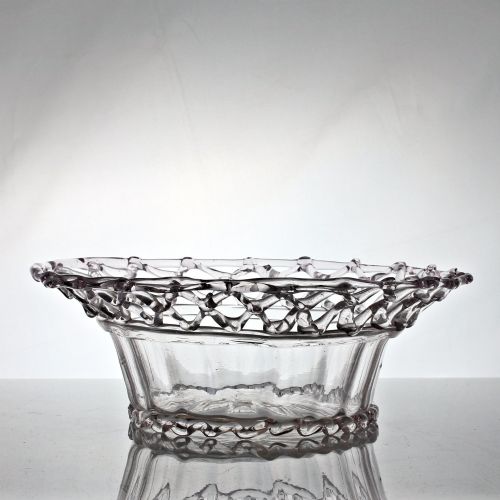
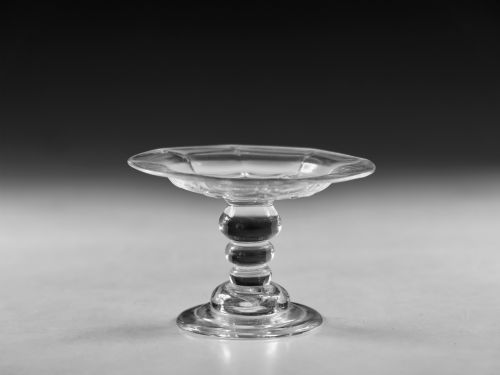
Forms vary from miniature patch stands with terraced feet to large cut glass bowls and pedestaled sweetmeat servers, demonstrating the domestic table uses of the period.
Materials and manufacture
These pieces utilise lead glass, lead crystal, and flint glass, shaped through hand-blowing and rib-moulding techniques.
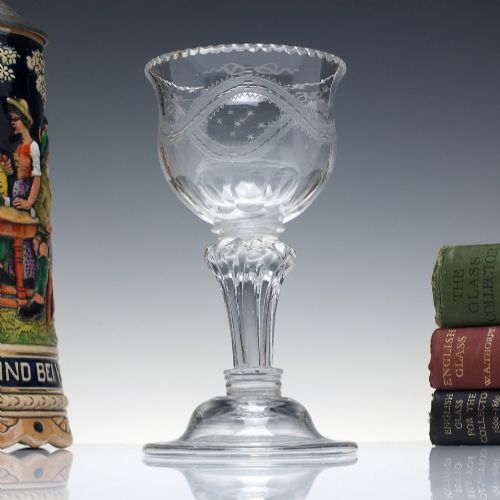
Makers employed cutting and engraving to decorate surfaces, whilst some examples incorporate enamel work or feature opaque twist stems within pedestal formations.
18th Century Glass Dish Retail Price Guide 2026
Typical asking prices for 18th century glass dish among the pieces listed under this phrase on Sellingantiques today, from the lower quarter to the upper quarter. They describe what is for sale here now, not the wider market.
Miniature patch stands were made to hold tiny silk patches used by society figures to cover facial blemishes.
Judging quality and character
Quality rests in the clarity of the metal and the precision of the cutting or moulding, where crisp facets and well-balanced baluster or double series opaque twist stems distinguish superior pieces.
The crispness of moulded patterns, such as honeycomb designs, and the stability of terraced feet or folded rims indicate the care taken by the glasshouse.
The 18th Century Glass Dish Glossary
- Patch stand
- A small pedestal dish used to hold beauty patches or cosmetic spots. These miniature vessels often feature terraced feet and knopped stems.
- Tazza
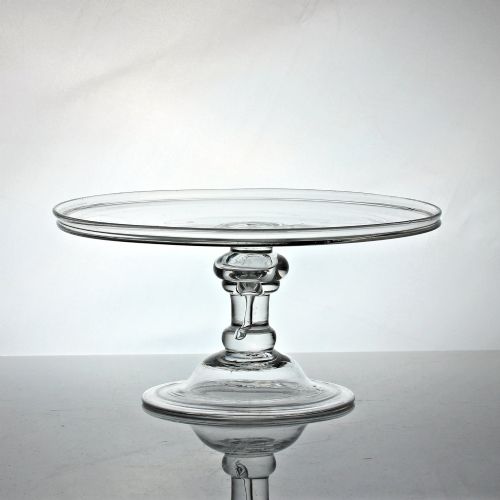
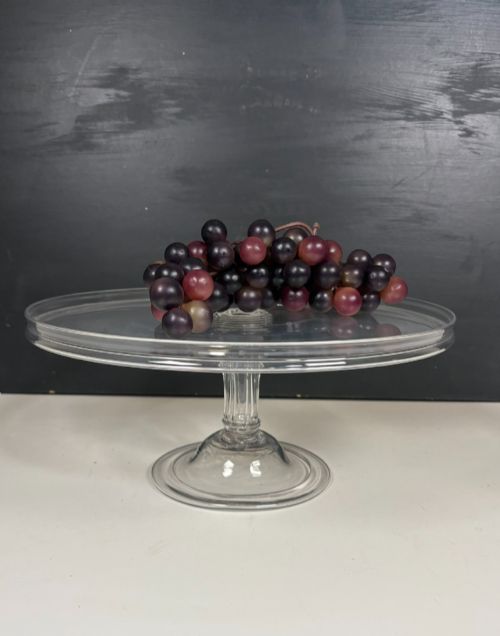
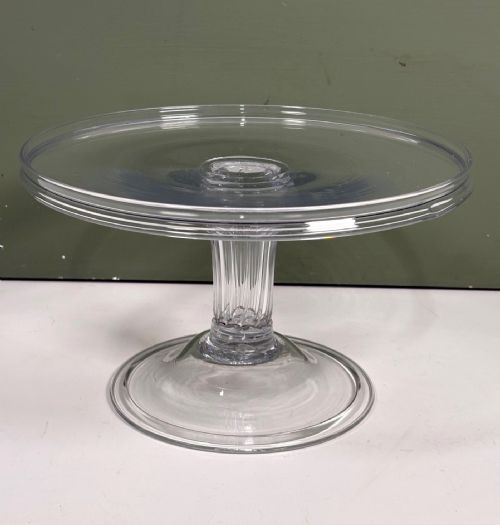
- A elevated shallow dish or bowl on a central foot. Georgian examples serve fruit or sweetmeats on the dining table.
- Sweetmeat glass
- A stemmed vessel with a wide bowl designed for confectionary. They frequently display rib-moulding or folded rims.
- Opaque twist
- A stem decoration formed by drawing out threads of opaque white or coloured glass inside clear metal. This technique creates linear or spiral patterns.
- Lead glass
- A heavy, brilliant glass containing lead oxide. It provides the clarity and weight characteristic of better Georgian tableware.
- Baluster
- A heavy, swelling stem form reminiscent of architectural pillars. Early Georgian pieces often utilise this robust profile.
18th Century Glass Dish: Frequently Asked Questions
What is an 18th century glass dish used for?
These vessels served sweetmeats, fruit, biscuits, or small cosmetic patches on Georgian dining and dressing tables.
Today they function as decorative objects or display pieces for collectors of early table glass.
How do I identify a Georgian glass tazza?
A tazza is a shallow dish mounted on a central foot or pedestal stem, designed to elevate food above the table surface.
Georgian versions typically feature heavy lead glass construction with circular, folded, or cut rims.
What is a patch stand?
A patch stand is a miniature dish used in the eighteenth century to hold small fabric face patches worn by fashionable society.
They usually measure only a few centimetres across and often stand on short, knopped stems with terraced feet.
How can I tell early Georgian glass apart?
Early pieces from the seventeen-thirties and forties often display heavy baluster stems, thick lead metal, and simpler moulded or rib patterns.
Later decades introduced brighter cutting, opaque twist stems, and neoclassical Adam style influences.
Where were these glass dishes made?
The listings show English production alongside items from Irish glasshouses and European centres such as Liege in Belgium.
English and Irish lead glass dominated the period due to its superior weight and brilliance.