

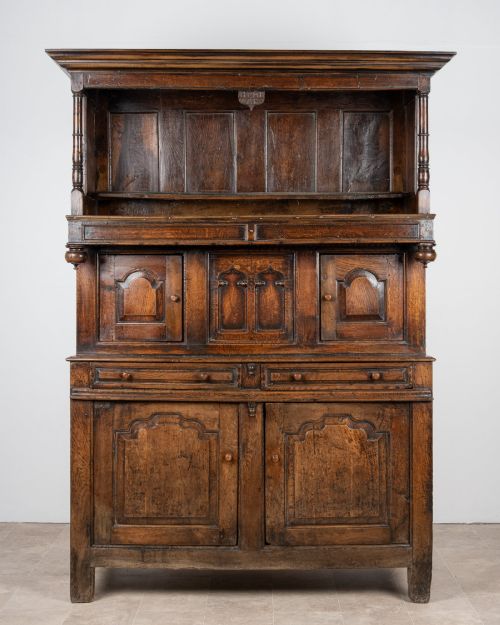
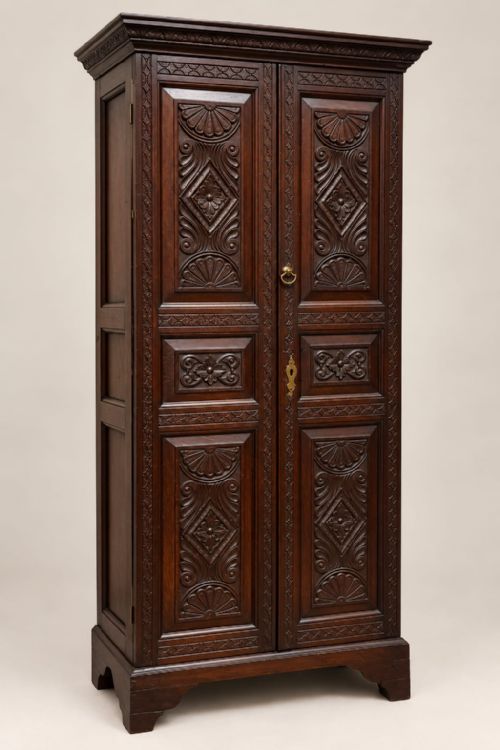
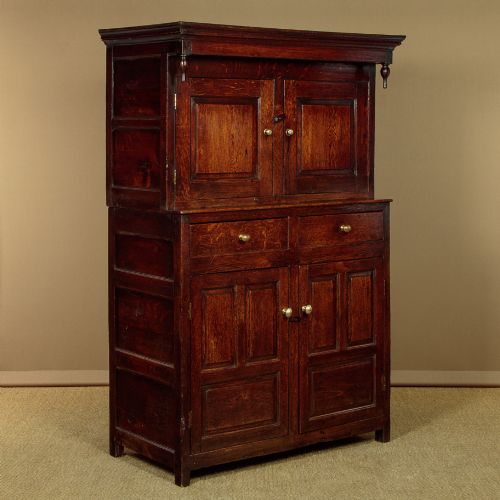
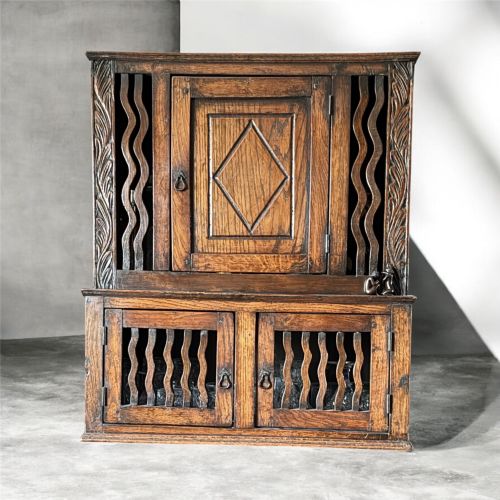


18th Century Food Cupboard
An 18th century food cupboard is a practical piece of regional storage history that brings honest timber and period craft into a modern home.
18th Century Food Cupboard
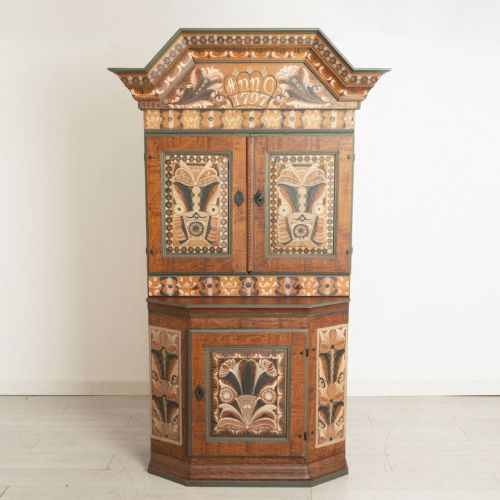
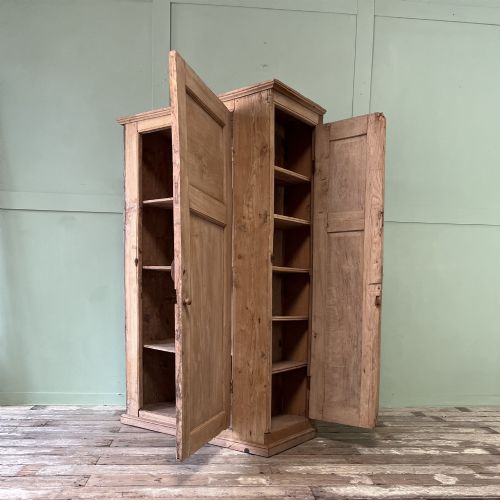
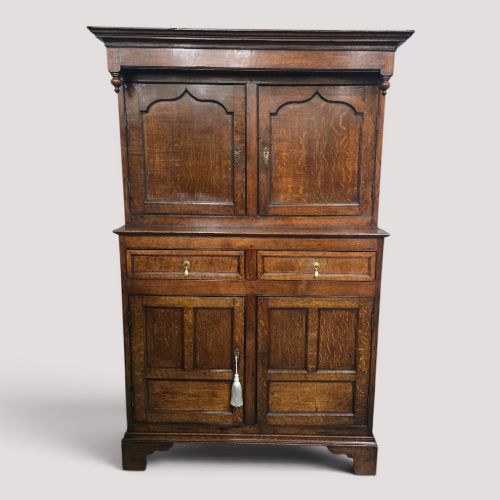
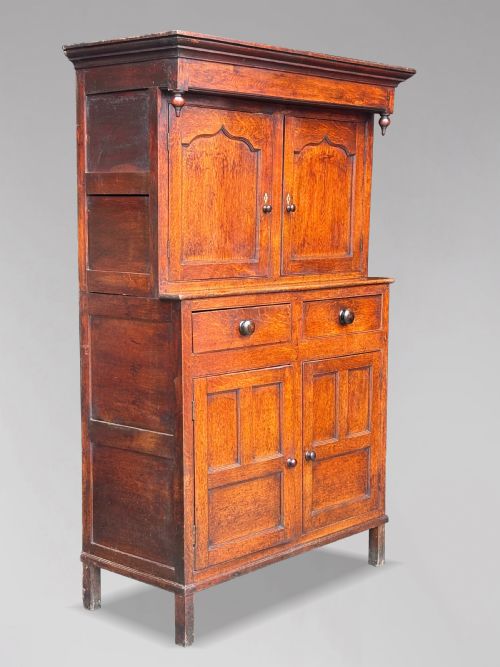
An 18th century food cupboard is a utilitarian storage piece created to store and protect provisions before modern refrigeration existed. Buyers searching this phrase encounter substantial oak and fruitwood items from Welsh, French, and English provincial traditions.
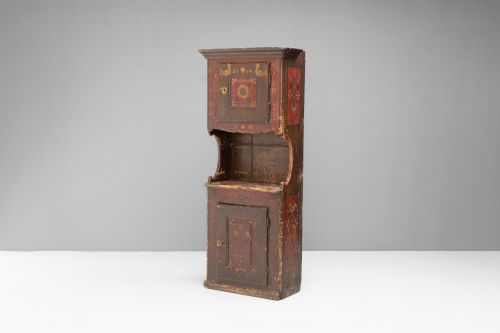
The selection here ranges from grand court cupboards and tridarns to smaller hanging wall cabinets and dedicated larder pieces. Oak and elm dominate the regional British examples, whilst French pieces frequently utilise fruitwood, walnut, or painted pine.
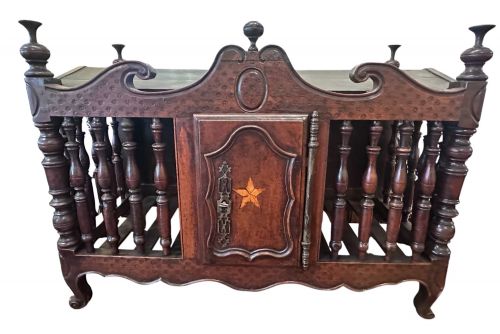
Many survivors show specific regional identities, such as the Welsh deuddarn or the French panetiere designed for bread storage. These sturdy vessels were built for daily domestic utility in farmhouse kitchens and rural homesteads.
Materials and construction methods
Makers relied principally on solid local timber such as oak, elm, fruitwood, and pine, hewn and joined by hand. Panels were often panelled and pegged, reflecting the heavy vernacular carpentry traditions of the period.
Iron and brass hardware, including blacksmith-made locks and strap hinges, secured the heavy doors against pests and damp. Surfaces were left natural to develop a deep patina through years of scrubbing and handling, though some regional examples received early coats of paint.
18th Century Food Cupboard Retail Price Guide 2026
Typical asking prices for 18th century food cupboard among the pieces listed under this phrase on Sellingantiques today, from the lower quarter to the upper quarter. They describe what is for sale here now, not the wider market.
Form variations range from compact wall-mounted bread cages to towering three-tier Welsh tridarns.
Assessing quality in vernacular furniture
Quality in an 18th century food cupboard rests in the integrity of the timber selection and the retention of original surface patination. Pieces that retain their authentic blacksmith-made ironwork and unblemished structural framing command greater respect among collectors.
The refinement of regional carving, the proportions of panel work, and the absence of intrusive modern alterations determine the standing of an individual piece. Honesty of wear and original construction details distinguish the finest country furniture from heavily restored examples.
The 18th Century Food Cupboard Glossary
- Court cupboard
- A traditional English or Welsh two-stage storage piece used for displaying plate and storing provisions. These sturdy items often feature enclosed upper and lower sections.
- Panetiere
- A small French bread cage constructed with turned spindles to allow ventilation around loaves. These delicate wall-mounted or freestanding pieces originated in Provence.
- Tridarn
- A large three-tier Welsh cupboard designed for storage and display in rural farmhouses. They represent the pinnacle of vernacular carpentry from the eighteenth century.
- Patina
- The surface sheen and colour developed by timber over centuries of exposure, light, and polishing. It serves as a key indicator of age and genuine handling.
- Vernacular
- Architecture and furniture created by local craftsmen using traditional regional materials and methods. These pieces reflect the specific domestic needs of their geographic origin.
18th Century Food Cupboard: Frequently Asked Questions
What were food cupboards used for?
These cupboards were designed to store perishable provisions, cheeses, and baked goods securely away from household pests. Ventilation panels or pierced woodwork allowed air to circulate around the contents before the invention of refrigeration.
In many rural households, they also served as the central storage unit for dry goods and tableware in the farmhouse kitchen. Their robust construction protected daily provisions from damp and vermin in stone-floored dwellings.
How do I identify Welsh vernacular pieces?
Welsh pieces from the eighteenth century are typically constructed from solid local oak or elm with robust framing. Characteristics include traditional regional forms like the deuddarn or tridarn, featuring carved panels and pegged joints.
They often display simple geometric or floral carving executed by local country joiners rather than urban cabinetmakers. The timber selection usually points directly to Welsh woodland sources used in rural domestic settings.
Are painted food cupboards authentic?
Painted finishes on eighteenth-century cupboards do occur, particularly on pine or softwood pieces from regional European traditions. Early or original pigment layers add historical interest and protect the underlying timber.
Buyers should examine the paint surface for signs of age, craquelure, and wear consistent with use in a domestic interior. Many country pieces received multiple coats of paint over generations of maintenance.
How should I care for old oak furniture?
Solid oak and elm require stable environmental conditions away from direct heat sources and sudden humidity changes. Feeding the timber occasionally with appropriate wax helps maintain the surface without sealing the historic patina.
Avoid placing these pieces in rooms with extreme temperature fluctuations that could cause timber shrinkage or splitting. Regular dusting with a soft cloth is sufficient to preserve the aged finish.