


18th Century Faience Charger
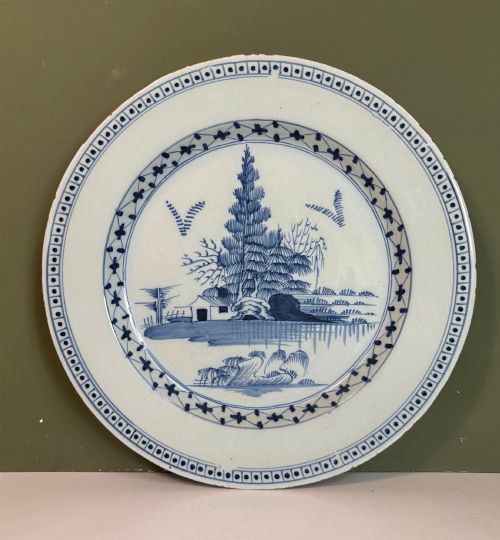
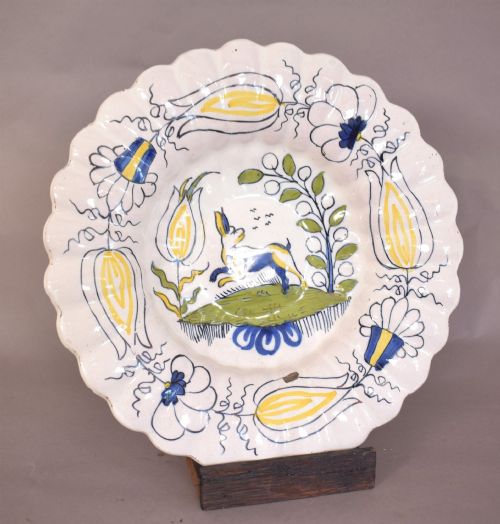
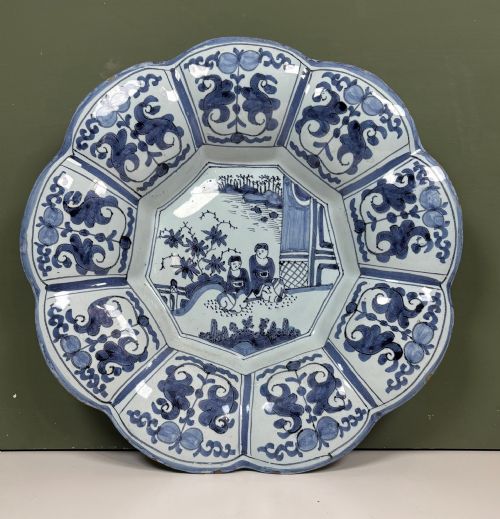
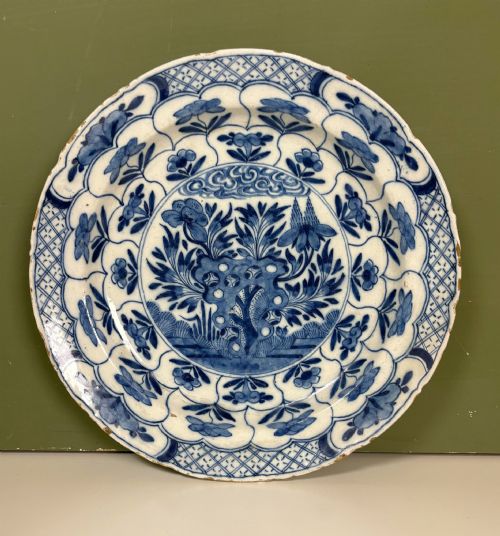
An 18th century faience charger brings bold tin-glazed earthenware into a room, offering large-scale painted decoration from Dutch, French, Spanish, and English workshops.
18th Century Faience Charger
An 18th century faience charger takes the form of a broad, shallow decorative dish or plate intended primarily for display rather than table service. These large plates showcase generous surfaces designed to carry pictorial and geometric schemes across living spaces.
The pieces appearing on this page span Dutch Delftware, French faience, Spanish Catalan pottery, and English tin-glazed earthenware. Dutch examples dominate the selection, appearing alongside regional variants from the broader European tradition.
Forms range from large chargers and decorative dishes down to standard plates, though the larger charger plates provide the characteristic scale that collectors seek. Most date across the eighteenth century, with occasional pieces stretching back into the seventeenth century.
Materials and production methods
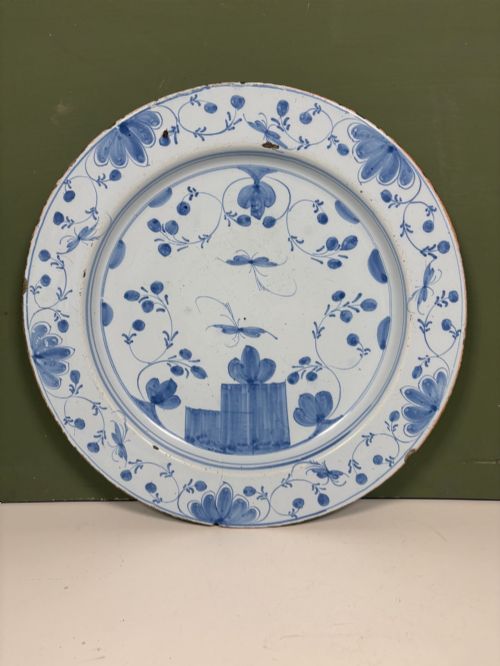
Potters formed these pieces using basic earthenware bodies coated in a thick, opaque tin-glaze that provided a smooth, whitish ground for painting. This absorbent surface required swift brushwork because the pigment sank permanently into the unfired glaze upon contact.
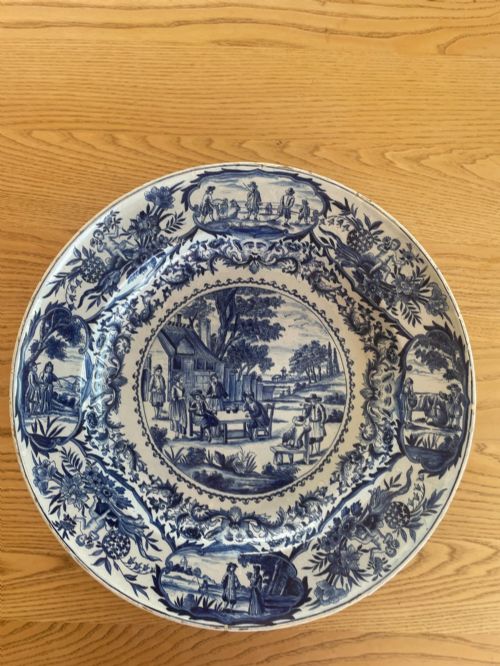
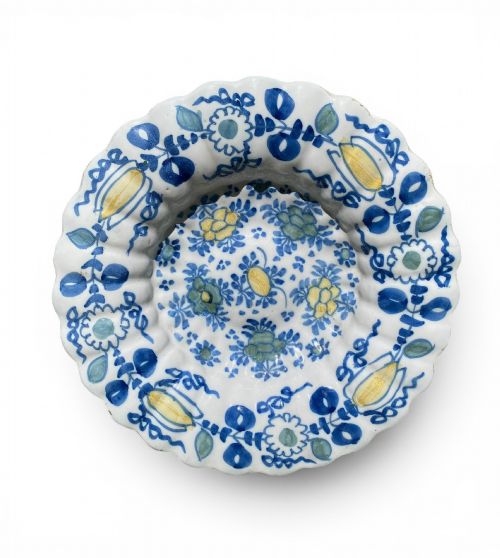
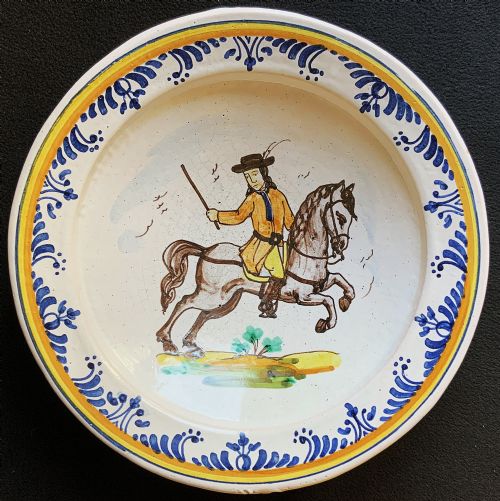
Decoration relied heavily on cobalt pigment for blue designs, occasionally accompanied by manganese and yellow pigments for polychrome effects. Firing fixed the mineral colours into the white tin glaze, producing the distinctive glossy finish characteristic of the period.
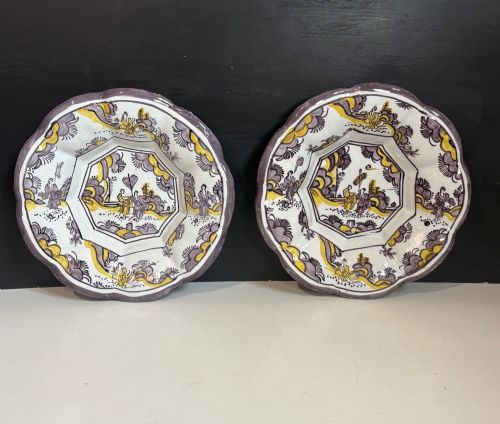
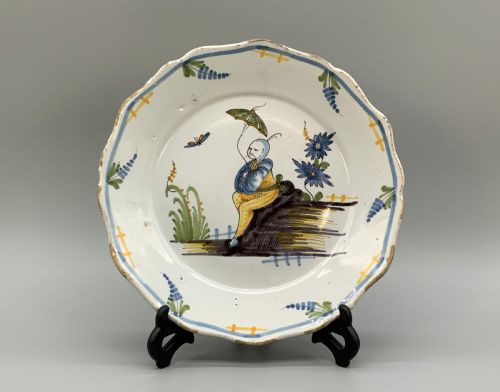
The decoration on these chargers spans simple geometric patterns, intricate floral sprays, and European interpretations of Chinese Chinoiserie designs rendered in cobalt and polychrome pigments.
Distinctions in quality
Quality rests upon the confidence of the brushwork and the clarity of the painted design against the tin-glaze ground. Superior examples display disciplined control in floral, geometric, or Chinoiserie motifs, whereas lesser pieces show rushed execution or muddied pigment.
The visual harmony of the palette and the evenness of the glaze application also separate standard production from finer cabinet pieces. Well-balanced polychrome arrangements and crisp cobalt blue painting elevate a charger beyond routine utilitarian earthenware.
The 18th Century Faience Charger Glossary
- Faience
- Tin-glazed earthenware produced in Europe outside of Italy, known for a white opaque glaze painted with metallic oxides.
- Charger
- A large decorative plate or dish, typically exceeding standard dinner plate dimensions, used for wall hanging or sideboard display.
- Tin-Glaze
- A ceramic glaze made opaque by the addition of tin oxide, creating a white surface suitable for direct painting.
- Cobalt Pigment
- A blue mineral colour used under the glaze to create deep blue designs that withstand high kiln temperatures.
- Polychrome
- Decoration employing multiple colours, combining cobalt blue with manganese, yellow, and other pigments on a single vessel.
- Chinoiserie
- European artistic styles reflecting Chinese motifs, frequently adapted by Delftware and faience painters during the eighteenth century.
18th Century Faience Charger: Frequently Asked Questions
How were chargers used?
These large dishes served primarily as decorative objects for display on sideboards, tables, or walls within domestic interiors. Their broad surfaces allowed households to exhibit painted scenes and patterns without risking everyday wear on the dining table.
Over time, collectors moved them from dining halls into cabinets and wall displays, preserving their painted surfaces. They functioned both as status symbols and as vibrant splashes of colour in traditional rooms.
How do I clean an old charger?
Dusting gently with a dry, soft cloth is normally sufficient for maintaining the surface of tin-glazed earthenware. Moisture can seep into old body earthenware through microscopic craquelure, so washing should be avoided unless strictly necessary.
Harsh cleaning agents or abrasive materials will damage the historic glaze and pigment layers permanently. Professional conservation advice should be sought if deeper cleaning becomes unavoidable.
How can I tell Dutch from French pieces?
Dutch Delftware frequently relies on strong cobalt blue painting, geometric borders, and traditional floral or maritime motifs. French faience often incorporates warmer palettes including manganese purple and yellow, alongside distinct regional touches like Chinoiserie.
Comparing the glaze tone and secondary pigment choices helps separate Dutch workshops from French or Spanish production centres. Brushwork styles also offer clues to the specific geographic origin of the pottery.
Can I hang my charger on the wall?
Hanging these pieces requires specialised, non-abrasive wire hangers designed specifically for heavy antique plates without exerting pressure on the rim. The wall support must be secure because large earthenware chargers carry substantial weight.
Displaying them safely away from heavy traffic areas prevents accidental knocks that could chip the historic tin glaze. Proper hanging hardware distributes the weight evenly across the base and rim.