
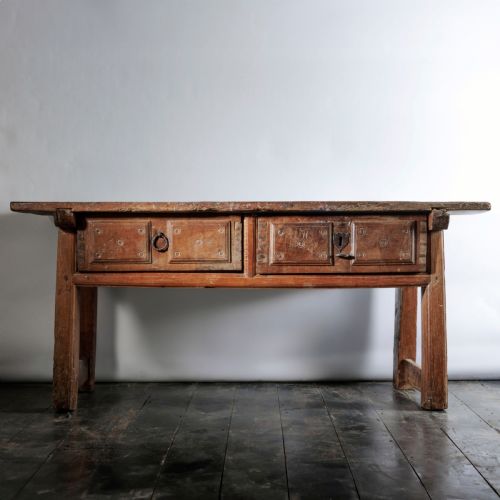
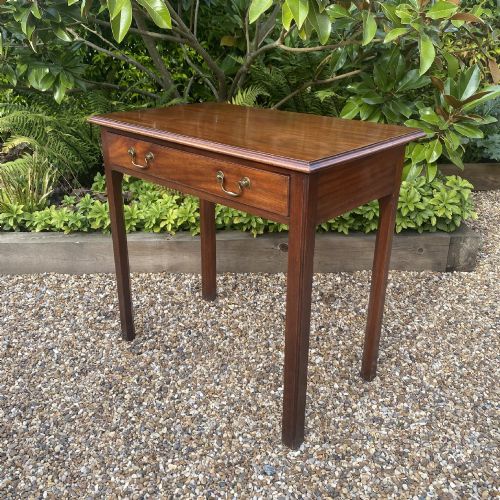
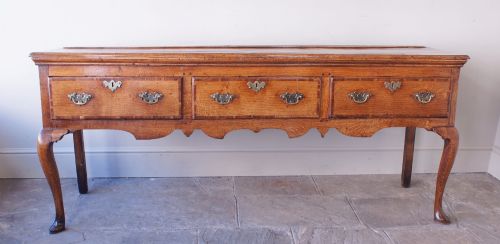
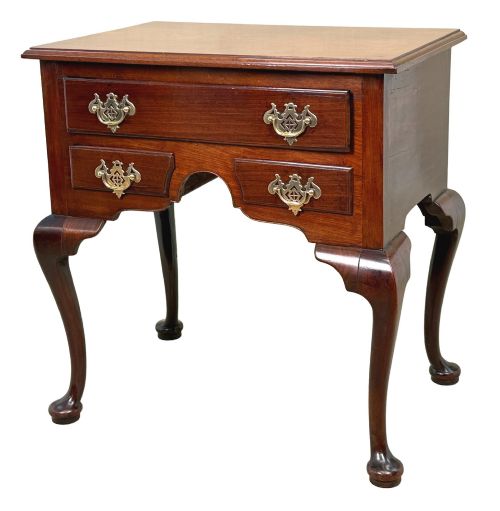
18th Century Drawer Table
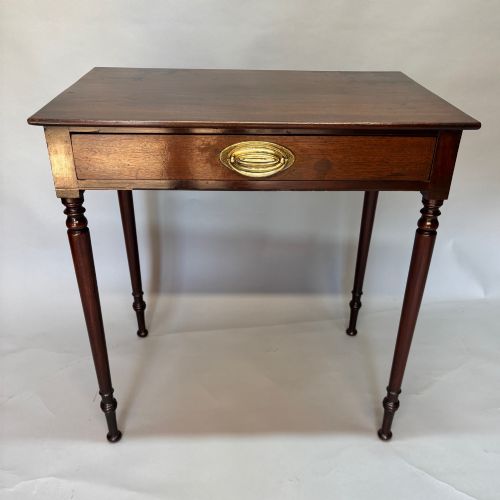
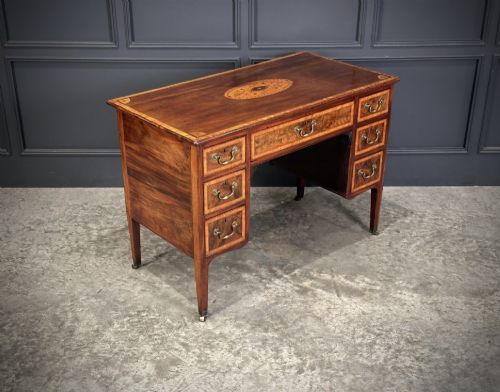
An 18th century drawer table brings working surface and concealed storage together in oak, mahogany, or walnut.
18th Century Drawer Table
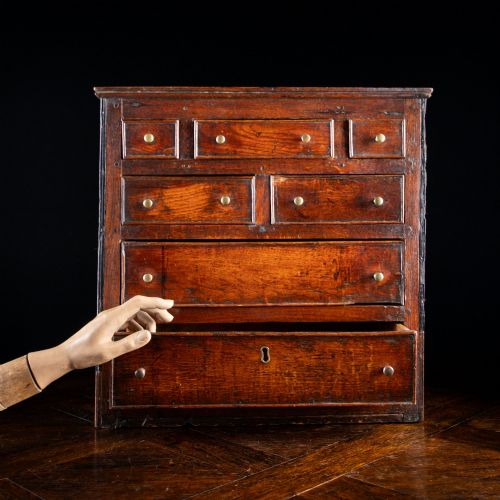
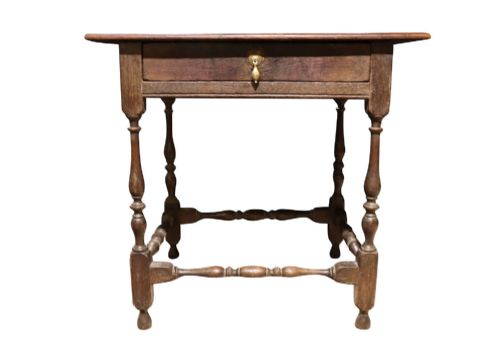
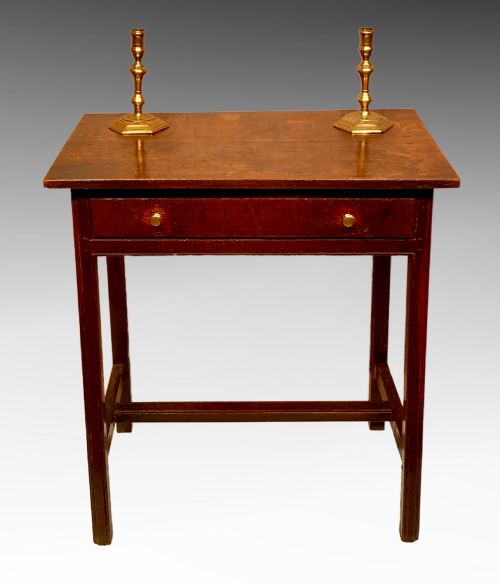
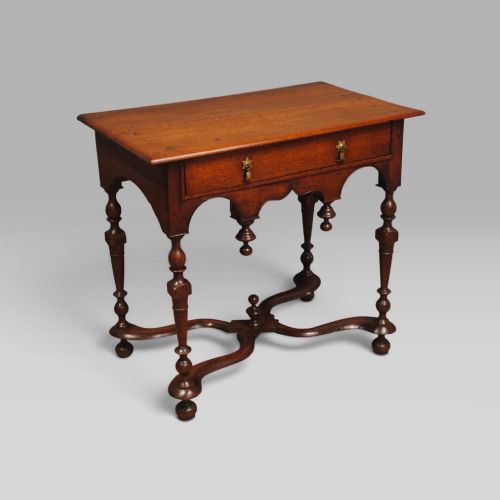
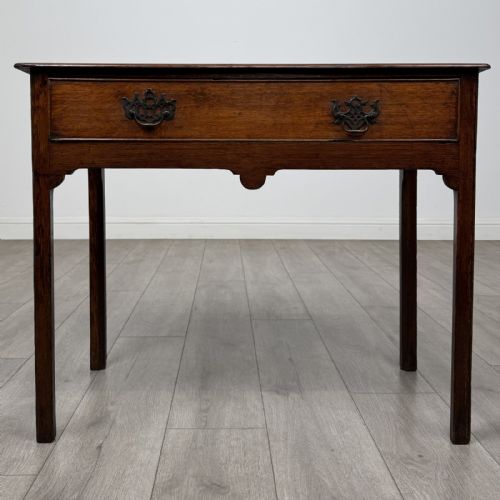
An 18th century drawer table serves domestic utility through forms such as lowboys, side tables, and dresser bases. These items provide a compact surface with one or more integrated drawers beneath the top.
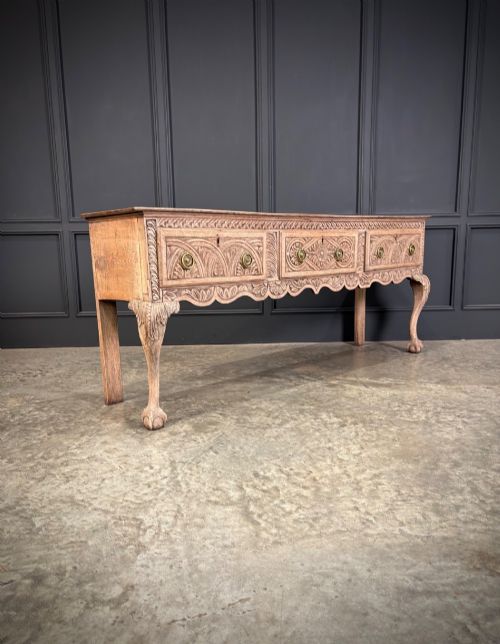
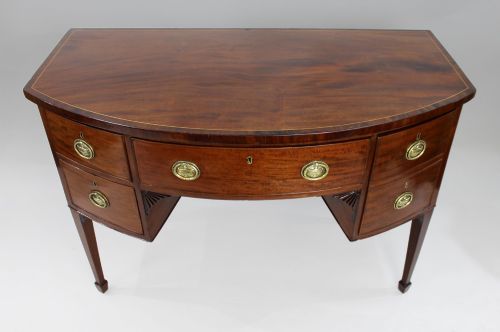
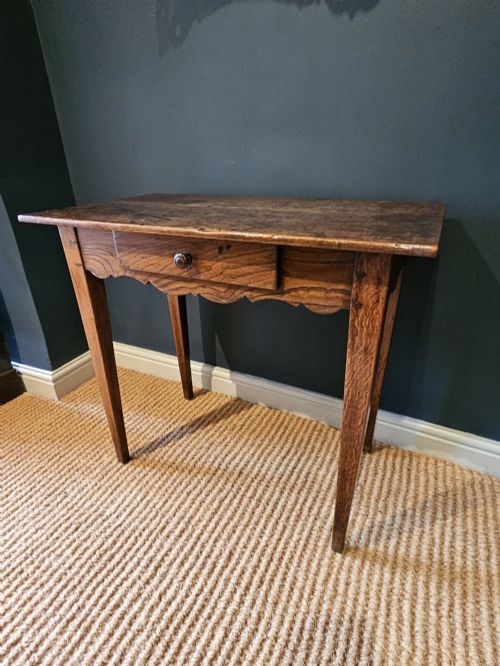
Oak and mahogany dominate the offerings, appearing across Georgian and provincial designs. Lowboys and single drawer side tables represent the primary forms encountered by buyers on this page.
Cabinet makers produced these pieces to function as dressing tables, writing desks, and serving surfaces. Their proportions suit halls, bedrooms, and reception rooms where floor space remains limited.
Materials and construction methods
Craftsmen utilised native timber such as oak for early pieces, transitioning to imported mahogany and walnut as trade routes expanded. Secondary woods often included elm or fruitwood for drawer linings and internal framing.
Joinery relied on pegged mortise and tenon frames, while drawer construction typically employed hand-cut dovetails. Timber surfaces received wax finishes or polishing rather than modern varnishes, preserving the grain structure.
Early cabinet makers occasionally utilised old floorboards for hidden drawer bottoms, leaving behind the ghost marks of forgotten nails.
Factors determining quality
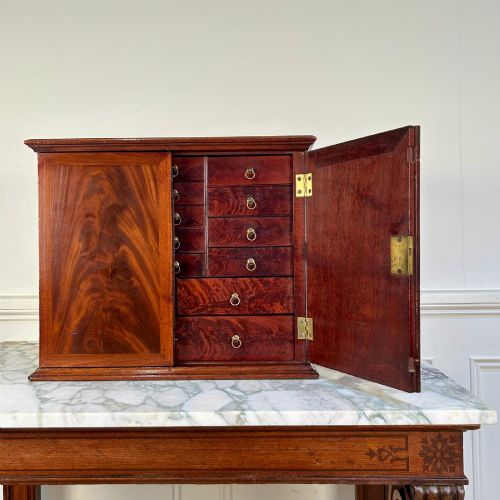
The choice of timber grain dictates visual hierarchy, with figured walnut, burr veneers, and dense mahogany commanding greater attention than plain boards. Surface preservation matters deeply, as dry original timber surfaces hold more integrity than stripped or heavily restored examples.
Structural refinement separates standard utility furniture from sophisticated examples, seen in the shaping of cabriole legs, crispness of carved details, and precision of drawer dovetailing. Retaining original brass hardware adds considerable merit to an individual table.
The 18th Century Drawer Table Glossary
- Lowboy
- A small kneehole dressing table or side table featuring one or more rows of drawers beneath the top surface. These low tables typically stand on cabriole or straight legs.
- Dresser base
- A robust lower sideboard unit containing banks of drawers and sometimes an open pot board shelf below. They originate from country houses and farmhouses.
- Cabriole leg
- A furniture leg that curves outward in a convex arc at the knee and tapers inward in a concave arc to the foot, inspired by animal limbs.
- Dovetail
- A joint formed by interlocking wedge-shaped fingers, used primarily to join drawer sides to drawer fronts with high tensile strength.
- Pot board
- An open lower shelf built into a dresser base or table framework, originally intended for storing pots and domestic vessels.
18th Century Drawer Table: Frequently Asked Questions
What rooms suit an 18th century drawer table?
These compact tables fit well in hallways, living rooms, and bedrooms. Their shallow depth allows them to sit flush against walls without obstructing pathways.
Drawer space offers practical storage for keys, stationery, or daily essentials while providing a display surface for lamps or decorative objects.
How do I distinguish oak pieces from mahogany ones?
Oak furniture exhibits a pronounced grain pattern with visible medullary rays, often associated with earlier Georgian and country vernacular pieces. The tone tends to be warm honey or deep nut brown.
Mahogany presents a smoother, denser surface with reddish-brown hues that darken with age, frequently found on more formal urban tables.
Were these tables used for dining?
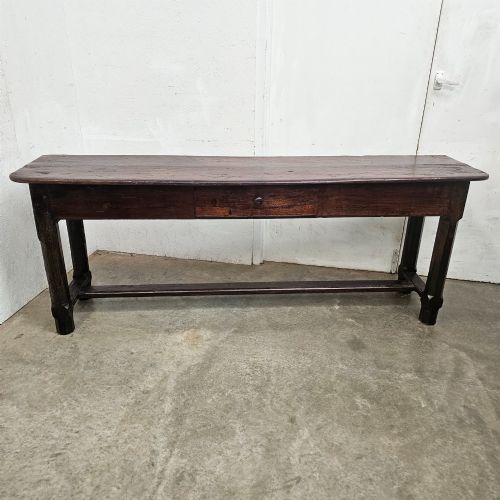
Smaller drawer tables functioned primarily as side tables, serving surfaces, or lowboys rather than main dining tables. Larger dresser bases and twin plank tables handled food preparation and heavy domestic chores.
Side tables stood against dining room walls to hold dishes before service.
How do I care for antique timber surfaces?
Maintain timber by applying natural beeswax periodically to nourish the grain and protect against moisture. Avoid placing tables near direct heat sources or in strong sunlight.
Dust with a soft, dry cloth rather than using silicone sprays or wet cleaners that degrade historic finishes.