
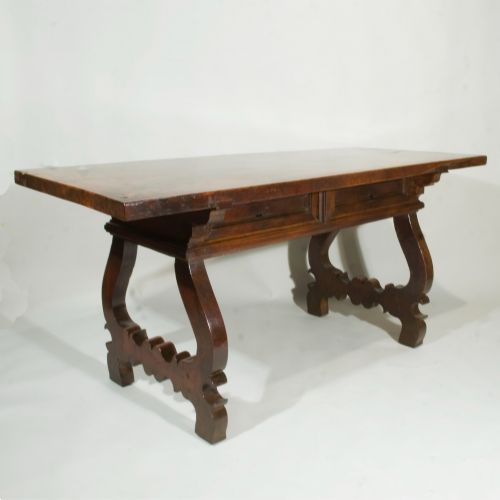
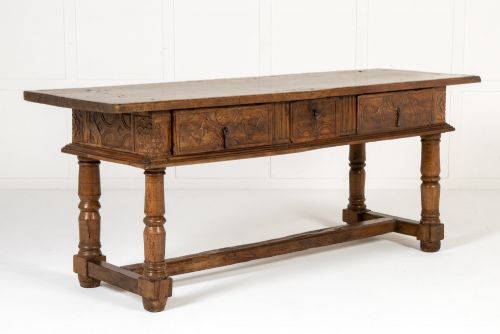


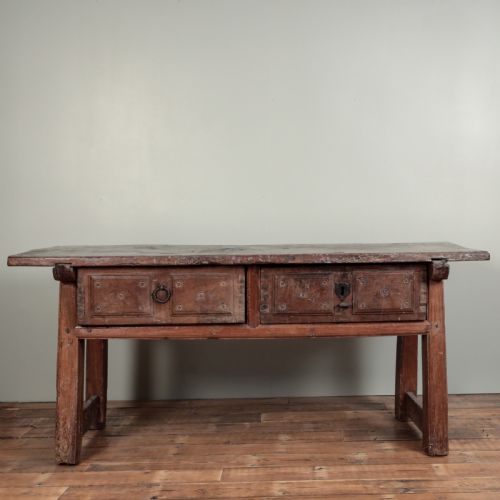


Spanish Baroque Console Table
A spanish baroque console table brings heavy architectural timber and grounded proportion into a room, offering both presence and utility.
Spanish Baroque Console Table
A spanish baroque console table sits firmly within the historical traditions of the seventeenth century and its later revivals, offering robust surface space for domestic interiors. These forms derive directly from the heavy timber furnishings produced across the Iberian Peninsula during the baroque period, when utility met stark, formal design.
Most examples found in current stock span the seventeenth and nineteenth centuries, capturing both original period construction and later nineteenth-century revivals. Side tables and centre tables share these lineage traits, built with substantial tops and sturdy framing designed to anchor a room.
The materials remain strictly traditional, relying on deep-toned woods and visible structural joinery rather than superfluous ornamentation. Walnut and oak dominate the surviving inventory, frequently paired with iron supports to ensure rigidity and long-term durability.
Materials and construction methods
Makers relied primarily on solid walnut and oak to construct the main bodies, selecting timber for density and deep natural grain. These woods were joined using traditional framing techniques that allowed the heavy boards to withstand decades of heavy daily use without losing structural integrity.
The inventory spans the seventeenth century through to the early twentieth century, encompassing provincial revival pieces.
Judging quality in construction and surface
Quality rests heavily on the depth of the timber's original patina and the integrity of the structural joinery. Pieces displaying untouched surfaces and deep, natural wear show far superior craftsmanship to those stripped or overly restored.
The weight of the timber and the subtlety of the iron stretchers dictate the overall refinement of the piece. Heavier solid construction marks the higher tier of production, ensuring the table remains balanced and enduring.
The Spanish Baroque Console Table Glossary
- Patina
- The surface sheen and colour acquired by timber through age and handling. This develops naturally over centuries and indicates untouched authenticity.
- Console Table
- A wall-mounted or freestanding table designed to sit flat against a vertical surface. These forms provide narrow display space in hallways and principal rooms.
- Ebonised Wood
- Timber treated with a chemical stain or pigment to imitate the deep black tone of ebony. This finish appears frequently on nineteenth-century revival pieces.
- Wrought Iron
- Iron beaten and shaped by hand into structural stretchers or braces. This material provides essential rigidity beneath heavy wooden tabletops.
Spanish Baroque Console Table: Frequently Asked Questions
Where should a console table go?
These tables suit hallways, living rooms, and dining spaces where a strong architectural focal point is required against a wall.
Their narrow depth allows them to sit comfortably in circulation areas without obstructing movement.
How do I clean antique walnut?
Dust the surface regularly with a dry, soft cloth to prevent particulate build-up in the wood grain.
Aplying a neutral beeswax periodically helps preserve the natural moisture and finish of the timber.
Are these tables sturdy enough for daily use?
Solid timber construction and iron stretchers ensure these tables easily handle everyday domestic requirements.
Their heavy weight prevents tipping, making them remarkably stable surface platforms.
How do I spot a revival piece?
Nineteenth-century revival items often feature slightly different tool marks and lighter timber preparations compared to seventeenth-century originals.
Examining the underside joinery and the consistency of the wood ageing reveals the true period of manufacture.