
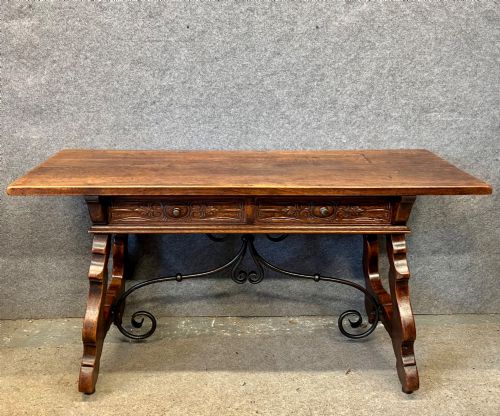


Spanish Colonial Side Table
A spanish colonial side table brings robust timber and historic utility into a room.
Spanish Colonial Side Table
When you search for a spanish colonial side table, you are looking at sturdy wooden surfaces shaped by centuries of tradition. These examples span from the seventeenth century through to the early twentieth century, showing both provincial and baroque influences.
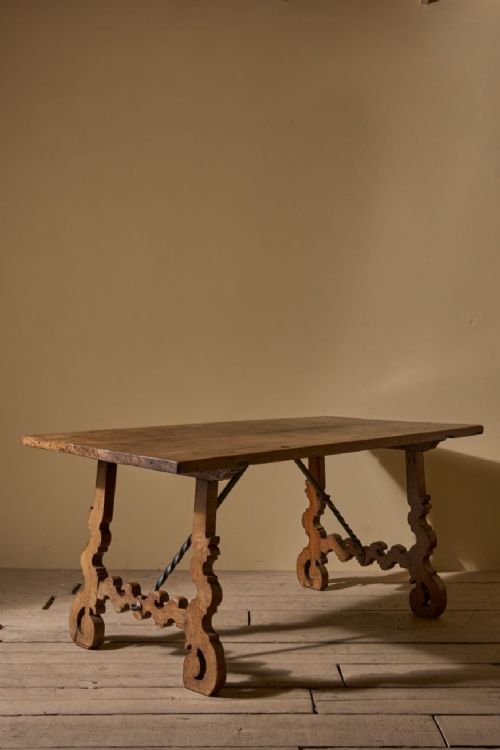
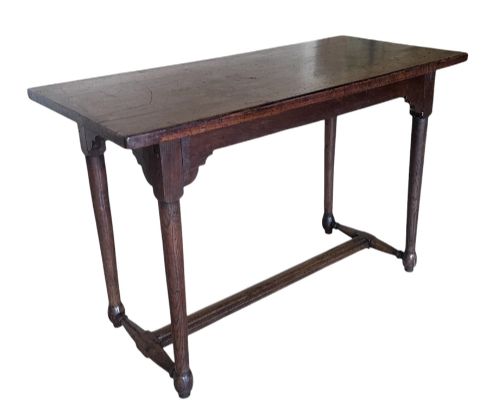
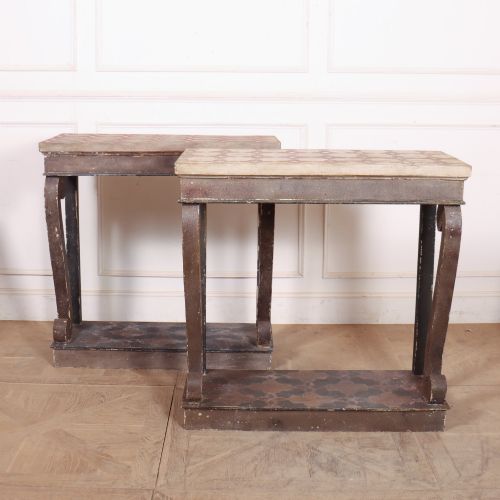
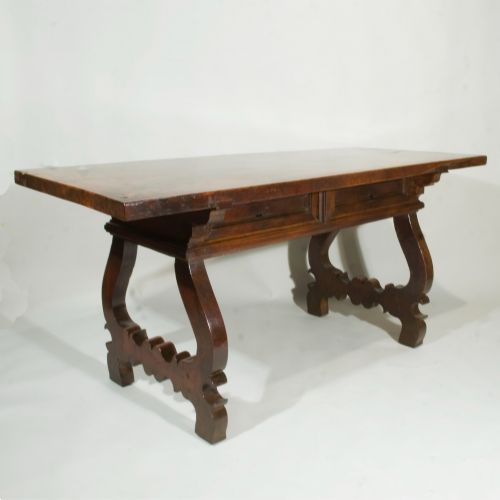
The pieces on this page appear primarily as side tables, console tables, and broader centre tables constructed for functional living. Walnut and oak dominate the forms, frequently paired with ironwork to create a grounded silhouette.
Most entries draw from seventeenth and eighteenth-century craftsmanship, alongside later interpretations from the nineteenth and early twentieth centuries. They offer a direct line to historical domestic spaces through practical surfaces.
How they were made
Cabinetmakers relied on dense hardwoods like walnut and oak for the structural frames of these tables. These timbers provided the necessary strength for heavy daily use without requiring excessive ornamentation.
One recorded set even pairs an armchair with a willow table, proving that historical domestic seating took unexpected material turns.
What varies in quality
The distinction between standard examples and superior pieces rests in the selection of the timber and the harmony of the proportions. Rich grain patterns in the walnut or oak elevate the visual weight of the furniture.
Integration of secondary materials, such as wrought iron hardware or fruitwood accents, dictates the overall refinement of the construction. Finer execution shows a deliberate balance between the heavy wooden top and the supporting base.
The Spanish Colonial Side Table Glossary
- Console table
- A table designed to stand against a wall, frequently supported by brackets or legs at the front. These pieces serve narrow spaces and hallways.
- Centre table
- A freestanding table intended to be viewed from all sides, positioned in the middle of a room. They often feature finished backs and robust timber frames.
- Spanish Baroque
- A stylistic period marked by dramatic form and restrained ornamentation. It prioritises structural mass over surface carving.
- Continental provincial
- A descriptor for furniture made in regional areas outside major metropolitan design centres. These items reflect local traditions rather than court fashions.
Spanish Colonial Side Table: Frequently Asked Questions
Where did people place these tables?
These tables served various domestic functions in hallways, principal rooms, and dining spaces. Their robust construction allowed them to handle daily administrative and household tasks.
Console and side variants stood against walls to hold lighting or objects, while larger centre tables occupied open spaces for communal use.
How do I care for historic walnut furniture?
Historic timber requires stable humidity and protection from direct sunlight to prevent the wood from drying out or splitting. Gentle dusting with a dry cloth preserves the finish without harming the grain.
Avoid placing these pieces near active heat sources or using modern chemical polishes that can degrade older wax surfaces.
What defines the Spanish Baroque style?
The Spanish Baroque style focuses on bold silhouettes, heavy timber construction, and architectural lines. Decoration remains minimal compared to later European iterations, relying on the natural beauty of the walnut and oak.
Wrought iron stretches and supports frequently accompany this style, adding both tensile strength and visual contrast to the dark wood.
Are these tables suitable for daily use?
Built from dense hardwoods like oak and walnut, these tables possess inherent durability suited for practical living. Their original purpose was strictly utilitarian, meaning they were engineered to bear weight and resist heavy wear.
Placing them in modern interiors simply continues their historical function as reliable surface furniture.