
18th Century Dining Server
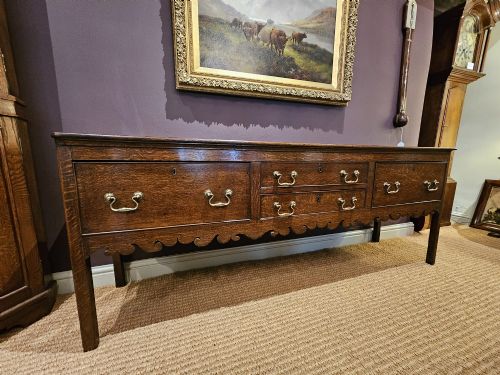
An 18th century dining server anchors a formal dining room with ample surface area and disciplined proportions.
18th Century Dining Server
An 18th century dining server encompasses formal serving tables, sideboards, and dresser bases designed to manage the practical demands of historic dining. The pieces available here span Georgian and George III periods, alongside regional Queen Anne and Sheraton examples.
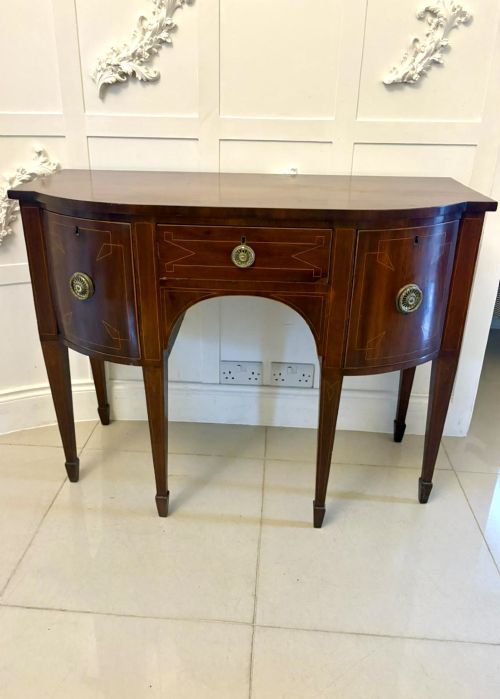
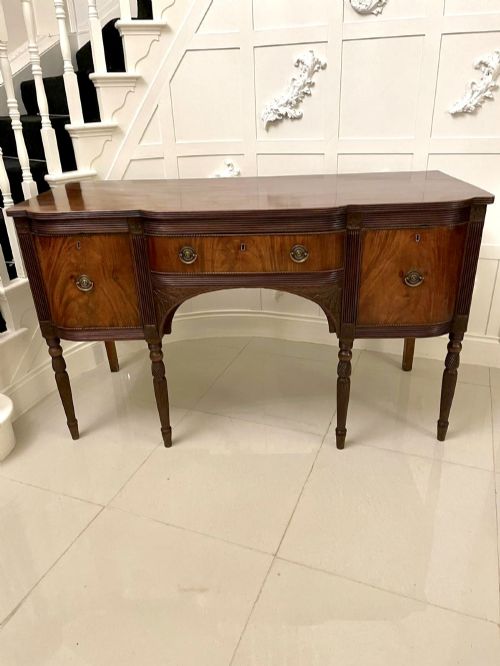
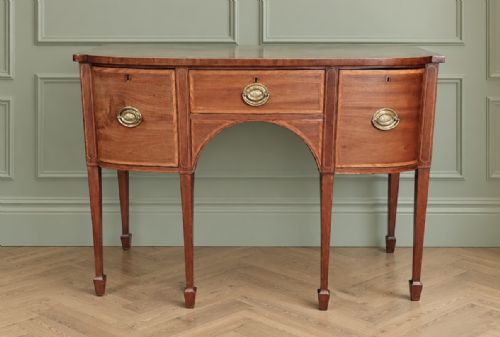
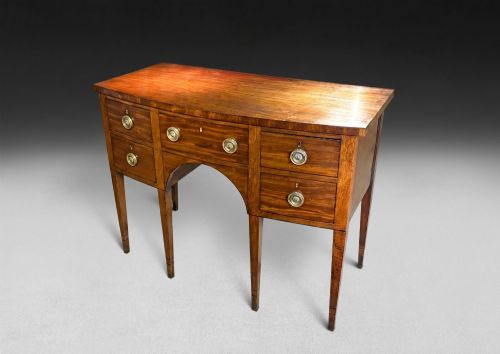
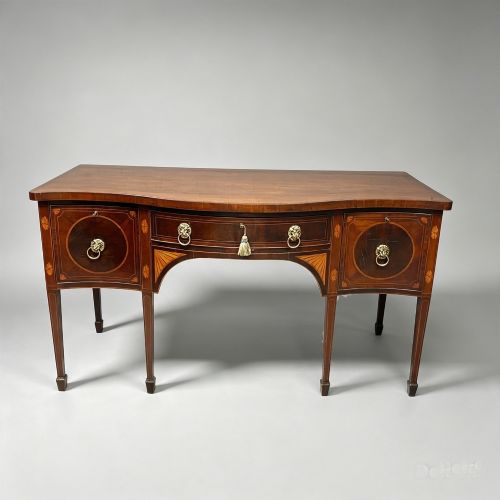
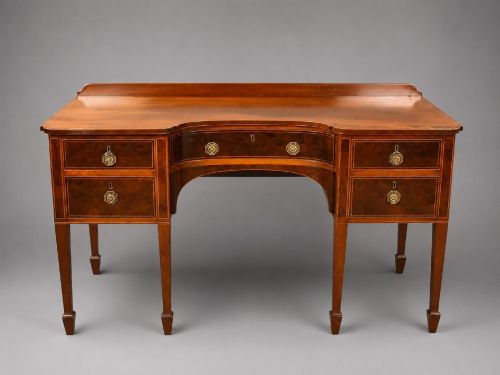
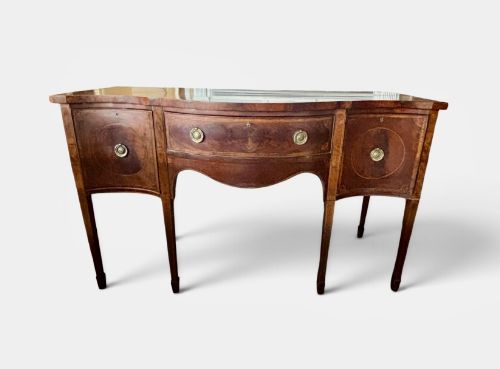
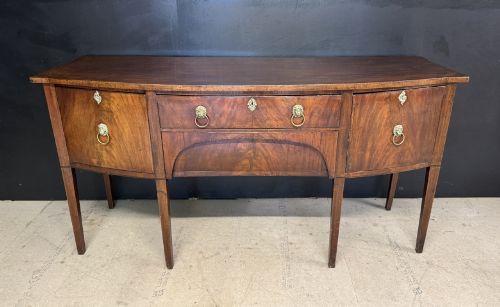
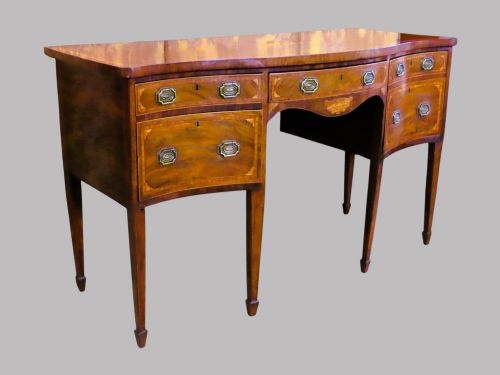
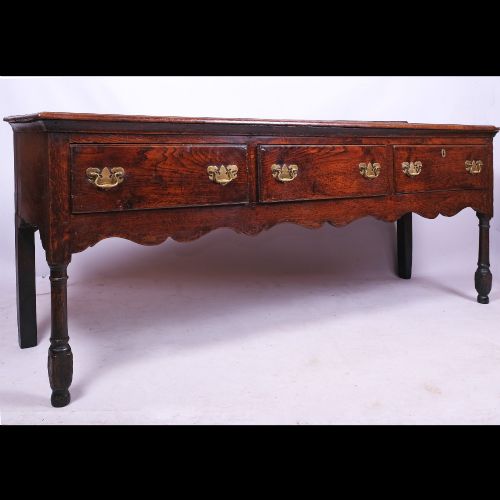
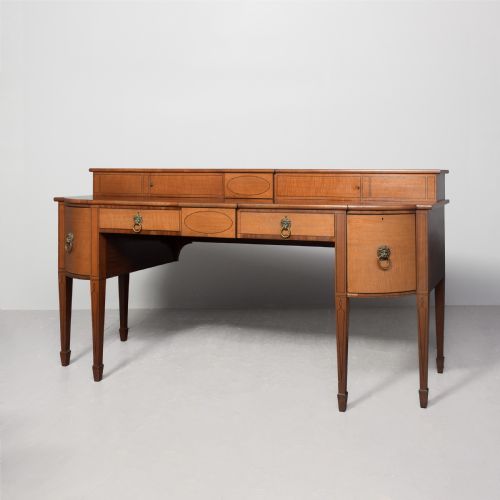
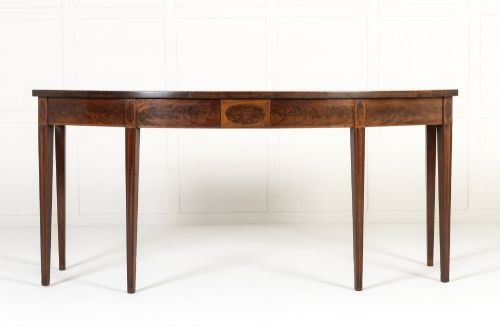
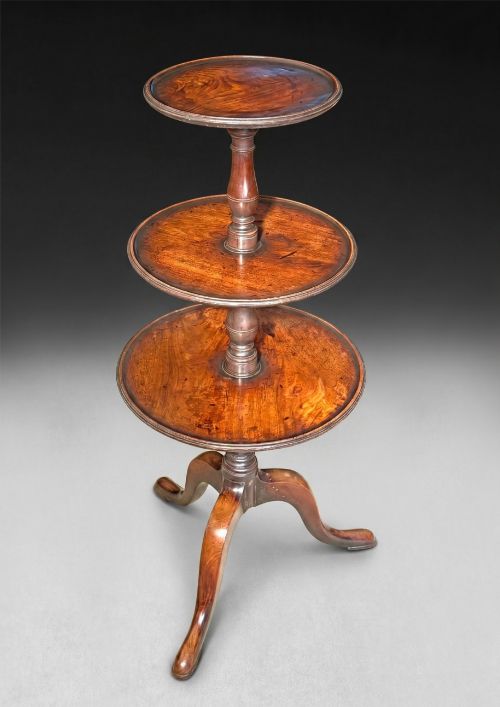
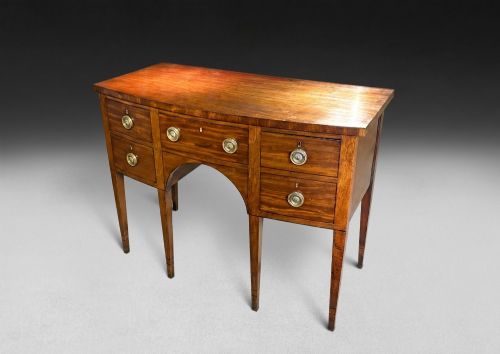
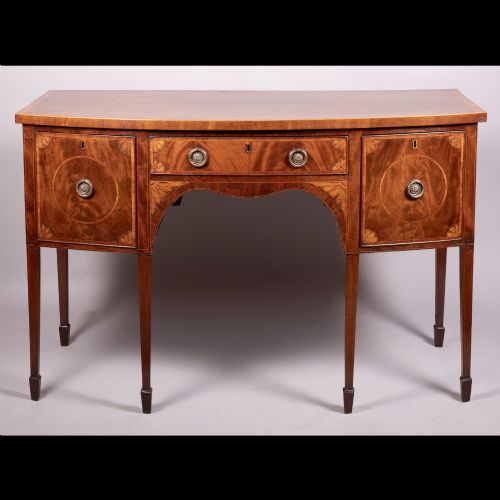
The predominant form you encounter is the mahogany sideboard, fashioned with straight, bow front, or serpentine profiles. Alongside these stand serving tables, dumb waiters, and occasional dresser bases in oak and mahogany.
Makers of this era addressed the need for organised hospitality through fitted drawers, tier structures, and specialised vessels such as cheese coasters. These forms reflect the evolution of dining habits across English, Scottish, and French provincial workshops.
Materials and Construction
Cabinet makers relied primarily on solid and figured mahogany, often selected for strong grain patterns in flame mahogany surfaces. Construction incorporated secondary timbers such as oak alongside structural brass hardware.
Decorative detail relies on cabinet work techniques including boxwood and satinwood inlay to accentuate borders and drawer fronts. Surfaces are shaped into curved serpentine and bowfront configurations requiring precise joinery.
Several pieces include dedicated cheese coasters designed to glide smoothly across the dining table between courses.
Gradations in Quality
Quality rests upon the selection of timber, where figured or flame mahogany veneers and crisp boxwood or satinwood inlay distinguish finer examples from plain constructions. The sophistication of the silhouette also dictates standing, with serpentine and breakfront profiles requiring greater joinery skill than straight fronts.
Proportion and execution of hardware further separate standard domestic pieces from exceptional commissions. Refined pieces exhibit balanced scaling, well-wrought brass fitments, and harmonious integration of secondary timbers.
The 18th Century Dining Server Glossary
- Serpentine
- A front contour characterised by a convex centre flanked by concave curves, demanding advanced woodworking skill. This flowing shape appears frequently on finer George III sideboards.
- Bow front
- A convex, outwardly curving front profile common in late Georgian case furniture. It softens the linear geometry of a dining room.
- Dumb waiter
- A tiered serving stand fitted with revolving circular trays on a central pillar. These pieces allowed diners to help themselves without servants present.
- Dresser base
- A low wooden sideboard or storage unit featuring drawers and sometimes cupboards below a flat top. They originate from earlier vernacular traditions in oak.
- Inlay
- A decorative technique where contrasting woods like boxwood or satinwood are inserted into recesses in the primary surface. This adds linear definition to drawer fronts and tabletops.
18th Century Dining Server: Frequently Asked Questions
What is an 18th century dining server?
An 18th century dining server is a large case piece or table used historically to hold food, plate, and wine during meals. These items range from formal mahogany sideboards to serving tables and dumb waiters.
They emerged to support elaborate dining rituals in Georgian households, providing both display space and concealed storage.
How do I distinguish a sideboard from a serving table?
Sideboards typically incorporate banks of drawers and cupboards built into the case frame below the top surface. Serving tables rely on an open frame with legs supporting the top board without enclosed storage.
Both forms served the dining room but fulfilled different capacities for holding tableware and linen.
Where were these pieces made?
The pieces originate primarily from English and Scottish workshops operating during the Georgian period. Regional variations include French provincial oak furniture alongside urban cabinet work.
Cabinet makers in major centres utilised imported mahogany and native timbers to build pieces for domestic dining rooms.
How do I care for antique mahogany furniture?
Keep wooden servers away from direct heat sources and strong sunlight to prevent timber splitting and veneer lifting. Regular dusting with a dry cloth preserves the polished surface.
Avoid silicone polishes and maintain stable indoor humidity levels to protect the historic joinery and inlay.