



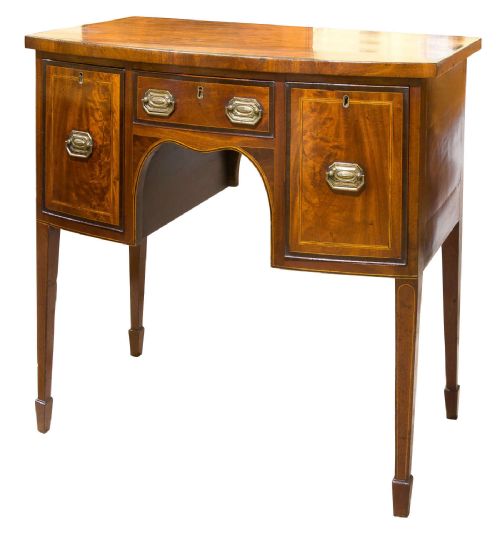

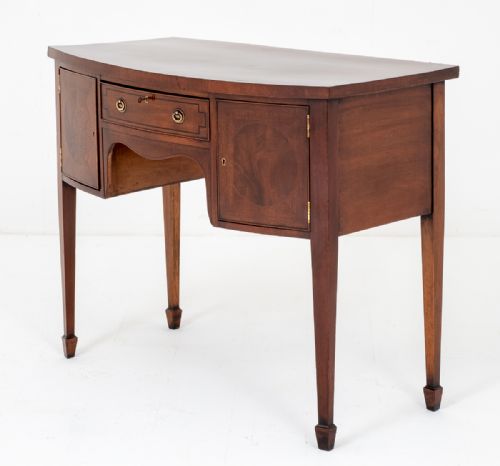
Classic Mahogany Credenza
These classic mahogany credenza pieces are substantial dining room furniture forms built from rich timber, offering both storage and commanding presence.
Classic Mahogany Credenza
When you search for a classic mahogany credenza, you are looking at substantial timber storage forms that align closely with traditional sideboards, side cabinets, and chiffoniers. These pieces emerge predominantly from the Georgian, Victorian, and Edwardian eras, spanning the eighteenth century through to the early twentieth century.
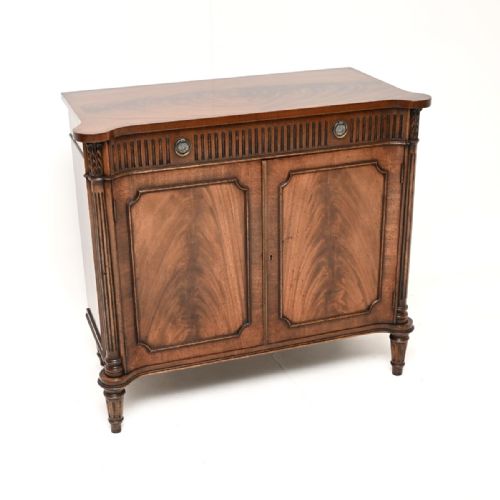
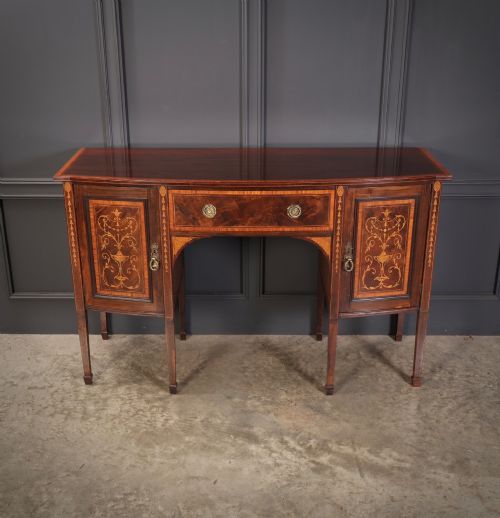
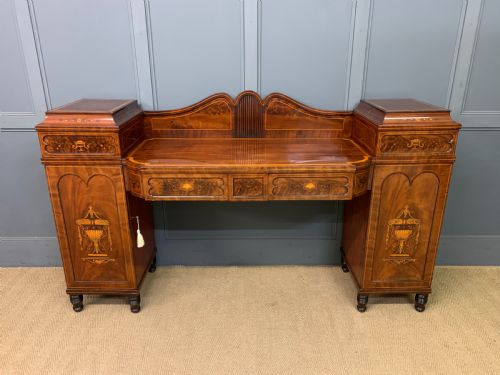
The versions you are most likely to meet on this page include George III bowfront sideboards, William IV chiffoniers, and later revival interpretations. They take the form of pedestal bases, two-door cabinets on legs, and low breakfront arrangements designed for dining rooms and grand hallways.
Makers and manufacturers across these periods utilised generous proportions and disciplined proportions to create functional display and storage surfaces. The typology crosses over with sideboards and chiffoniers, reflecting how nineteenth-century cabinet makers adapted earlier functional forms for changing domestic habits.
Materials and construction
Construction relies heavily on solid mahogany and flame mahogany veneer, chosen for deep grain patterns and rich reddish-brown tones. Cabinet makers selected fine cuts of timber to cover large carcases, ensuring stable surfaces that resisted warping over decades of domestic use.
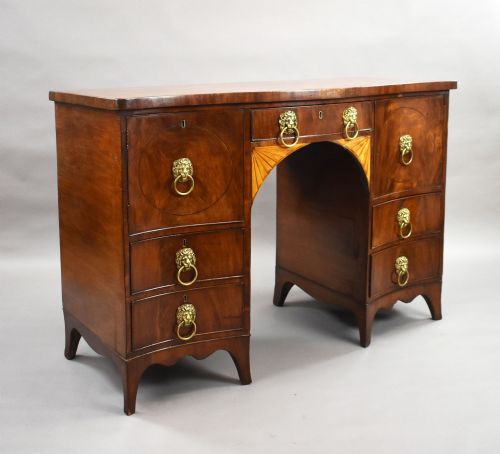
Detailing often incorporates contrasting boxwood inlay, satinwood stringing, and marquetry patterns to accentuate the clean lines of bowfront and breakfront carcases. Brass fittings, including ring handles and key escutcheons, provide functional metallic accents against the dark timber.
Supporting structures range from six-legged configurations on Georgian bowfronts to sturdy plinths and bracket feet on Victorian pedestals. Joinery techniques prioritize concealed structural strength to bear the weight of heavy tableware and display items.
Classic Mahogany Credenza Retail Price Guide 2026
Typical asking prices for classic mahogany credenza among the pieces listed under this phrase on Sellingantiques today, from the lower quarter to the upper quarter. They describe what is for sale here now, not the wider market.
The documented forms include George III bowfront sideboards, William IV chiffoniers, and later Regency revival pedestal designs.
Judging quality and craftsmanship
Quality separates into pieces possessing crisp, hand-cut inlay and those featuring simpler, painted or machine-cut substitutes. The choice of timber veneer dictates visual depth, with highly figured flame mahogany marking the upper tiers of cabinet making.
Structural integrity in the drawer linings and backboards indicates the level of care invested during manufacture. Superior examples retain original brass hardware and precise drawer dovetailing that operates smoothly without binding.
The Classic Mahogany Credenza Glossary
- Mahogany
- A durable tropical hardwood prized for its deep reddish-brown colour and stability in furniture construction. It accepts polish exceptionally well and forms the primary structural material for these pieces.
- Bowfront
- A curved cabinet front that swells outward in the centre, softening the rectangular silhouette of the furniture. This shape requires advanced woodworking skill to bend timber or veneer accurately.
- Chiffonier
- A low sideboard or cabinet developed in the nineteenth century, often featuring enclosed shelving below. It serves as a compact storage unit for dining accessories.
- Marquetry
- The art of applying pieces of veneer to a structure to form decorative patterns and pictures. Craftsmen use contrasting woods like boxwood and satinwood to create these intricate designs.
- Pedestal sideboard
- A large dining room form featuring central serving space flanked by heavy columnar or pillared pedestals. These units provide substantial storage capacity and a commanding architectural presence.
Classic Mahogany Credenza: Frequently Asked Questions
How do I identify a Georgian piece?
Georgian pieces typically display restrained classical proportions, fine boxwood inlay, and disciplined bowfront or breakfront outlines. Cabinet makers of this era focused on architectural balance and subtle wood selection rather than heavy ornamentation.
Examination of the interior drawer construction and secondary timbers often confirms the eighteenth or early nineteenth-century origin.
Where were these pieces used?
Historically, these items stood in formal dining rooms and large reception spaces to store cutlery, linen, and glassware. Their wide top surfaces also functioned as serving areas during banquets and family meals.
Today, they adapt easily to modern living rooms and hallways as media consoles or general storage cabinets.
What is flame mahogany?
Flame mahogany is a highly figured veneer sliced from the junction where branches meet the main tree trunk. This cut produces a distinctive, fiery grain pattern with exceptional depth and chatoyancy.
Cabinet makers reserved this prized material for the most prominent surfaces, such as drawer fronts and cabinet doors.
How do I care for mahogany furniture?
Maintenance requires keeping the timber away from direct sunlight and extreme temperature fluctuations to prevent the veneer from drying or cracking. Regular dusting with a soft, dry cloth preserves the polished finish.
Occasional application of appropriate wax feeds the wood and maintains its natural lustre without building up heavy residues.