
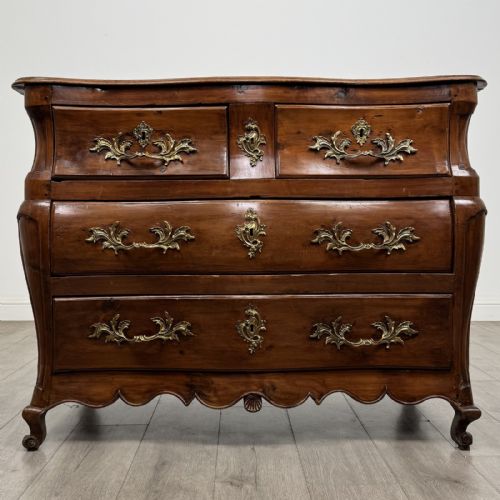
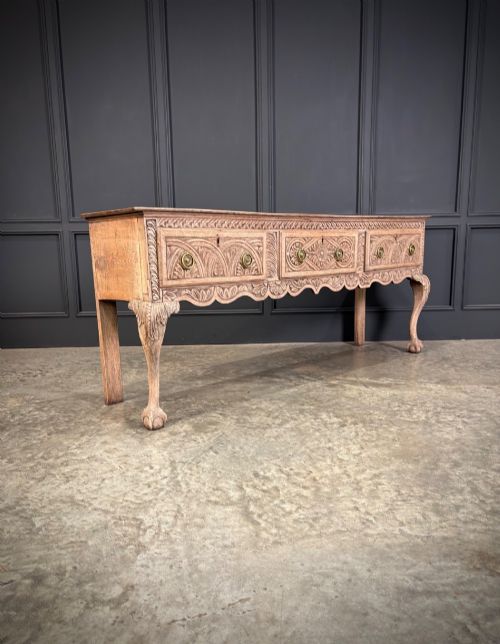
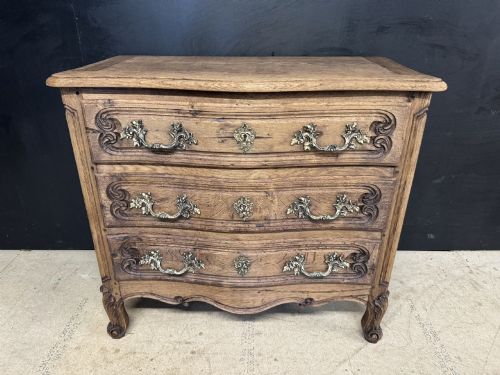
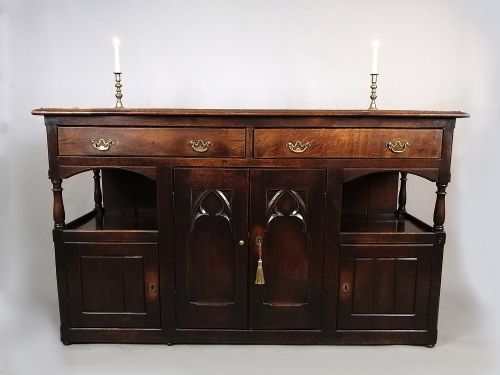
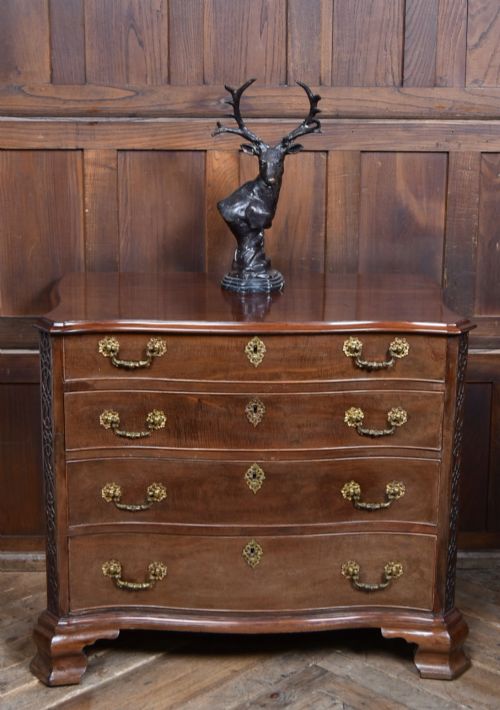
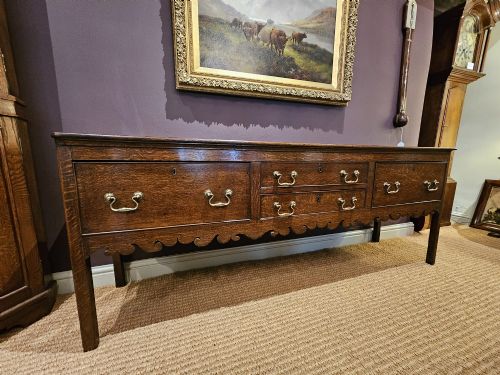
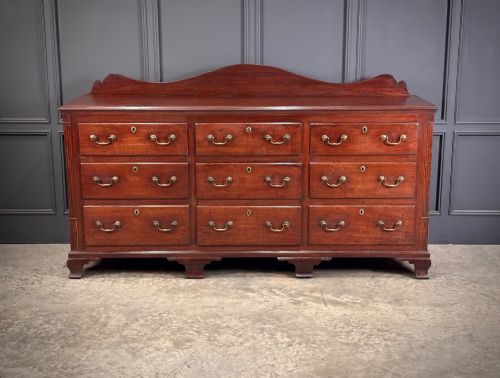
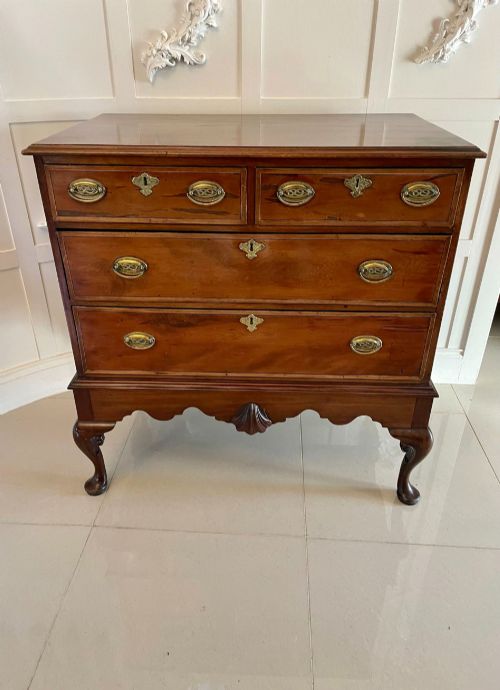
18th Century Carved Dresser
An 18th century carved dresser brings rustic proportion and timber character to a modern room.
18th Century Carved Dresser
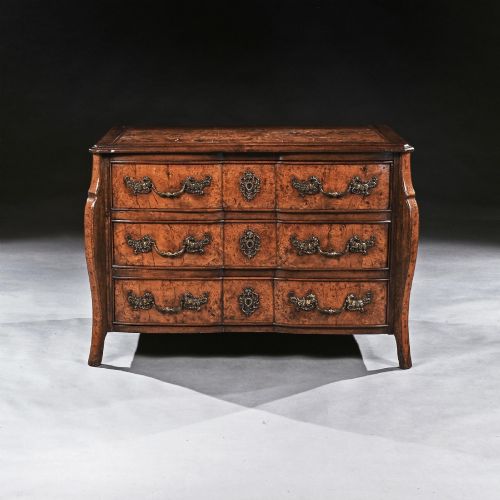
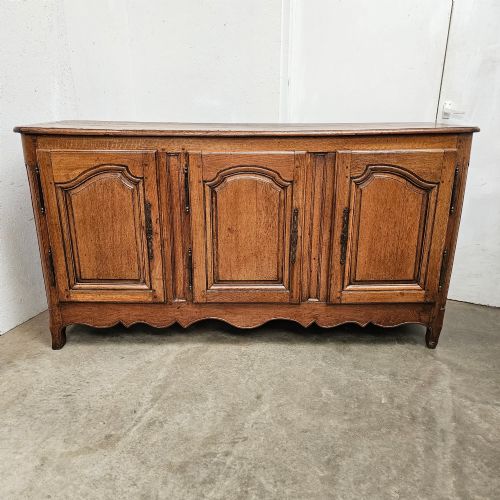
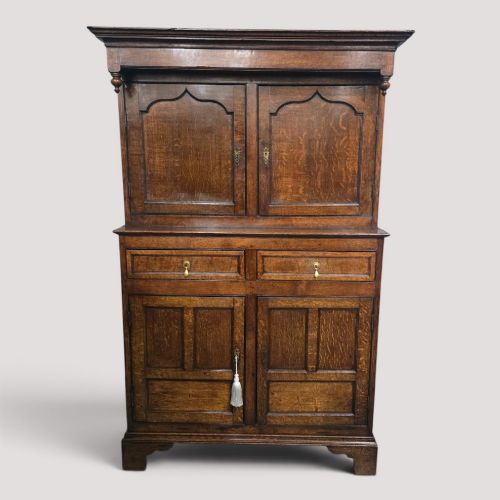
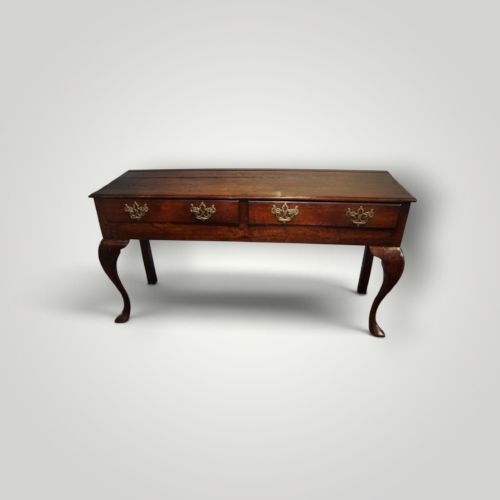
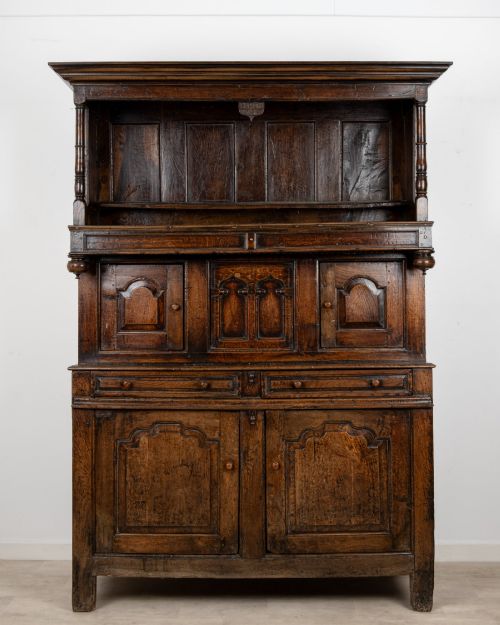
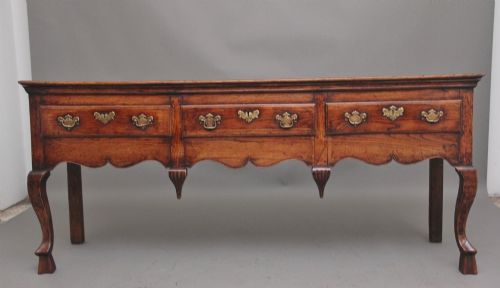
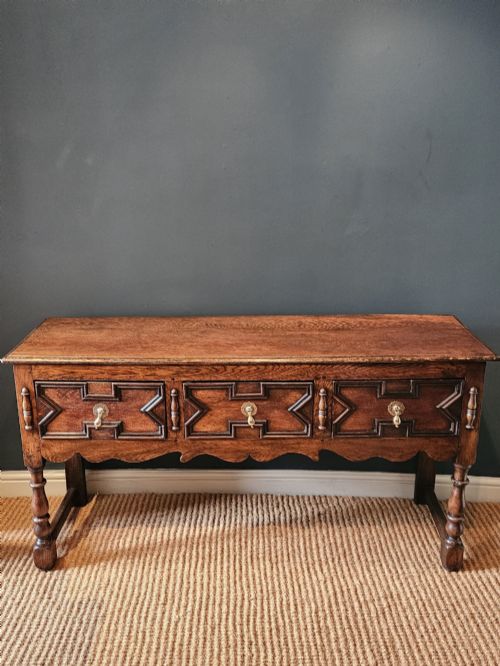
When you search for an 18th century carved dresser, you find robust storage furniture created for domestic use across Britain and continental Europe. The selection here leans heavily towards oak, alongside walnut and ash, spanning regional vernacular styles like Welsh country work and French provincial design.
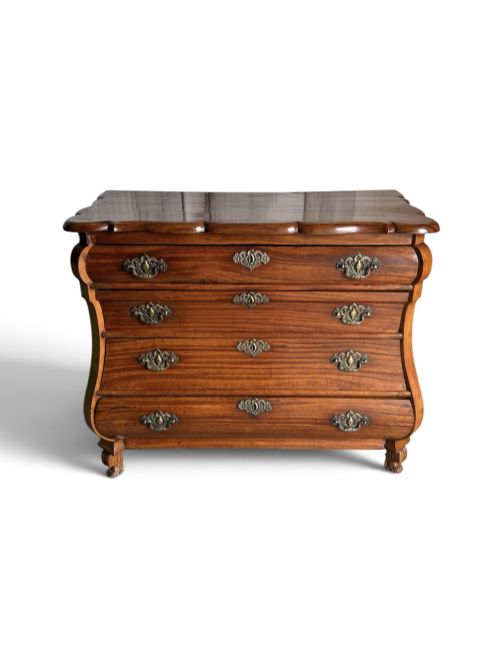
The form ranges from low dresser bases and side tables to towering court cupboards and two-piece buffet deux corps cabinets. Open plate racks and closed drawer arrangements define the practical side of these pieces, which were originally built to hold and display household tableware.
How they were made
Cabinet makers relied primarily on solid oak, walnut, and elm, often combined with secondary woods such as pine and ash. Panels were typically hand-planed and joined using traditional mortise and tenon construction secured with wooden pegs.
Carving was executed by hand using gouges and chisels directly onto the timber, yielding crisp relief work on friezes and cupboard doors. Drawer linings frequently show through- dovetails cut individually by hand, while brass drop handles or willow pattern plates complete the joinery.
Some country makers tucked tiny hidden drawers behind secret sliding panels, just to keep family tea money safe.
What varies in quality
The depth and crispness of the hand-carved detail separate ordinary regional items from exceptional examples. Timber selection also dictates grade, with figured burr elm or rich burr walnut commanding greater visual presence than plain utility boards.
Proportion and originality of surface finish determine the standing of a piece. Retaining original backboards, brass hardware, and a warm historic patina elevates the integrity of the furniture significantly.
The 18th Century Carved Dresser Glossary
- Dresser base
- A low freestanding cabinet featuring multiple drawers above cupboards or an open pot board. This form served as the primary working surface in country kitchens.
- Bombe
- A convex, swelling contour typical of continental commodes and drawer fronts. This curved silhouette requires advanced timber-bending and carving skill.
- Court cupboard
- An enclosed antique cabinet featuring an upper section supported by carved pillars. These monumental pieces held household linen and silver.
18th Century Carved Dresser: Frequently Asked Questions
How do I care for an 18th century oak dresser?
Feed the dry timber periodically with a traditional beeswax polish applied sparingly with a soft cloth. Keep the piece away from direct heat sources and radiators to prevent timber splitting.
Avoid using modern aerosol sprays or silicone-based cleaning products on antique wood surfaces. Gentle dusting with a dry lint-free cloth preserves the historic finish.
Can I use a dresser base in a modern kitchen?
These robust furniture pieces function exceptionally well as kitchen islands or serving buffets. Their deep drawers provide practical storage for modern culinary equipment.
Ensure that modern moisture levels and heavy countertop appliances are managed carefully around historic timber surfaces. Many collectors enjoy blending these rustic country pieces into contemporary interiors.
What is the difference between a Welsh dresser and a French enfilade?
Welsh pieces typically combine a lower drawer base with an open plate rack tiered above for display. They reflect vernacular British country joinery traditions.
French enfilades and buffets are long, low storage cabinets with doors across the front rather than open plate racks. They showcase provincial European carving styles like Louis XV panelling.
How do I spot original hardware on a dresser?
Examine the interior of the drawer boards around the handle posts for filled old holes or shadow marks. Original brass drop handles and batwing backplates show consistent oxidation and wear.
Hand-filed posts and handmade nuts inside the drawer box indicate period fixings. Modern screw heads or bright unoxidised brass usually point to later replacements.