
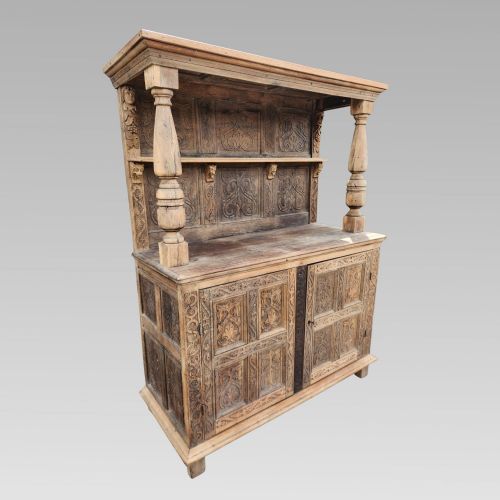

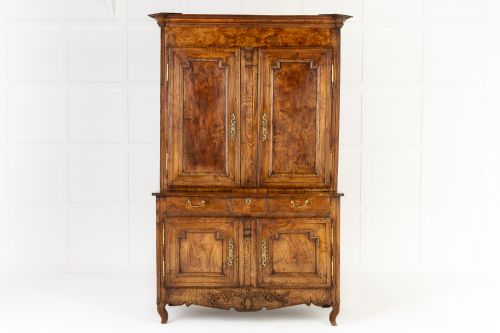


Carved French Kitchen Cupboard
A carved french kitchen cupboard brings substantial rural character and practical storage to a room through traditional regional woodworking.
Carved French Kitchen Cupboard
A carved french kitchen cupboard encompasses substantial storage furniture originating from provincial regions, designed for storing food, linen, or domestic wares in country houses and chateaux. When you search for a carved french kitchen cupboard, you encounter diverse regional forms spanning centuries of domestic life.
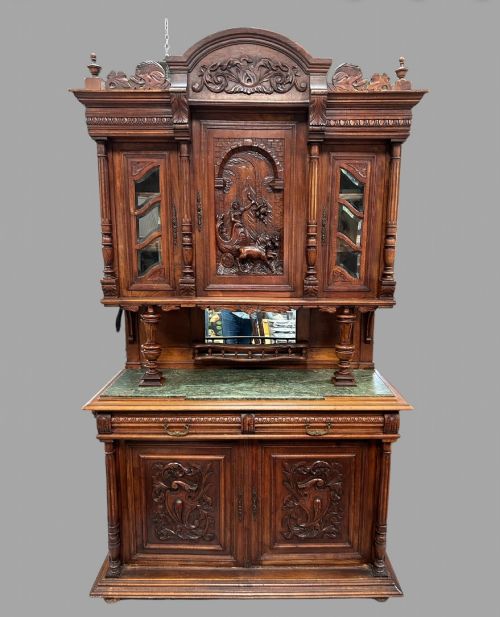
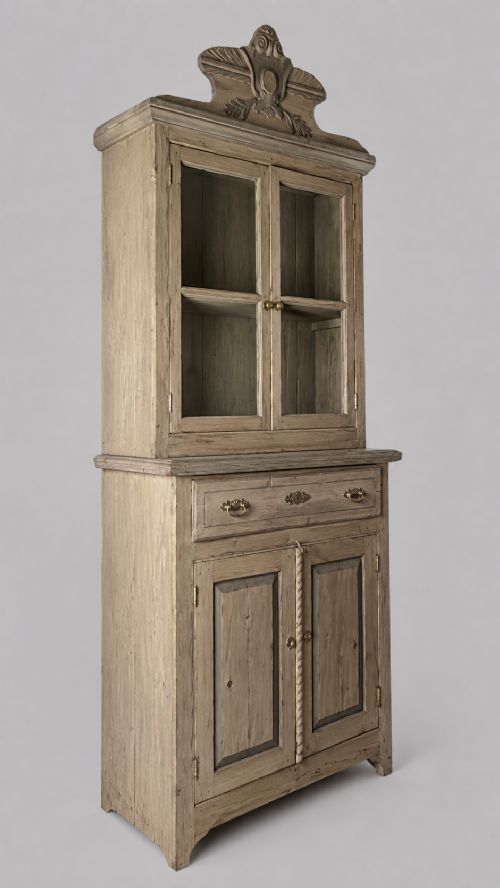
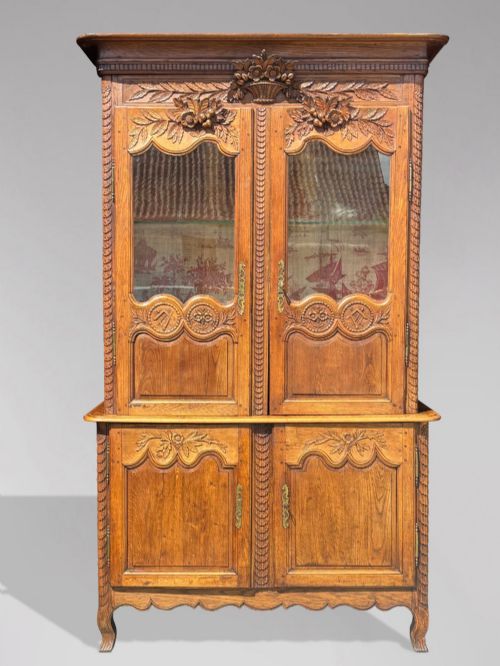
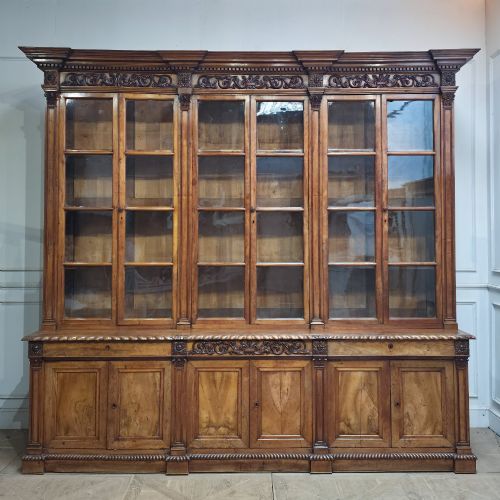
The pieces appearing on this page range from grand 18th century oak buffet deux corps cabinets to 19th century painted glazed cupboards and tall housekeeper's larders. Oak, walnut, fruitwood, and chestnut provide the primary structural timbers for these substantial storage pieces.
Regional styles such as French Provincial, Louis XV, and French Country dominate the selection, showing carved panel details and traditional hardware in brass and iron. The forms include dressers, sideboards, glazed display units, and tall single armoires tailored for kitchen and dining spaces.
How they were made
Cabinet makers constructed these cupboards using solid timbers like oak, walnut, ash, chestnut, and fruitwood, joined with traditional framing and panel techniques suited to heavy daily domestic use. Iron and brass hinges, latches, and escutcheons secure the heavy doors while adding functional contrast to the natural wood grain.
Carving was applied directly to structural panels and cornices by hand, displaying regional motifs and asymmetrical Louis XV influences rather than standardised factory decoration. Painted finishes and natural waxed patinas developed over generations, preserving the underlying timber while recording centuries of handling.
Historic housekeeper's cupboards occasionally retain faint chalk tallies on interior doors where provisions were counted out.
What varies in quality
Proportion and the preservation of original hardware, glass panes, and surface patinas separate exceptional examples from heavily restored or altered pieces. The harmony between the architectural proportions of the upper and lower sections in a buffet deux corps defines the success of the design.
The Carved French Kitchen Cupboard Glossary
- Buffet deux corps
- A large two-part cupboard featuring an upper cabinet set upon a deeper lower sideboard base, traditionally used for storing tableware and provisions in rural French homes.
- Housekeeper's cupboard
- A tall, large-scale storage piece historically utilised by domestic staff for linens, dried goods, and kitchen provisions.
- Fruitwood
- Dense timber harvested from fruit-bearing trees such as pear or apple, prized by regional cabinet makers for its fine grain and warm tone.
- Patina
- The surface sheen and colour acquired by wood and metal over decades of handling, cleaning, and exposure to light.
- Visselier
- A traditional provincial open-back dresser or plate rack designed to display ceramics above a serving surface.
Carved French Kitchen Cupboard: Frequently Asked Questions
How are two-part cupboards transported?
These large storage pieces separate into distinct upper and lower sections for moving through doorways and navigating stairwells safely.
Professional furniture couriers dismantle the cornice and secure internal shelving before transit to protect the aged joints.
Where should a large cupboard be placed?
Kitchens, dining rooms, and expansive hallways provide suitable environments where the height and depth of these substantial storage units do not overwhelm the floor space.
Positioning them away from direct heat sources prevents the historic timber from drying out and splitting over time.
How do I date an 18th century piece?
Examining the hand-cut joinery, iron hardware, and tool marks on the interior boards reveals the methods used by period craftsmen.
Regional carving styles and timber choices also correspond to specific decades of French provincial production.
How do I maintain the wood surface?
Applying a traditional beeswax polish nourishes the dry timber and maintains the natural patina developed over generations of use.
Avoid silicone-based sprays and keep the surface clean with a soft, dry cloth to protect the historic finish.