

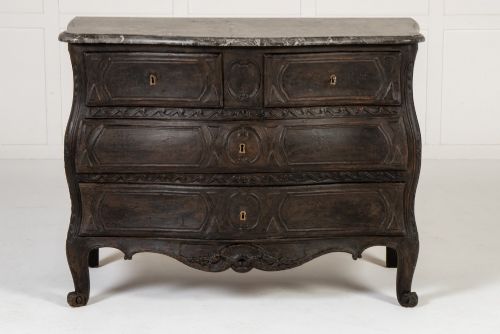


Dark Oak French Dresser
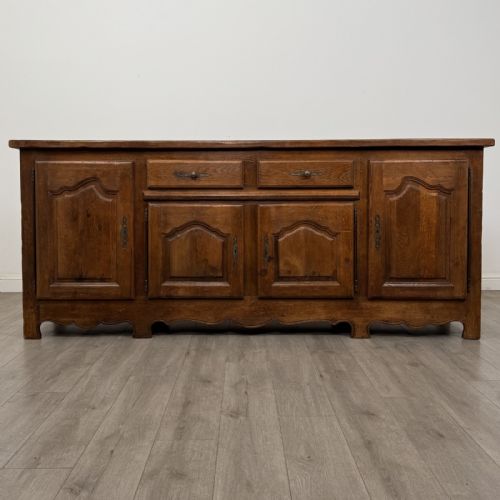
A dark oak french dresser brings solid timber, deep grain, and robust proportions into a dining room or kitchen.
Dark Oak French Dresser
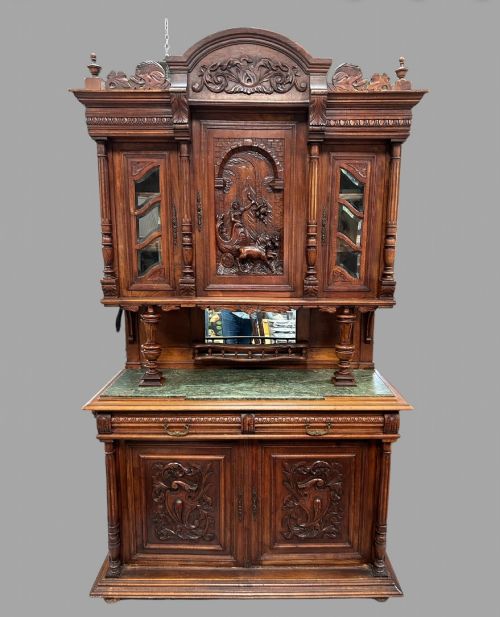
A dark oak french dresser is a substantial storage piece originating from provincial workshops, combining display shelving or upper cabinets with a lower base of cupboards or drawers. You will regularly encounter pieces from the eighteenth and nineteenth centuries, alongside regional styles such as Breton and Renaissance Revival.
The form spans two-piece commodes and vitrines, housekeeping cupboards, and buffet a deux corps designs constructed primarily from oak. These items served practical domestic functions in French rural homes, providing secure storage for tableware and provisions.
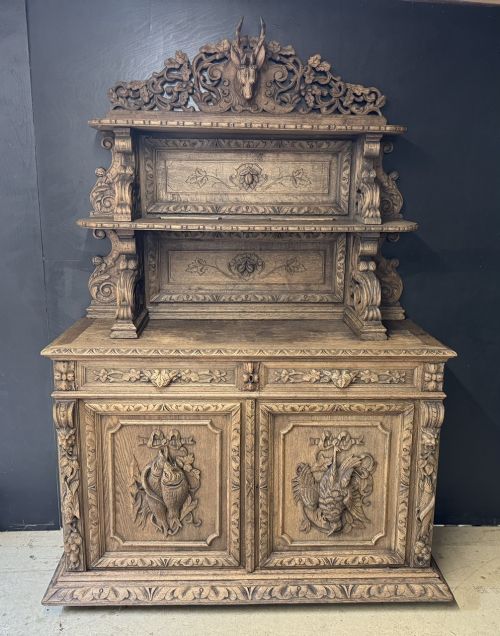
Regional variations display distinct decorative carving, ranging from French provincial simplicity to elaborate hunting motifs featuring game and foliage. The structural layout adapts to domestic needs, balancing enclosed storage with surface display space.
How they were made
Cabinet makers utilised solid oak planks, joining panels with traditional mortise and tenon construction to withstand seasonal humidity shifts. Structural framing often incorporates chestnut or walnut elements within internal sections.
Surface ornamentation relied on hand chisels, producing deep relief carvings of leaves, fruit, and hunting scenes directly into the timber. Iron and brass hardware, including hinges and lock plates, secured the heavy doors and drawers.
Finishes developed naturally through wax application and centuries of handling, though some pieces exhibit period painted treatments or ebonised surfaces. Glass panels appear in upper vitrine sections to enclose display areas.
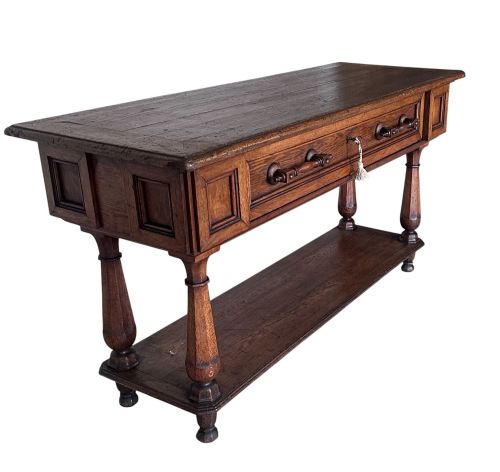
Object forms include sideboards, commodes, vitrines, console tables, and housekeeper cupboards originating from French provincial workshops.
What varies in quality
Quality rests in the crispness of the hand carving and the selection of timber with dense, straight grain patterns. Provincial pieces with integrated proportions and original hardware command greater appreciation among collectors.
The integrity of the construction, particularly the tightness of joints and the smooth operation of heavy drawers and doors, separates standard utility items from master workshops. Untouched surface patination preserved beneath layers of old wax remains a key indicator of desirability.
The Dark Oak French Dresser Glossary
- Buffet a deux corps
- A large two-tier cupboard featuring an upper section set back upon a deeper base. This form provided extensive storage for domestic provisions in traditional French households.
- Commode
- A low chest of drawers or cabinet designed for domestic rooms. Eighteenth-century examples frequently display serpentine fronts and bombe profiles.
- Breton
- A regional style originating from northwestern France, characterised by dense carving and distinctive cupboard forms such as the enclosed bed cupboard. These items reflect maritime and rural traditions.
- Renaissance Revival
- A nineteenth-century design movement drawing inspiration from sixteenth-century motifs. Pieces in this style exhibit architectural columns, heavy cornices, and deep relief panels.
- Vitrine
- A glass-fronted cabinet designed for displaying porcelain and glassware. In two-piece furniture combinations, this upper section sits above a solid wooden buffet base.
Dark Oak French Dresser: Frequently Asked Questions
How do I clean a dark oak french dresser?
Dust regularly with a soft, dry cloth to prevent dirt accumulation in the carved recesses. Apply a traditional beeswax sparingly to nourish the timber and maintain the surface sheen without building up heavy residues.
Avoid placing the timber near direct heat sources or strong sunlight, which cause wood to dry out and split. Modern liquid cleaners and silicone sprays damage antique finishes and should be avoided entirely.
Where should I place a large buffet?
Dining rooms and spacious kitchens provide traditional settings where these substantial pieces serve their original function of storing tableware and serving food. Ensure the floor is level to prevent distortion in heavy two-piece cupboard frames over time.
Measure ceiling height and wall space carefully before placement, as these items often feature generous cornices and tall proportions. Allow adequate clearance around doors and drawers for smooth daily operation.
How do I date an antique oak cabinet?
Examine the construction methods visible inside drawers and at the rear panel joints, looking for hand-cut joinery and forged iron nails. Tool marks left by hand planes and chisels indicate manual fabrication typical of eighteenth and nineteenth-century workshops.
Stylistic details such as hardware design, carving depth, and the presence of regional motifs help narrow the period of origin. Compare the timber patination and wear patterns around handles to confirm age.